
What’s coordination got to do with it?
Written by Jacque Bridges.
Updated May 6, 2026.
Images have been generated using AI, unless otherwise stated.
Proposal Coordinators: The Backbone of Every Winning Submission
Proposal coordination is always a needed and necessary function in proposal development. Coordinators are often overlooked and undervalued; sometimes, they are written off as expendable. But there is nothing more important than having the right person assist in driving a proposal team to meeting milestones and deadlines while working towards submission.
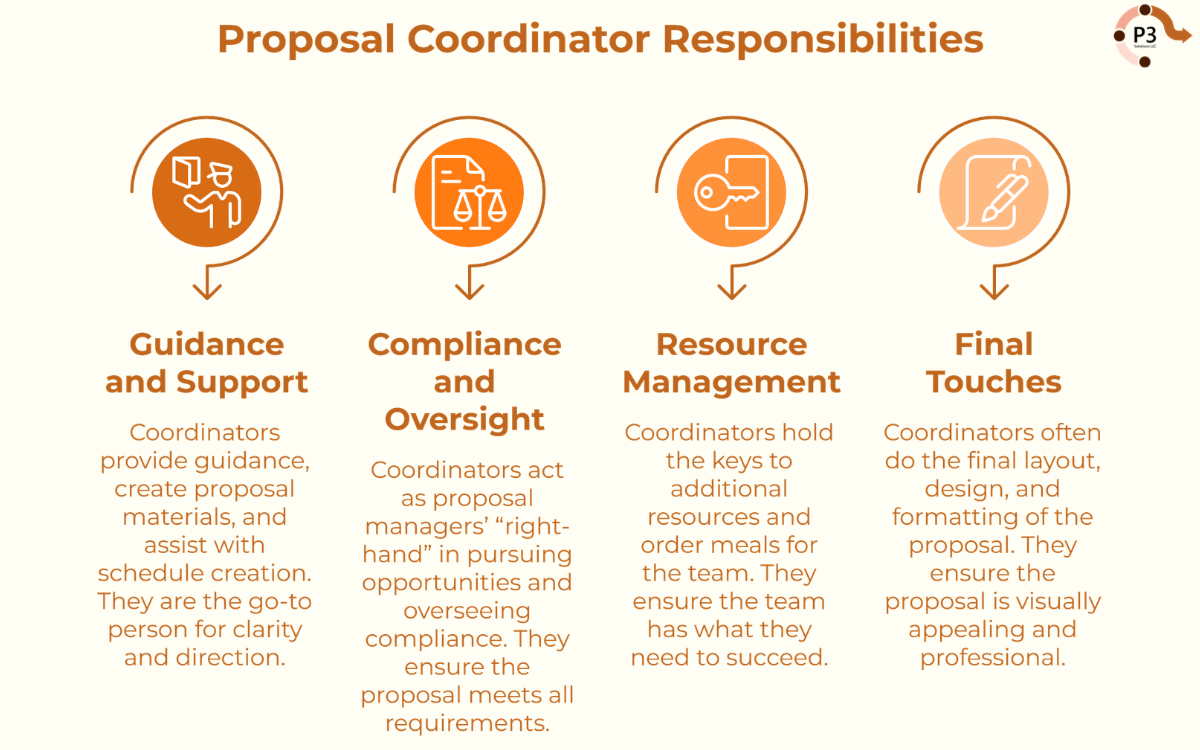
Proposal coordinator responsibilities
Coordinators act as proposal managers’ “right-hand” in pursuing opportunities and overseeing compliance. Coordinators are those who provide guidance, create proposal materials, and assist with schedule creation. They also often do the final layout, design, and formatting. Coordinators tend to be the proposal team’s go-to person for clarity and direction. They hold the keys to additional resources and order meals for the team. It’s a thankless job, but someone has to do it!
Proposal coordinators contribute to the success of the proposal team in many ways, including:
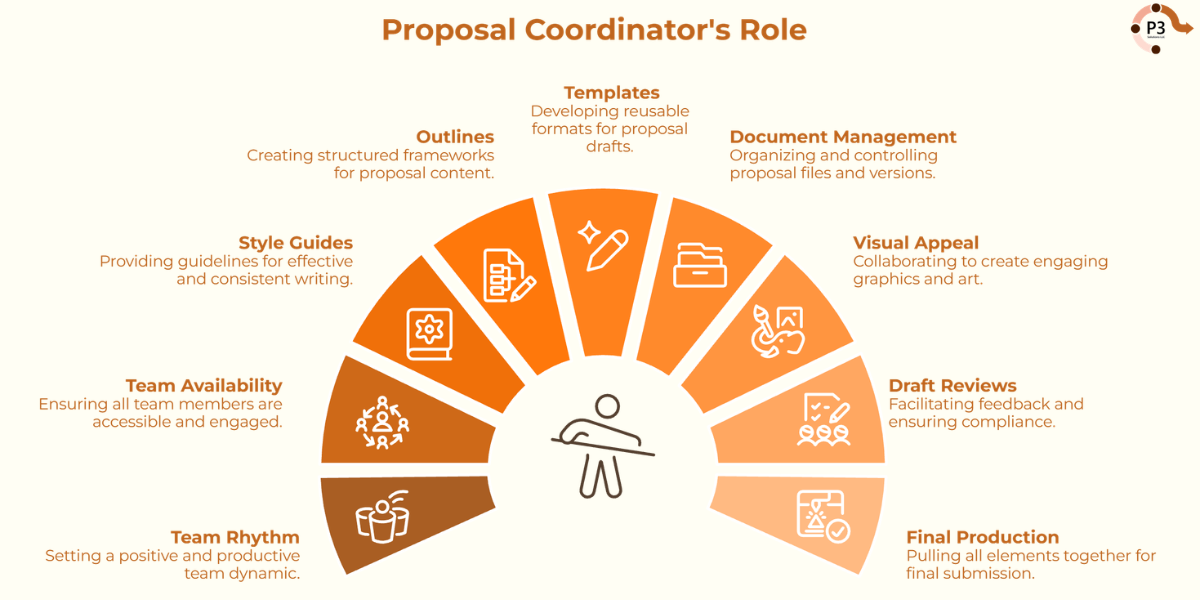
Setting the rhythm of the team — Creating a positive team dynamic that allows creativity and discipline, such as establishing rules of engagement. For example, a proposal coordinator will generally manage meeting invites for tag-ups and color team reviews. These meetings are key to determining where the team is in the proposal process, identify any blockers, and receive critical feedback.
Ensuring team availability — Often, members of the proposal team may not be able to commit to the effort 100%, as they may have full-time commitments to clients or be assigned to other tasks. However, these proposal team members need to take their (limited) role seriously and contribute their expertise to achieve the most technically accurate proposal possible. Proposal coordinators create comprehensive contact lists and stay in touch with all members of the team – and that goes a long way toward ensuring that everyone knows where they need to be, what they need to do, and when they need to do it.
Proposal coordinator’s many roles
Preparing style guides — Style guides provide basic guidelines for effective proposal writing and editing. They can help highly technical people maintain awareness of common errors, punctuation, capitalization, and abbreviations, to name a few. Style guides can also reflect the RFP’s formatting instructions. By preparing a comprehensive style guide, proposal coordinators provide the writing team with a useful, at-a-glance guide. Good proposal writing should always be:
C oncise
L ogical
E asy to read
A ccurate
R elevant
Creating outlines — Using RFP requirements as a guide, proposal coordinators often create proposal outlines to assist in the writing process. These outlines become headings in the proposal and help guide writers in developing their content.
Developing templates — Coordinators, when functioning as desktop publishers, develop templates that authors can populate as they begin writing drafts that ultimately become compliant and compelling proposal content.
Keeping the keys — Coordinators are ‘key’ when it comes to managing drafts and other proposal-related documents on a shared document platform (e.g., SharePoint). Coordinators are also typically responsible for proposal file organization, location, access, and version control. Coordinators ensure that the latest drafts are available online so authors can make their contributions as part of a collaborative effort.
Feeling creative? — Coordinators work with authors and graphics artists to develop easy-to-grasp graphics that render complex concepts into digestible and visually appealing proposal art. We can think of no better example than the phrase, “a picture is worth a thousand words.” Consider the reader and the mind-numbing eye strain that can occur when reading multiple pages of plain text.
Reviewing the drafts — Reviews are important to ensure that writers are on track with complying with requirements, writing concisely, and presenting content in a compelling manner. Depending on the length of the proposal and the timeline, several reviews may be needed. Coordinators are instrumental in setting up review meetings, sending draft materials, and ensuring that reviewers have all the tools they need to provide critical feedback on the content.
Producing the $1%* thing — Finally…the due date is nearly upon us and most of the proposal team has stood down. Now it’s time to pull it all together – and coordinators step in once again to produce the proposal. Whether the submission is electronic or hard copy, coordinators ensure that all sections are in place and compliant.
Proposal coordinators perform many tasks that the rest of the proposal team doesn’t always see. If you’re working in a collaborative, friendly environment and you’re being fed reasonably regularly, know that a coordinator is working behind the scenes.
Proposal coordinators may not always get the spotlight, but their role is critical to keeping teams organized, deadlines met, and submissions compliant. Without them, even the strongest strategies can falter. Recognizing their value — and ensuring your team has the right support — can make the difference between a missed opportunity and a winning proposal.
Don’t leave your proposals to chance. Partner with P3 Solutions to strengthen your capture and proposal efforts, streamline team coordination, and ensure every submission reflects your best strategy.
Further Reading:
A day in the life: How my proposal client drove me to distraction.
Deadline Crunch? P3’s Top 10 To-Dos.
To run away or to dive-in deep: Reflections on a 20-year journey