
The 10 Most Annoying Passive-Aggressive Behaviors in the Workplace
Written by Joseph Philipson.
Originally published March 10, 2025
All images are P3 originals, courtesy of Hadi Madwar.
Passive-aggressive behaviors
Passive-aggressive coworkers can make work unbearable. While your passive-aggressive colleague probably isn't a squirrel called Wendy, you can find more than a few of these traits in your least-liked colleagues.
Many individuals engaging in these behaviors are often unaware of their actions or the detrimental effects they can have on the workplace.
Either way, here are a few of the most annoying ways to be passive-aggressive in the workplace. Just make sure that none of them applies to you.
1. Procrastination
Procrastination isn't always passive-aggressive. Sometimes, it's simply a lack of time management skills, dwindling motivation, or downright laziness. However, procrastination is one of the first and best ways a passive-aggressive coworker can strike.
Perhaps they procrastinate because they don't like other people telling them what to do, they don't like the person in charge of a project, or simply because they're worried their work product will be less than perfect.
Procrastination hinders team progress and creates unnecessary stress for everyone trying to finish their work. It's also a massive waste of time when the targets of this passive aggression might not even know that they're the target.
Example
Imagine a team member, Wendy, who regularly submits reports just before the deadline. This will cause unnecessary stress for her colleagues.
Even though Wendy has been reminded, she doesn't change her behavior. Instead, she signals her dissatisfaction with the task or the person who assigned it to her.
Check out Wendy’s page for more advice about what NOT to do in the workplace.
Solution
It's important to set clear expectations and even interim milestones for employees like Wendy. A regular check-in with Wendy could be a good way to monitor her progress and provide her with opportunities to address any obstacles she might face.
2. Sarcasm
Sarcasm can be funny. However, when sarcasm isn't inclusive and is merely a thinly veiled way to insult a colleague or undermine their work and effort, it's just rude without the confidence to voice discontent or an opinion.
You don't have to be abrasive, but rather than saying, "Great! Yet another meeting!" you could suggest shorter meetings or that somebody send meeting points ahead of time to ensure everybody stays on topic.
Could I be any more of a toxic colleague?
Example
In the last meeting, Wendy decided to respond to a coworker's suggestion with, "Oh, sure, because that worked so well last time."
Solution
Foster an environment where team members feel safe expressing concerns. Address sarcastic comments promptly, highlighting that they negatively affect team morale and aren't particularly helpful in most situations.
3. Withholding
Withholding is the act of keeping critical information from colleagues. Knowing something but not telling them.
This behavior can be particularly damaging and is a way to sabotage colleagues and organizations when helping is easier.
Example
Wendy actively decided not to tell her colleague about a rescheduled meeting. Ultimately, the other employee missed it and appeared very unprofessional.
Solution
A culture of transparency is key here. Enabling and implementing platforms for information sharing and collaboration will not only stop an employee from being able to withhold, but it will also encourage them to work as part of a team.
4. Backhanded compliments
A compliment, what's wrong with that?
You can't call a backhanded compliment a compliment. Instead, it's a positive-sounding comment that's simply an insult.
A backhanded compliment typically highlights your insecurities, suggests something negative, questions your skills or abilities, or makes you feel guilty.
A backhanded compliment could be something like "Not bad for an X," which diminishes the person's achievement, drawing attention to one of their unchangeable qualities rather than their work.
You can efficiently deal with a backhanded compliment by focusing on the positives. The person dishing them out has the problem, not you.
Example
Wendy tells a coworker they were "surprisingly good at this for someone your age" despite having hibernated for a fair few winters herself.
Solution
Here, it's important to provide feedback about how her words are perceived, even if she meant them as a compliment. Let her know that genuine praise and feedback are very important and that she's free to share them, provided that she considers the impact of her statements and phrasing before she does.
5. Silent treatment
The silent treatment is a common reaction for coworkers who have trouble with emotional maturity.
It's unhelpful and creates a needlessly uncomfortable environment for more than just the target of passive aggression.
While silence is sometimes warranted to allow people to cool off or recommended while others speak, direct communication can be more effective in conflict resolution.
Example
Wendy refuses to acknowledge a colleague's presence and spends the day ignoring their greetings and questions.
Solution
It's time to have a private conversation with Wendy. Let her know how her silence affects team dynamics and that she can voice her concerns if she has any.
6. Gossip
There's a difference between a well-meaning interest in your colleagues' lives and well-being and gossiping about them behind their backs.
Gossip is the opposite of withholding. Rather than retaining factual and useful information, the gossiper shares harmful and potentially untrue information about colleagues and coworkers.
All this will do is create division and mistrust within teams.
Remember that this is spreading malicious lies and rumors rather than discussing others. It can be helpful to talk respectfully about colleagues to get a second opinion on dealing with situations.
Example
Wendy whispered to another colleague about certain mistakes, which started to sow seeds of mistrust within the team.
Solution
Create a culture of respect and direct communication. Address rumors promptly and remind other employees to verify information before accepting it as truth. Thus, even if Wendy decides to spread more rumors, trust will not be eroded, and the workplace culture will not encourage this kind of behavior.
This kind of behaviour will stop in a workplace environment with no place for rumors.
7. Avoiding responsibility
Almost everyone will do this at some point in their lives, but it's a behavior that you should avoid at work and at home.
The issue is that we're prone to overestimating our effort (because we experience it first-hand) and minimizing the efforts of others.
When something goes wrong, it can be challenging to rationalize that it could simply be your fault.
However, some people never believe they could have been at fault. Everybody else will be to blame, or if it was a solo project, the reasons were circumstantial but had nothing to do with them.
Fostering a no-blame culture makes these passive-aggressive team members more willing to seek solutions rather than excuses. Even though this means they may still avoid admitting something is their fault, they can at least attempt to rectify problems.
Example
Wendy immediately blames other employees when a project doesn't meet expectations. "I thought you were handling that," she laments.
Solution
Clearly defined roles mean that everybody's responsibility is visible to all. Each team member will know which tasks they're responsible for, and their colleagues will also know who to ask for help with work.
Be sure to hold individuals accountable for their remit so they can't shirk their duties.
8. Indirect communication
Being direct doesn't mean you have to be abrasive or rude. You can say something directly and clearly while respecting your colleagues and coworkers.
However, for the passive-aggressive team member, why say something clearly when you communicate indirectly with a note about the state of the break room or how a colleague dresses?
Indirect communication may manifest as making announcements to the entire team when everybody knows which team member is the target.
If they have something to say to only one person, they should do it respectfully and perhaps privately, especially if it doesn't concern anybody else.
Example
Wendy leaves a note in the break room that says, "Some people should really clean up after themselves," but she doesn't say who she means.
Solution
Training on effective personal skills can help here. Create channels where employees can feel comfortable voicing their concerns openly.
9. Sabotage
Everybody should have a shared interest in the success of the company and organization you work for. Sabotaging coworkers to disrupt without confrontation is highly unprofessional.
We're not saying you must constantly help every one of your coworkers, especially at the expense of your own work. However, wasting your time and energy on sabotaging a coworker you don't like is pretty low, even for a master of passive aggression.
Underperforming or toxic coworkers won't need to be sabotaged, even if it could be tempting.
Sabotage is easily the most aggressive of the passive-aggressive behaviors, even if you can do it stealthily.
Example
During a project, Wendy “forgets” to send a crucial file to one of her teammates, who ultimately misses a deadline.
Solution
You have to create accountability within workflows and foster a team-orientated environment. Team members should share in the success, so there's no incentive to sabotage each other.
10. Arriving Late to Meetings
Arriving late is a form of passive-aggressive protest that allows the passive-aggressive team member to show discontent by disrespecting others' time. However, even if aimed at management, this will more likely hurt colleagues and coworkers whose time is being used for this meeting and the meeting leader, who will have to repeat themselves.
For punctual colleagues, late arrivals show a lack of respect. Every team member has a responsibility to themselves and their coworkers to arrive at the scheduled time.
Just remember that a colleague's being late might simply be because they are poor timekeepers, rather than trying to undermine the harmony of the workplace by regularly being late.
Example
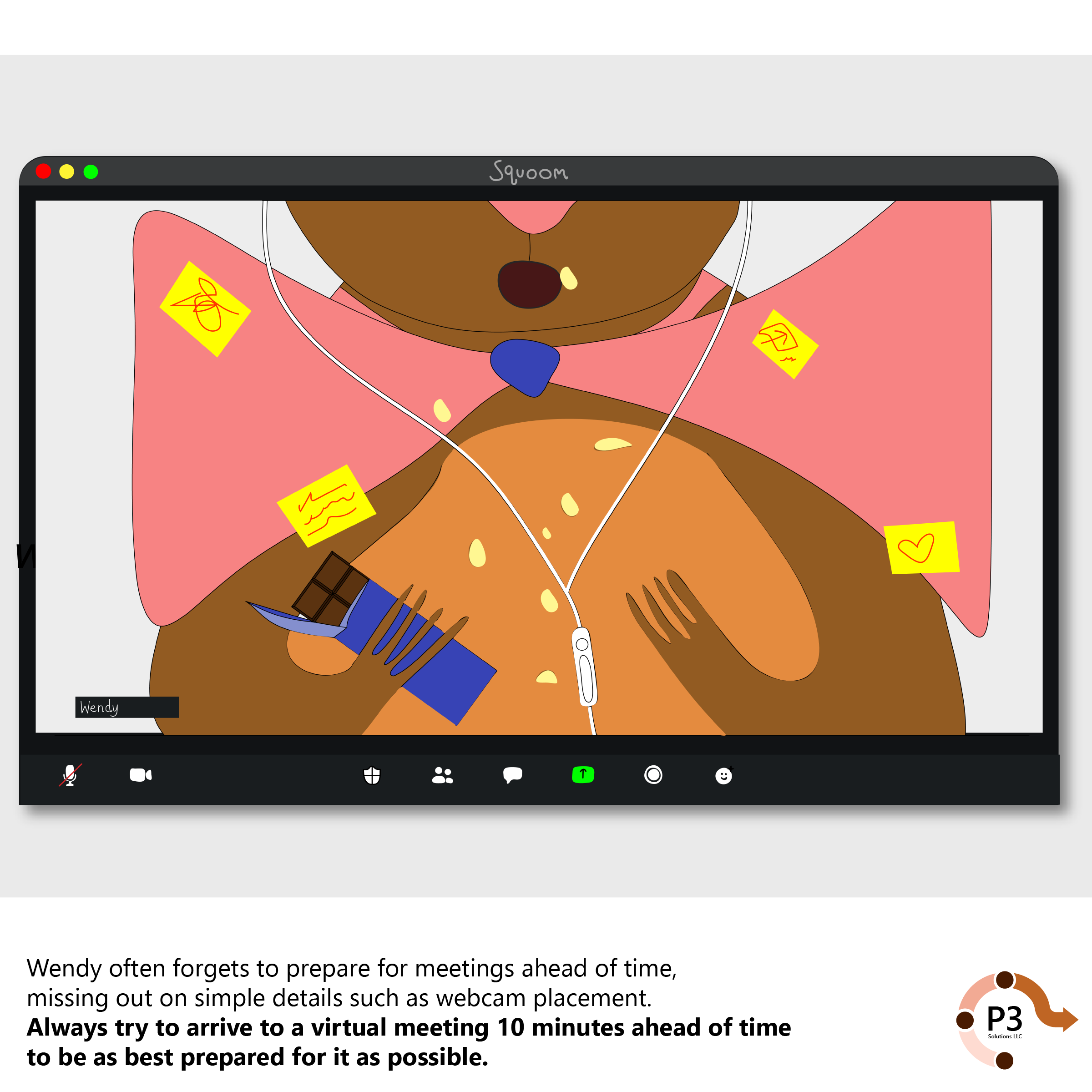
Whenever a meeting is taking place, Wendy is always five minutes late. The group regularly has to repeat information solely for her benefit.
Solution
Discuss the importance of timeliness and its impact on team efficiency. Make sure that clear expectations are set and that there are consequences for habitual lateness.
Dealing with any “Wendy” requires clear communication, firm boundaries, and a workplace environment where transparency and mutual respect are key.
If you address these kinds of passive-aggressive issues directly, you can mitigate their negative impact and foster a culture of collaboration.
Need support with your staff? P3 Solutions can help!
Contact us and tell us how we can help you meet your next challenge.