
Wendy: What NOT to do in the workplace
Updated June 1st, 2026.
All images are P3 originals, created by Hadi Madwar.
Meet Wendy, the squirrel who’s become a legend in the office — though not for reasons you'd expect. While we all strive to be hardworking, efficient, and team-oriented, Wendy serves as a hilarious (yet cautionary) example of what not to do in the workplace. From constant distractions to unprofessional behavior, Wendy’s antics provide valuable lessons on workplace etiquette that you won’t want to miss. Let’s dive into what makes her the ultimate "don't" in a professional setting.
Multitasking
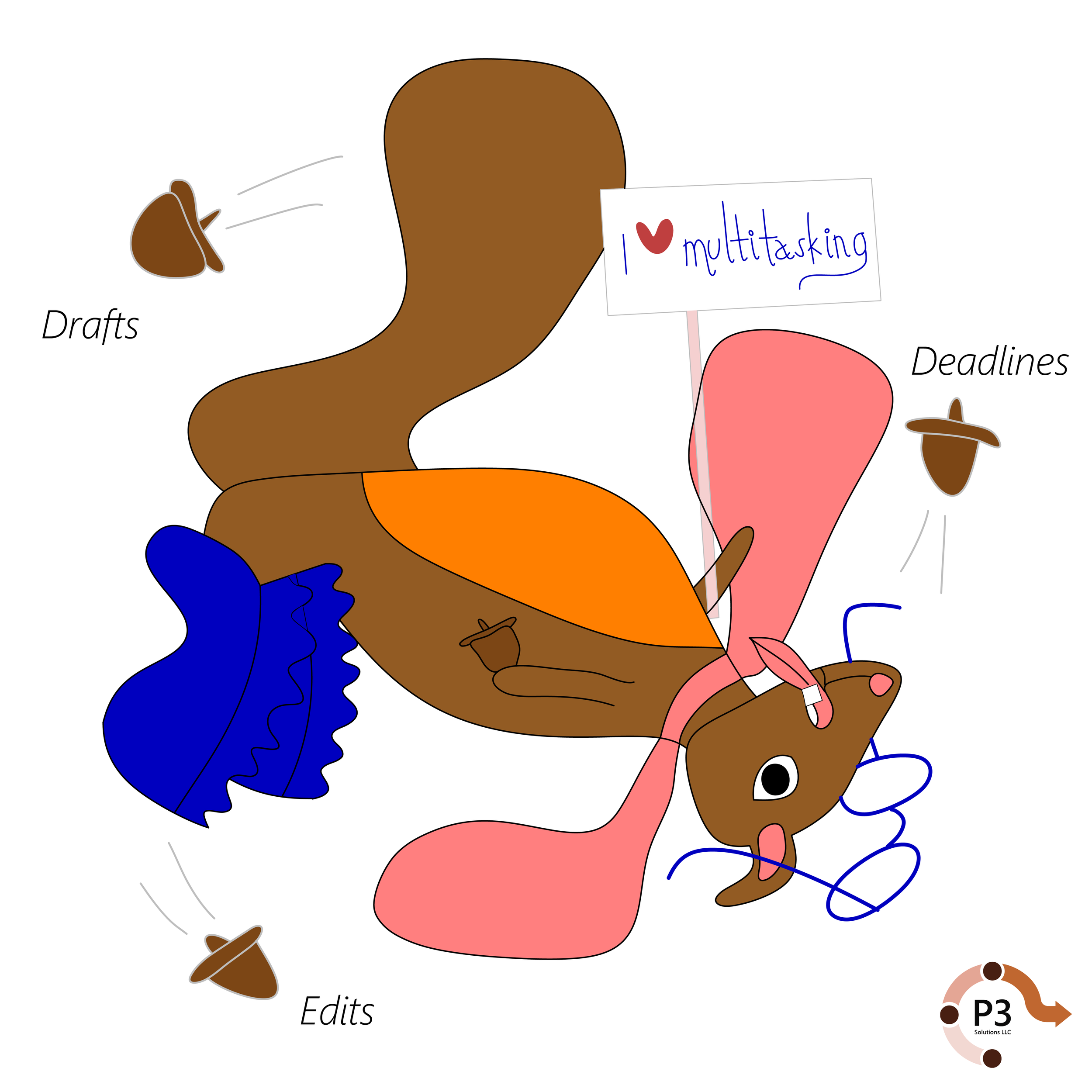
Wendy is juggling the drafts, edits, and deadlines, she’s doing it all.
Wendy is juggling the drafts, edits, and deadlines for a proposal. She's answering messages from technical contributors, copying comments from an email chain, updating an older version with "final_final" in the filename, and assuring everyone the proposal's still on track.
Wendy's working hard, but she's become the whole process. There's no content lock, with sections continually reopening. There's no protected review, so compliance comes too late. There's also no single source of truth, so people are working on different versions.
Avoid the proposal production trap!
Not my department!
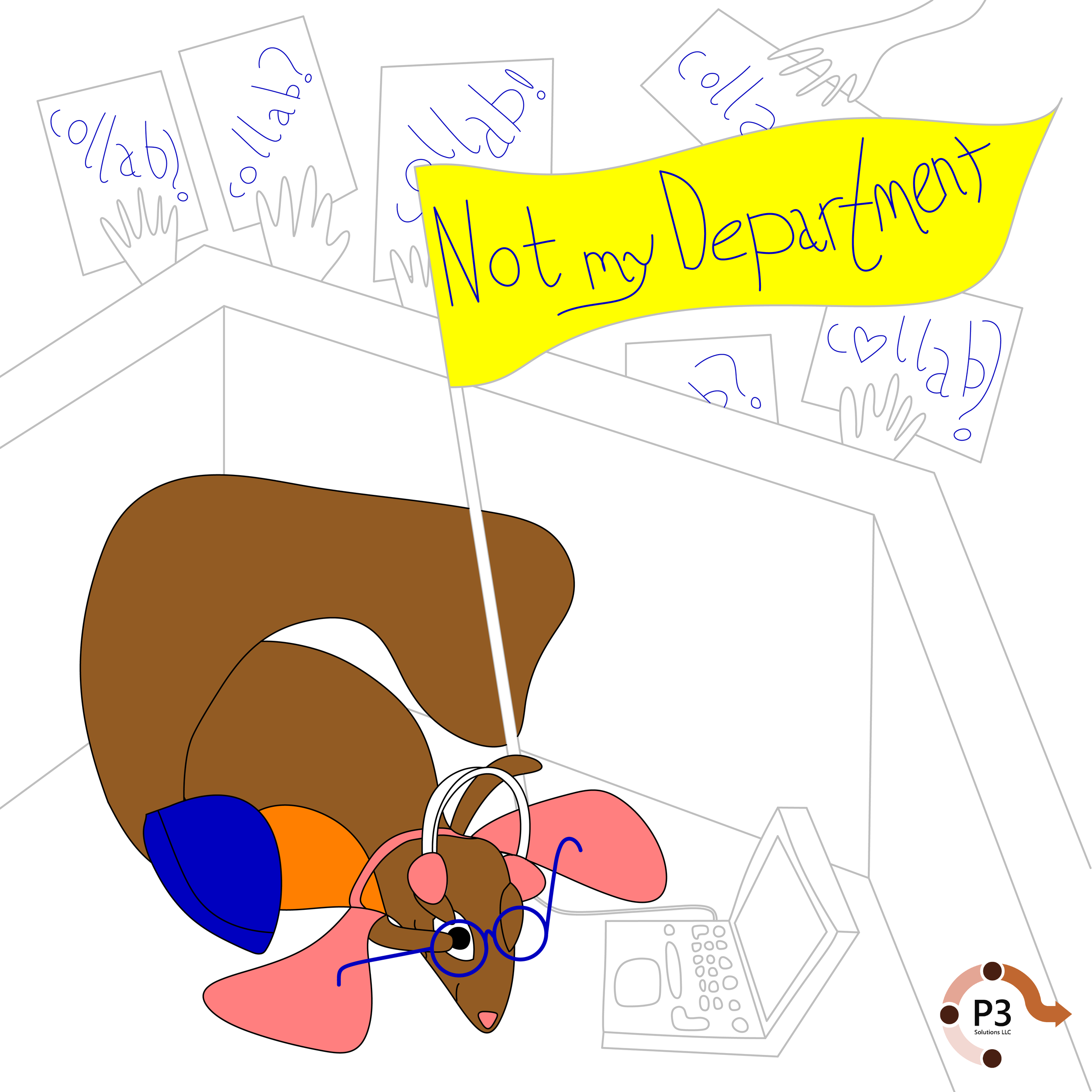
Wendy: Master of Avoidance
The most successful squirrel colonies — and organizations — know that collecting acorns is a shared goal. No single squirrel can gather enough for the entire colony, and no department can succeed in isolation.
Read our post: Breaking Down Silos: Improving Collaboration and Communication
Too many changes at once
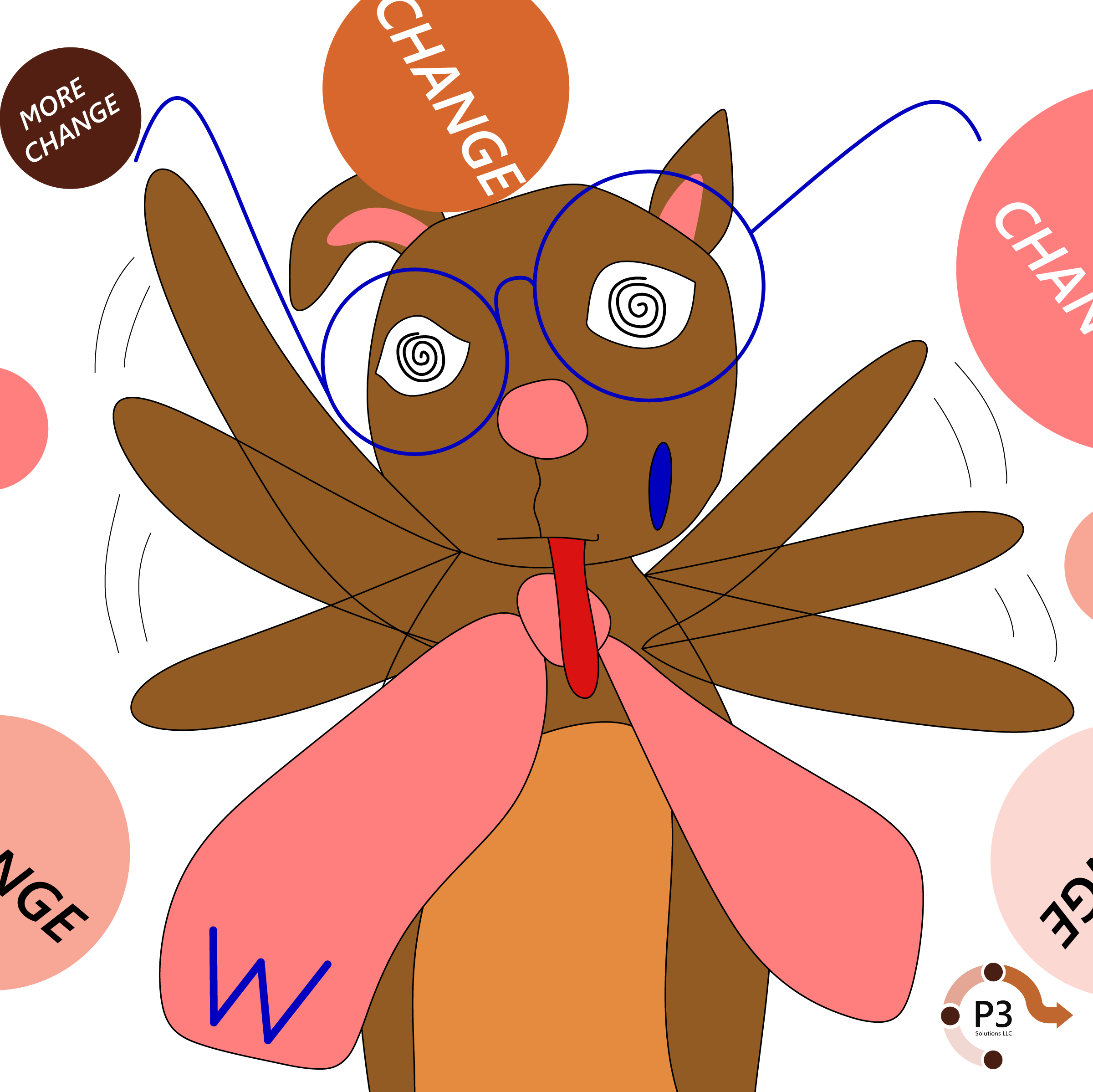
Wendy is juggling too many changes at once.
Wendy has a habit of insisting on too many changes at once, whether on a project, document, or design. While her attention to detail shows she cares about quality, piling on multiple revisions at the same time can overwhelm teammates, slow progress, and create confusion. This approach highlights the need for prioritization and clear communication—focusing on the most important adjustments first ensures work moves forward smoothly while still maintaining high standards.
Failing to address the client’s problem.
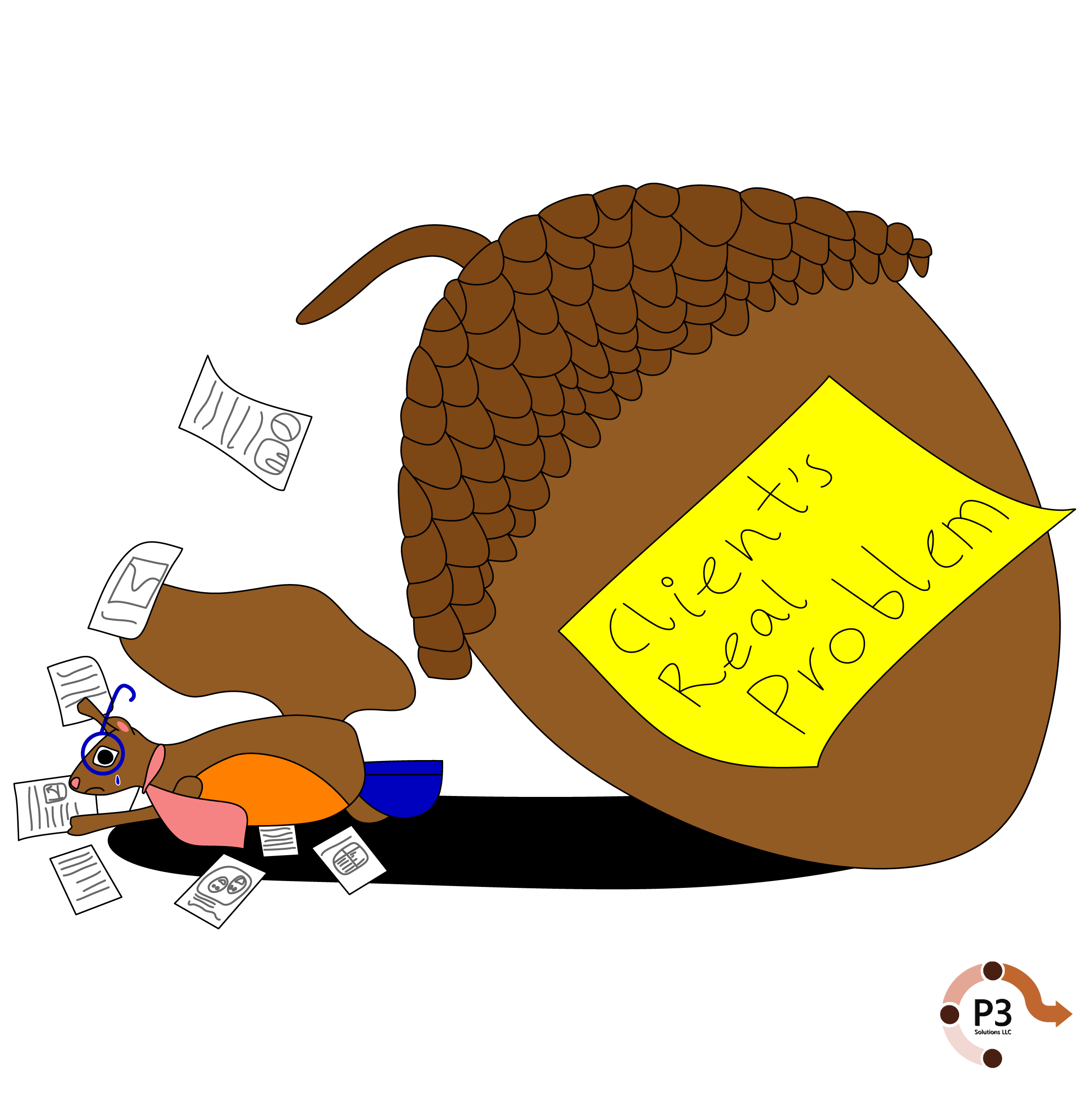
You’re ignoring the client’s real problem Wendy!
Wendy sometimes fails to address client problems promptly, either by overlooking issues or delaying follow-ups. This can frustrate clients, damage trust, and create missed opportunities to strengthen relationships. Ignoring or mishandling concerns not only affects customer satisfaction but also reflects poorly on her professionalism, emphasizing the importance of proactive communication, timely solutions, and taking ownership to ensure clients feel heard and supported.
Oversharing
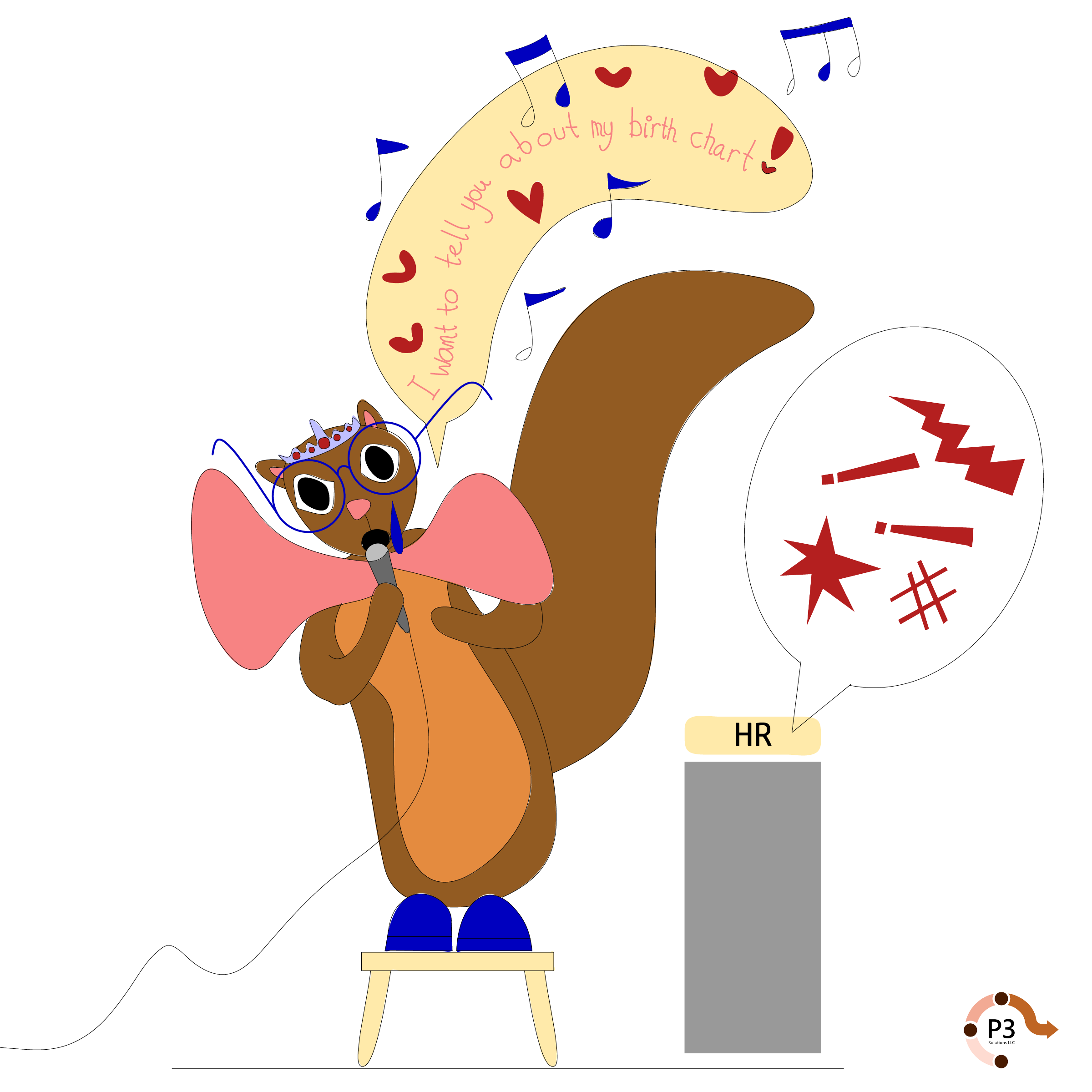
We don’t need to know about your birth chart Wendy!
Wendy has a tendency to overshare personal details at work, whether in meetings, emails, or casual conversations. While openness can build camaraderie, sharing too much can blur professional boundaries, make colleagues uncomfortable, and distract from workplace priorities.
This habit highlights the importance of setting clear boundaries: maintaining professionalism while still being personable ensures that relationships stay respectful, communication remains focused, and workplace energy is directed toward meaningful tasks rather than unnecessary personal drama.
Failing to proofread

Public funding Wendy! PUBLIC FUNDING!
The dangers of poor writing: Wendy rushed through her work and skipped proofreading, only to discover too late that she had written “pubic funding” instead of “public funding” in a key grant proposal for her NGO. What might seem like a minor typo could have major consequences: unclear or sloppy communication can confuse reviewers, undermine the organization’s credibility, and even cost them much-needed funding. In high-stakes situations like grant applications, attention to detail isn’t just about professionalism—it directly impacts the NGO’s ability to secure resources and continue its mission.
You might like our series: Navigating Change in the NGO Sector.
Nap Time
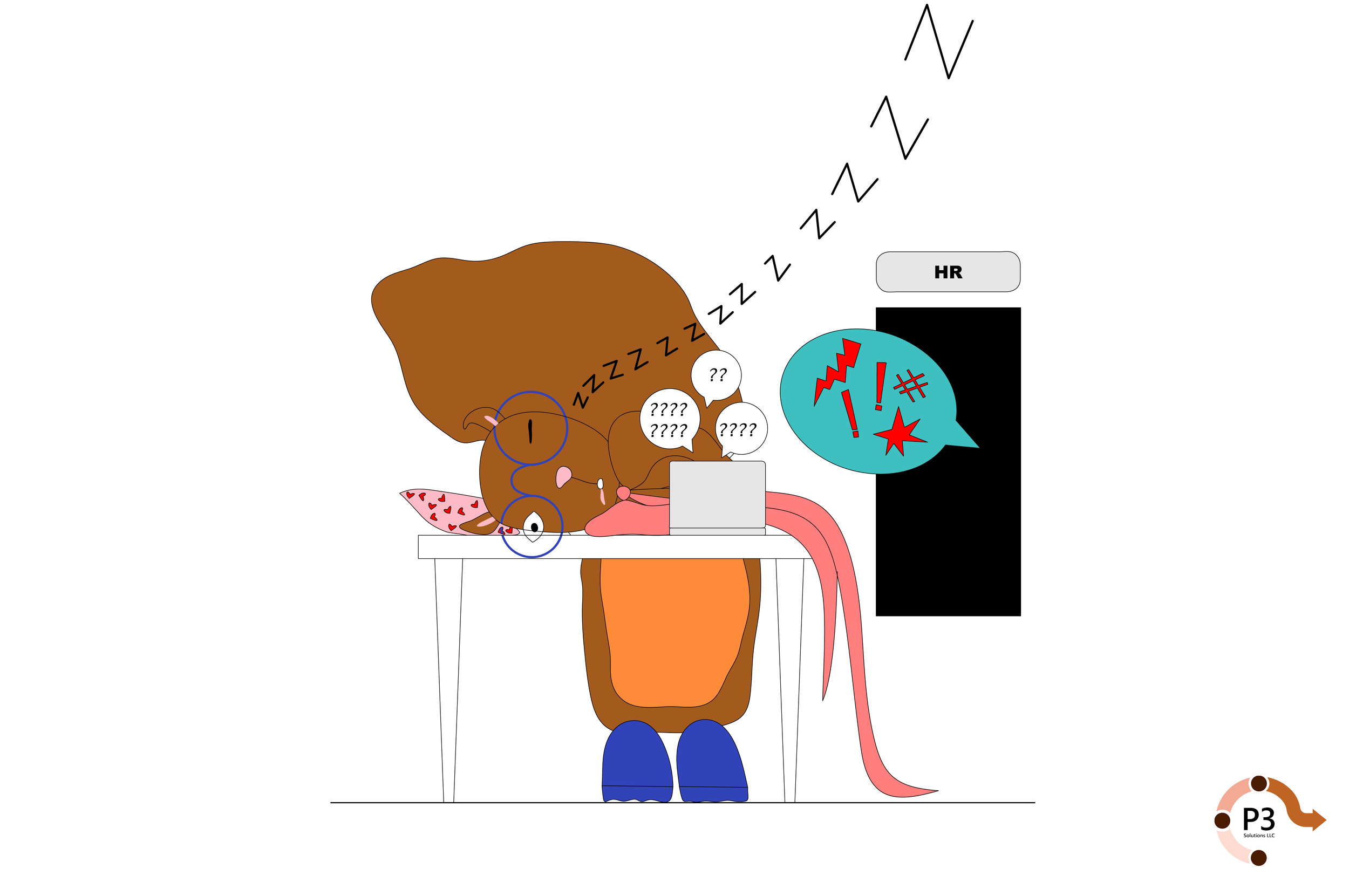
Wendy napping on the job.
Ah yes, classic Wendy — dead asleep at her desk while HR is mid-rant, veins popping, voice echoing through the office like a corporate banshee. Is she stressed? Overworked? No, Wendy just decided it was nap o’clock during a mandatory "Respect in the Workplace" seminar. While most of us are trying to keep our jobs and stay awake through painfully awkward roleplay videos, Wendy’s out here treating her cubicle like a luxury spa.
Pro tip: if HR is yelling and you're snoring, you're probably doing the workplace thing wrong — unless your long-term career goal is "unemployment with benefits."
The blame game
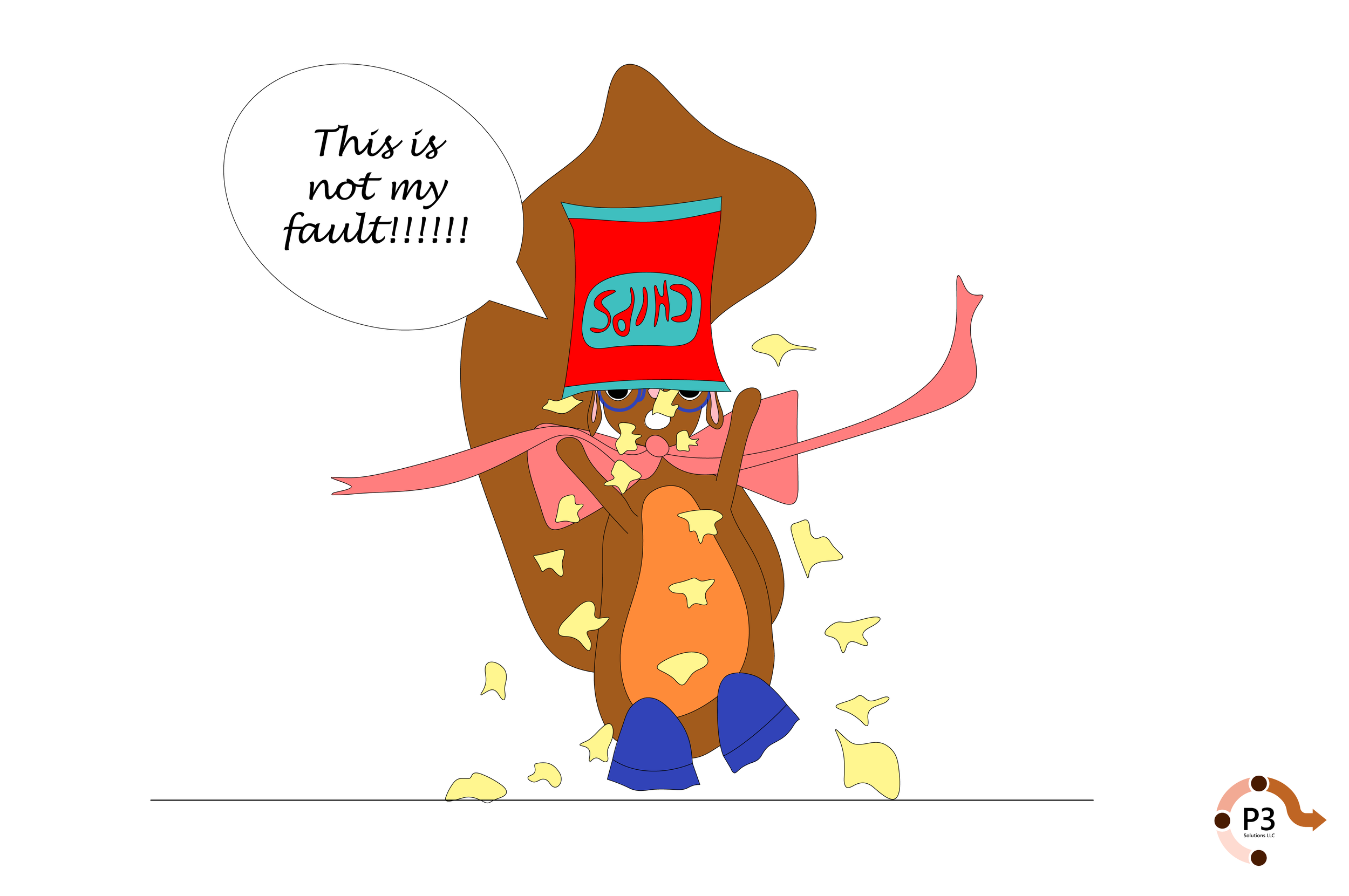
Wendy blaming everyone but herself.
Whether the printer jammed, the email didn’t send, or the coffee machine caught fire, Wendy is definitely not to blame. But here’s the thing: constantly dodging responsibility (no matter how fluffy your tail is) doesn’t win you any workplace awards — unless it's for "Most Likely to Vanish When Things Go Wrong." So take a lesson from our furry friend: own your slip-ups. It’s less exhausting than the blame game, and way less nuts.
Creative slump
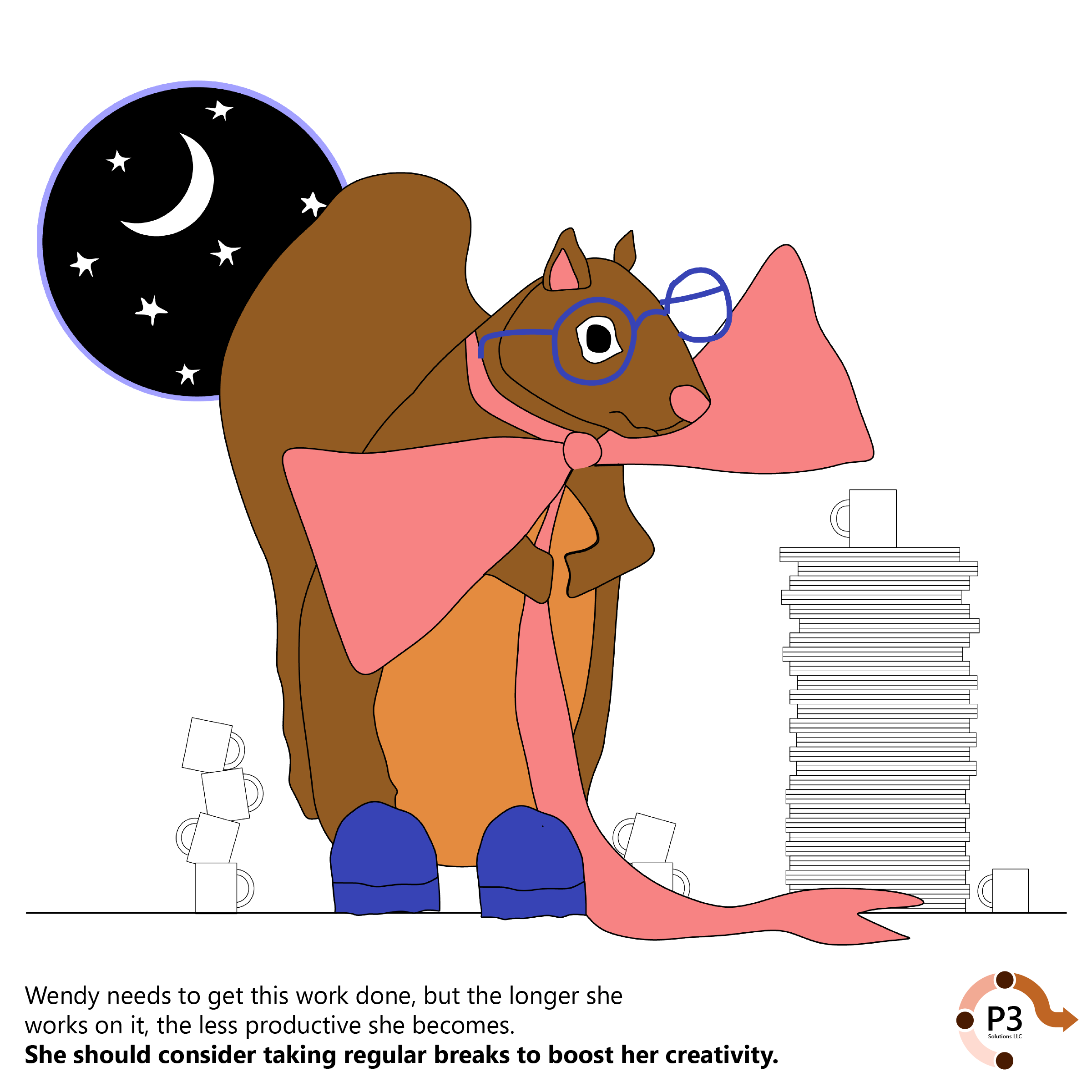
Wendy needs a break.
Lately, Wendy’s creativity has hit a serious slump. She finds herself stuck in a rut, struggling to come up with fresh ideas or think outside the box. Tasks that once felt exciting now seem repetitive, and brainstorming sessions often leave her staring at a blank page. The frustration has started to affect her confidence and productivity, reminding her that sometimes the best way to get her creative spark back is to slow down and take better care of herself.
Poor time management
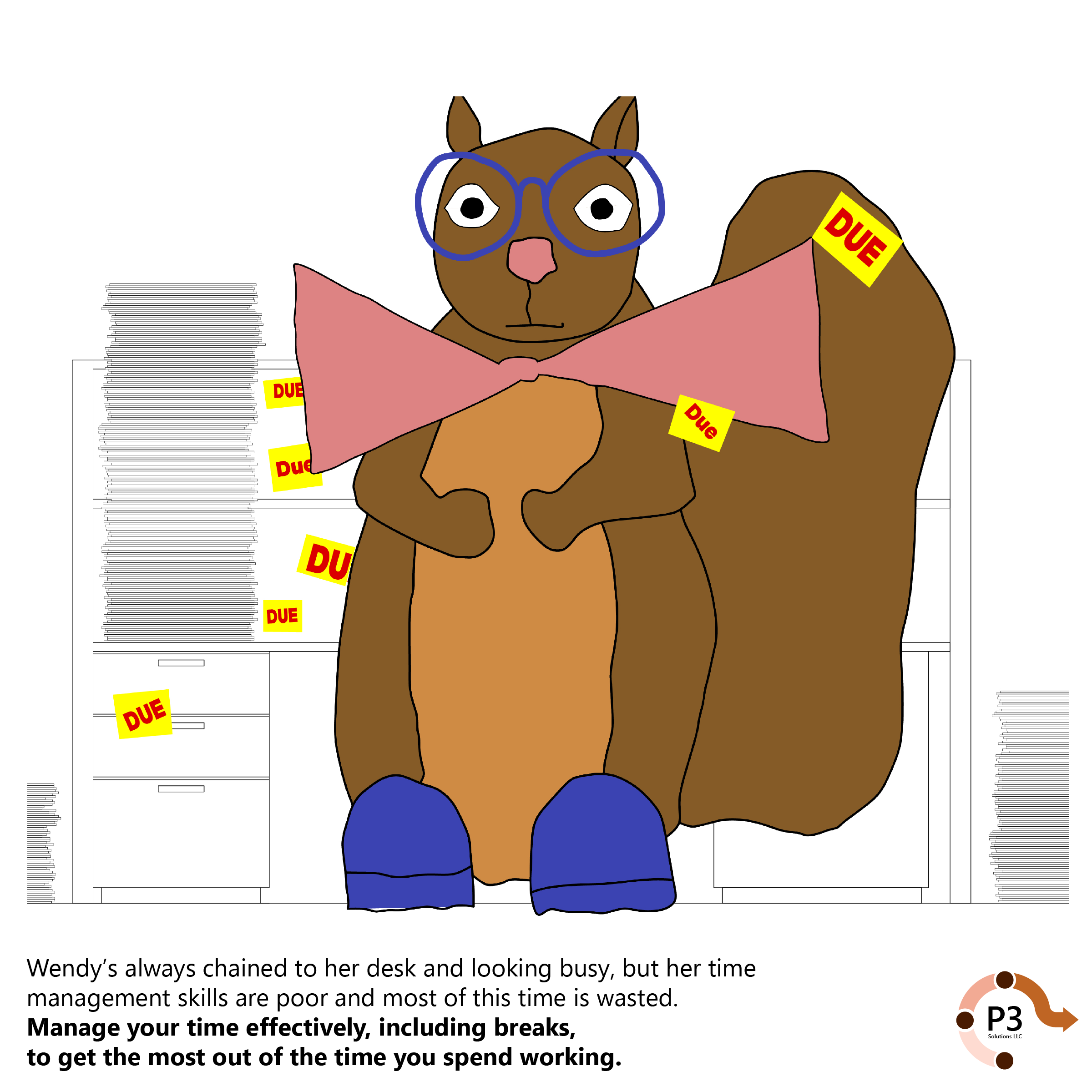
Wendy looking busy… but really just wasting time.
Wendy’s struggle with poor time management has become a major roadblock in her workday. She often underestimates how long tasks will take, starting her day with good intentions but quickly falling behind as small distractions and unexpected tasks pile up. As deadlines approach, she finds herself scrambling at the last minute to finish everything, which leaves her feeling stressed, rushed, and unable to give her best work the attention it deserves. Over time, this cycle has made her days feel chaotic and overwhelming, highlighting how much better things could run with a clearer plan and better time management habits.
Unnecessary responsibilities
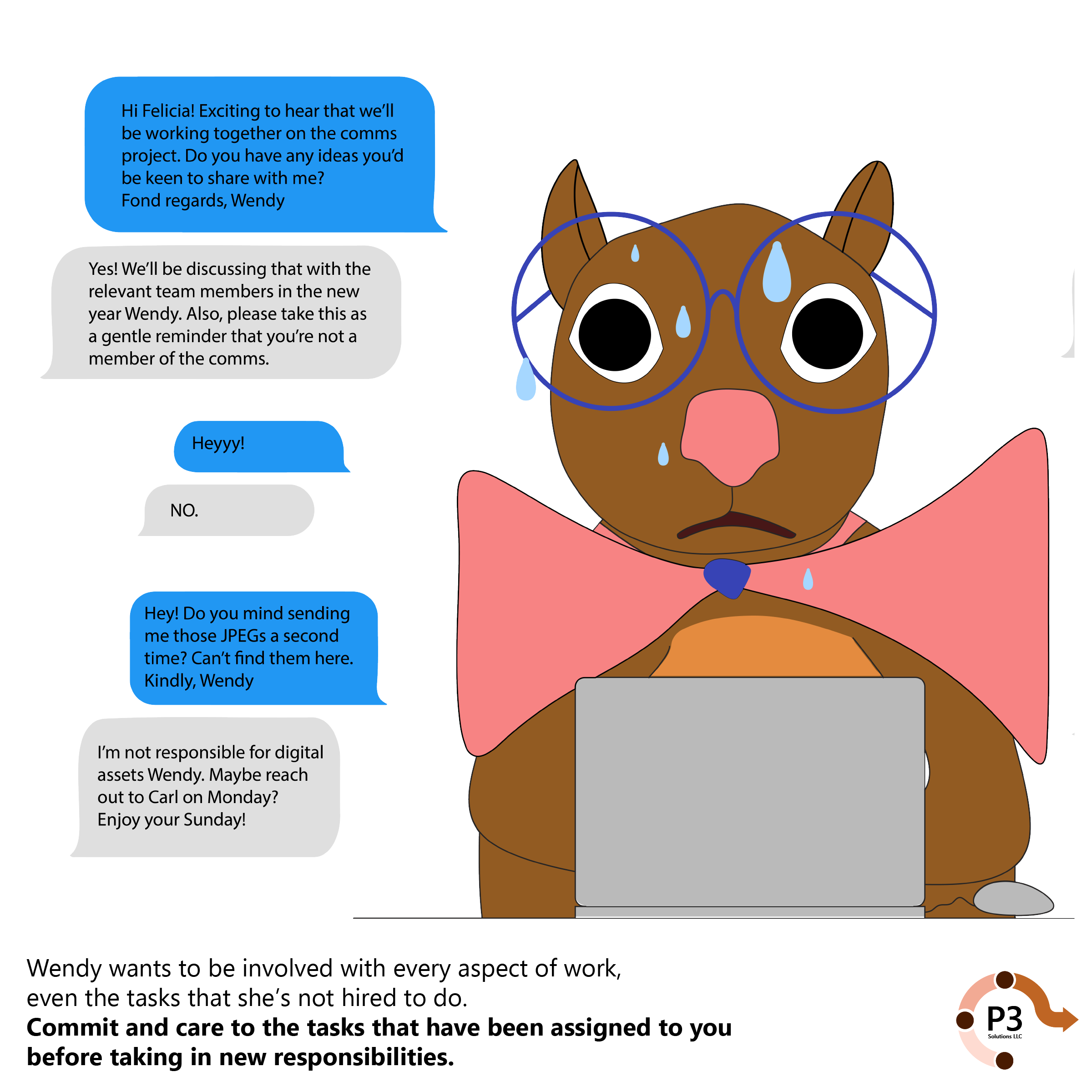
Wendy stressing about unnecessary tasks.
Wendy has a tendency to take on unnecessary responsibilities, often volunteering for tasks outside her role without fully considering how much she already has on her plate. While her intentions are good and she wants to be helpful, this habit quickly leads to an overwhelming workload. As she juggles too many commitments at once, her stress levels rise and it becomes harder for her to focus on the core responsibilities that truly matter in her role. Over time, spreading herself too thin leaves her feeling exhausted and less effective, showing that sometimes the most productive thing she can do is learn to say no and set clearer boundaries.
Read our post: Miscommunication and Overload in Workplace Channels.
Lack of preparation
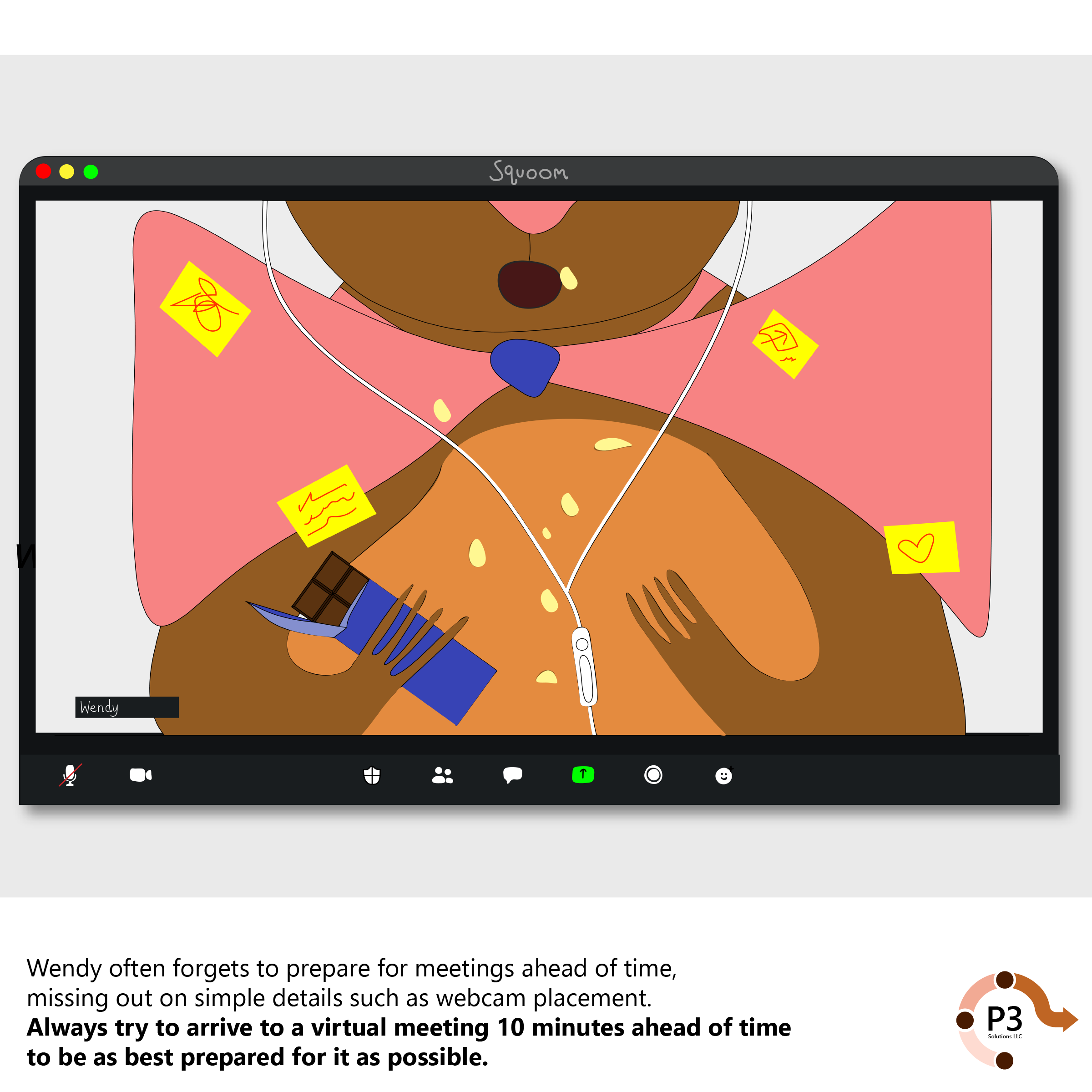
Wendy’s lack of preparation is evident to her colleagues, and stakeholders.
Wendy’s lack of preparation is often evident, as she sometimes shows up to meetings and projects without the necessary research or materials. Instead of feeling ready to contribute, she finds herself scrambling at the last minute to catch up or piece things together on the spot. This not only adds unnecessary stress but also means she occasionally misses opportunities to share ideas, provide useful input, or fully engage with the discussion. Over time, this pattern makes her workdays feel more reactive than proactive, highlighting how a little preparation ahead of time could help her feel more confident and effective.
It’s also one example of being passive-aggressive in the workplace.
Don’t be like Wendy!
In the end, Wendy’s mistakes serve as a reminder of the importance of preparation, time management, and setting boundaries in the workplace.
Don’t be like Wendy — learn from her missteps, stay focused, and approach your work with intention to succeed and thrive.
Need help? We offer best practices and lessons learned from our 25+ years in business. We also love coming up with creative solutions to solving unique challenges — even ones like Wendy!
Contact us to see how we can help you achieve your professional goals.