
The Impact of Poor Communication on Team Dynamics
Written by Joseph Philipson.
Originally published March 27, 2025
Part one of our five-part series on poor communication.
All images are P3 originals, courtesy of Hadi Madwar.
Every successful team needs communication. Effective communication leads to cohesive and efficient workflows when coordinating tasks, aligning goals, and resolving conflicts. However, when communication is poor, the devastating effects will be felt within the team and workplace. They can lead to disjointed team dynamics, stunted productivity, and damaged morale.
Collaboration and agility are paramount to any modern workplace, and poor communication isn't just an inconvenience; it could even be a liability. Teams need accurate information to stay on track and meet their deadlines. Unclear messages, missed updates, and a lack of transparency can all cause confusion and frustration. If not dealt with, these issues can compound.
Any organization aiming for growth must prioritize clear communication at its core. This includes adopting streamlined approaches and new technologies. Today, we won't be discussing the best communication practices. Instead, we'll be highlighting the potential risks of poor communication on team dynamics, underscoring the crucial role of clear communication in professional team settings.
Defining Poor Communication
If poor communication could be easily defined, we'd never really have a problem with it. For our purposes, the simplest way to explain poor communication is when information is unclear, incomplete, or misunderstood.
Poor communication is one of the most cited workplace challenges and many organizations struggle to bridge the gap between leadership and employees.
We must first eradicate the idea that we're blaming a single person for poor communication. After all, communication comes in two parts from two individuals: the speaker and the sender.
In a workplace, you have to remember that both of these individuals play a part in communication. Always address the issue of poor communication as something that every individual involved can work on and improve.
Imagine an instance where the project expectations and goals aren't clearly stated. Different teams mightn't effectively align their efforts and end up pulling in slightly different directions. Once the work is done, there'll likely be delays as things need to be reworked.
Similarly, good feedback is essential as it removes any uncertainty. A lack of feedback can leave employees unaware of their progress or feel undervalued regarding their contribution to team objectives.
A deadline like "as soon as possible" is unhelpful. It indicates a timeframe, but the priority needs to be inferred by team members. Does this mean "as soon as possible; deprioritizing every other task immediately" or "as soon as you've completed your other pending tasks"?
Interpersonal dynamics are also harmed when team members don't effectively communicate their thoughts or intentions. This can lead to a ripple effect of misunderstandings, which might be hilarious in a sitcom but no laughing matter on high-stakes work projects.
Key Impacts on Team Dynamics
Poor communication will do so much more damage than create ineffective workflows. It can completely undermine the structures on which team dynamics are built.
First, productivity is hurt, but then it permeates through entire working relationships and causes every aspect of a team's operations to rot.
Productivity
Productivity is the first thing to suffer. Time spent clarifying unclear instructions (after the fact), correcting mistakes, or waiting for missing information is wasted time.
Productivity can be reduced by 25% simply by poor communication.
“If a project manager offers vague directions for deliverables, the teams involved could take longer to complete the task.”
Morale
Emotional well-being is integral to how everybody performs and, ultimately, communicates. Team members who feel undervalued or misunderstood are far less likely to go the extra mile.
Poor communication is often the cause of workplace dissatisfaction, which leads to higher turnover rates and disengagement.
Engagement drops when employees feel they can't voice concerns or openly share ideas. This disconnect could lead to burnout, with unresolved frustrations accumulating over time.
Relationships and Trust
A team can't work if the members don't trust each other. Poor communication, particularly misunderstandings, perceived slights, or inconsistent information, can lead to conflicts and resentment.
Without clear communication, teams may never foster a mutual understanding or be able to collaborate effectively.
“Imagine if a team member has misunderstood their remit and responsibilities and encroaches on another team member’s role. This could ultimately lead to conflict, damage relationships, and disrupt workflows.”
This is typical behavior for Wendy: what NOT to do in the workplace.
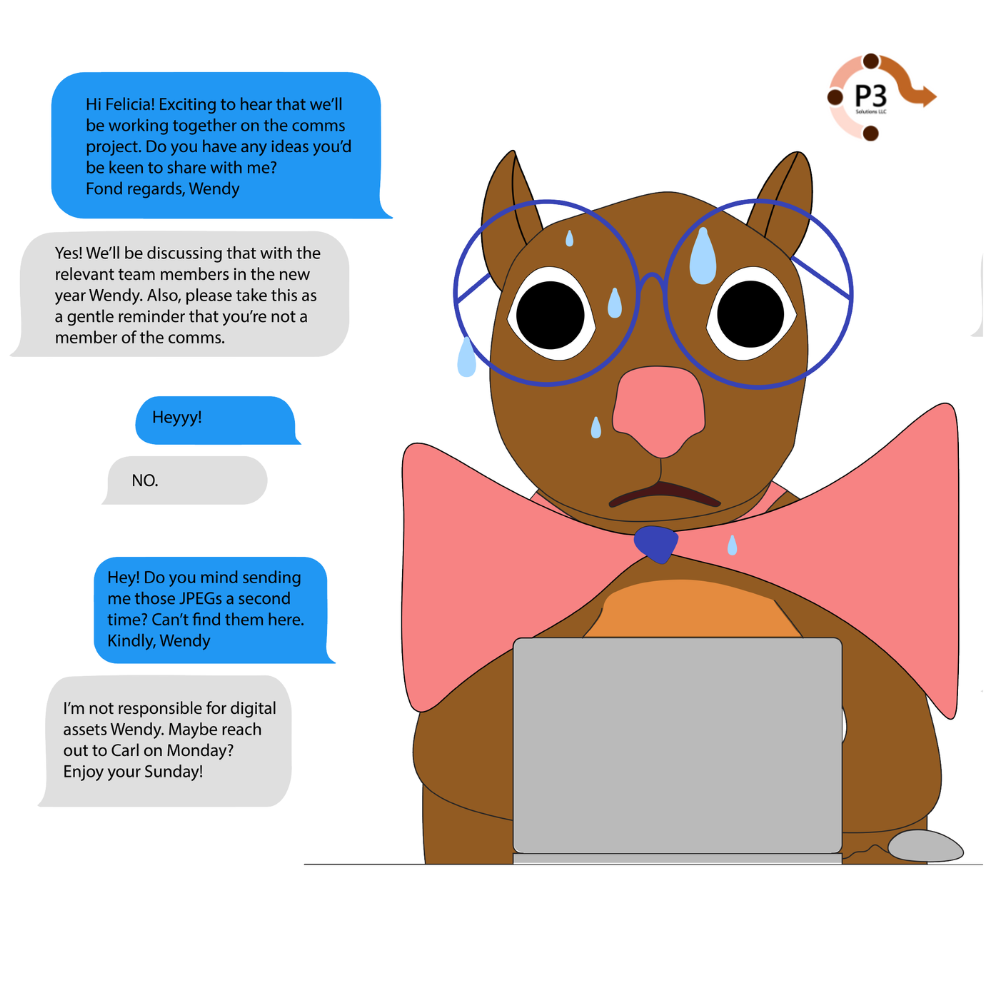
Refusing to Communicate Clearly
Refusing to communicate clearly is not only pathetic, but it offers no value to either the sender or receiver. It’s also one of the most annoying passive-aggressive behaviors in the workplace.
Whether it's because of ambiguous instructions, inconsistent messaging, or simply not actively listening, when teams don't communicate clearly, they invite confusion, frustration, or inefficiencies into their workflows.
Building Trust and Collaboration
Communication greases the wheels and is the cornerstone of trust and collaboration. Poor communication leads to team members losing confidence in their leaders and colleagues. Teamwork requires trust, but unclear communication can lead to doubts and suspicions.
“A manager who doesn’t outline key objectives or expected outcomes runs the risk that different team members interpret the task differently.”
Aligning Team Goals
Without proper communication, opportunities can be missed, and inefficiencies creep into workflows.
Teams need a common understanding of their priorities and goals, which can only be achieved by prioritizing clear and accurate communication. The worse the communication, the worse the productivity within teams.
The Role of Leadership in Communication Clarity
Leadership's role is to set the tone for team communication, literally leading by example. Leaders need to have clear communication habits and eradicate ambiguity. Uncertain employees will ultimately end up disengaged.
“Vague instructions and overusing jargon can exacerbate the issues caused by poor communication. Active listening, regular updates, and open dialog can improve clarity and team cohesion.”
Strategies for Clear Communication
Clear and effective communication takes work, but it's not overly complicated. Teams can start implementing these simple strategies to improve their communication:
· Summarizing Key Points: Ensuring everyone understands critical details before moving forward.
· Feedback Loops: Creating opportunities for team members to ask questions or seek clarification.
· Using Collaboration Tools: Platforms like Slack, Asana, or Trello help streamline communication and ensure everyone is on the same page.
These practices could foster more productive and engaged team environments.
Spreading Misinformation
Whether actively or passively spread, misinformation can destroy team dynamics far more quickly than they can be built up. Unlike simple miscommunication, misinformation involves spreading incorrect or incomplete information, which can cause confusion, mistrust, and poor decision-making.
Misunderstandings and Conflict
Misinformation can quickly lead to conflicts within teams. Incorrect details can misalign expectations or cause team members to act on assumptions. Most misinformation will lead to frustration and blame being thrown around .
If a manager mistakenly communicates an inaccurate project deadline, team members may alter task priorities, miss deadlines, or deprioritize high-priority tasks.
Loss of Productivity
Misinformation quickly affects operations. Teams working with inaccurate information often need to revisit, revise, or even restart tasks.
Misinformation increases workloads and delays the completion of crucial tasks, especially in high-stakes environments. Of course, poor communication can also be detrimental to lower-stakes situations!
Decreased Morale and Trust
Misinformation will corrode team morale and trust. Repeated instances of incorrect or incomplete information will lead team members to regularly question the reliability of any information they get.
Misinformation leads to disconnection, with teams ultimately lacking a sense of unity or shared purpose.
Strategies to Combat Misinformation
With some deliberate effort and structured systems, you can reduce the spread of misinformation within companies and organizations, starting with these strategies:
· Encouraging Open Dialogue: Teams should feel empowered to seek clarification when faced with conflicting or unclear information. Leaders can model this behavior by actively soliciting questions and feedback.
· Double-Checking Facts: Leaders and team members should verify the accuracy of their information before sharing it widely. Collaborative tools like shared documents or project management platforms can help maintain consistency.
· Creating a Culture of Accountability: Establishing clear accountability for communication ensures that individuals take responsibility for the accuracy and clarity of the messages they share. Regular training on best practices for communication can reinforce this culture.
Misinformation can disrupt operations and damage team trust and morale. Look to address the root causes and rectify issues with robust solutions.
Building a Stronger Team Through Better Communication
A pervasive issue that silently undermines talented and well-resourced teams, poor communication comes with far-reaching consequences.
Productivity, morale, and trust can all be damaged, disrupting operations and strained relationships across organizations.
Fixing poor communication begins with awareness. Leaders and team members must recognize and avoid the behaviors and habits that lead to unclear and inaccurate messaging.
Clarity, open dialogue, and accountability can create stronger, more cohesive teams.
Remember that communication isn't just what's being said; it's how it's being said. Active listening, collaboration tools, and consistent feedback loops can help everybody stay on the same page.
Effective communication is a necessity, and those who invest time and resources into it will see stronger team dynamics, increased efficiency, and higher morale.
Need support with your communication? P3 Solutions can help!
Contact us and tell us how we can help you meet your next challenge.
Further Reading:
https://www.simpplr.com/blog/2021/causes-effects-poor-communication-workplace
https://www.concretecms.com/about/blog/intranets/the-impact-of-poor-communication