
Reviving Syria Through Small Businesses
Written by Tia Saliba.
Originally published August 22,2025
Part two of our five-part series on Reviving Syria.
All images are original, courtesy of Hadi Madwar.
At P3 Solutions, we remain committed to the belief that sustainable recovery in Syria must be grounded in human rights, economic dignity, and the empowerment of local communities. In this second installment of our Reviving Syria series, we turn our focus to the entrepreneurs who are not just rebuilding businesses—but reimagining Syria’s future from the ground up.
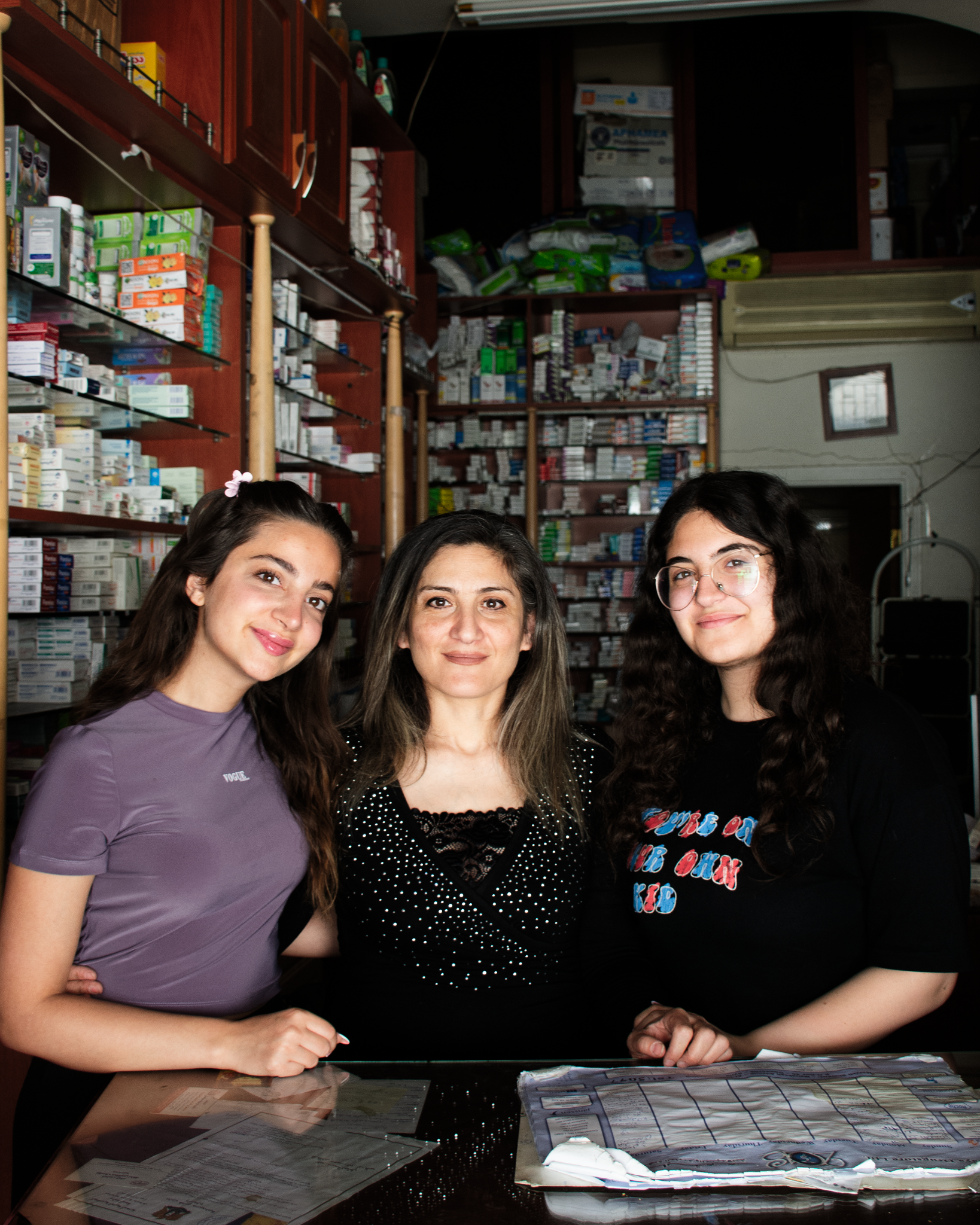
Inside a family-owned pharmacy in Old Damascus.
These individuals are more than business owners; they are changemakers navigating complex challenges with creativity, purpose, and resilience. Whether launching small enterprises in local markets or driving innovation through tech and social ventures, Syrian entrepreneurs are laying the groundwork for long-term recovery and inclusive development.
The Syrian crisis, after nearly 14 years of devastation inflicted by the Assad regime, has affected nearly every sector of the country’s economy, particularly entrepreneurship and small business development. For example, over 52 percent of Aleppo's infrastructure was been destroyed or damaged.
The lack of electricity has left many Syrians in the dark, and critical infrastructure like roads, water systems, and telecom networks remain damaged or dysfunctional. Entire marketplaces in Aleppo, Homs, and Deir ez-Zor were wiped out by the regime’s and its allies’ aerial bombardment.
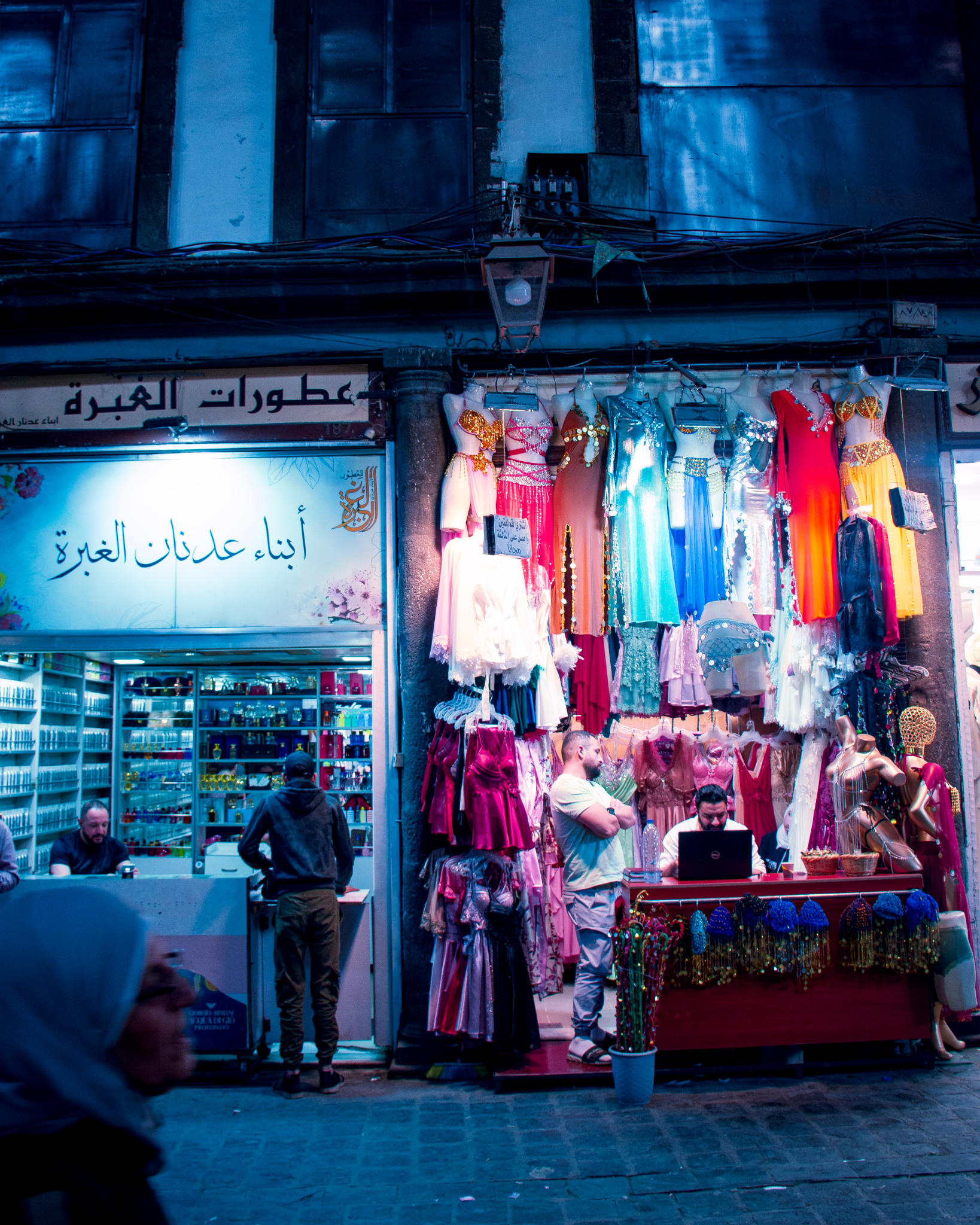
Garment shop in the Souk al Hamidiyeh (Hamidiyeh Bazaar).
About 8.1 million Syrians were internally displaced, and nearly as many fled the country—resulting in a massive loss of both skilled labor and consumer demand. Sanctions, hyperinflation, and a collapsed banking system further isolated Syria from global trade. Most small businesses were forced to shut down, pivot to informal operations, or rely on remittances and barter systems to survive. Frequent power outages, fuel shortages, and unreliable Internet access made it nearly impossible for businesses to operate consistently, especially startups reliant on logistics, communication, or digital services.
After more than a decade of conflict, Syria's entrepreneurial landscape remains fragile, but shows signs of resilience and rebirth. Amid this devastation, small enterprises have emerged as the economy of Syria is publicly struggling. Micro, Small, and Medium-sized Enterprises (MSMEs) now account for around 70% of employment and roughly 40% of the GDP. These small businesses provide an income to millions and have adapted under circumstances like sanctions, inflation, and power outages.
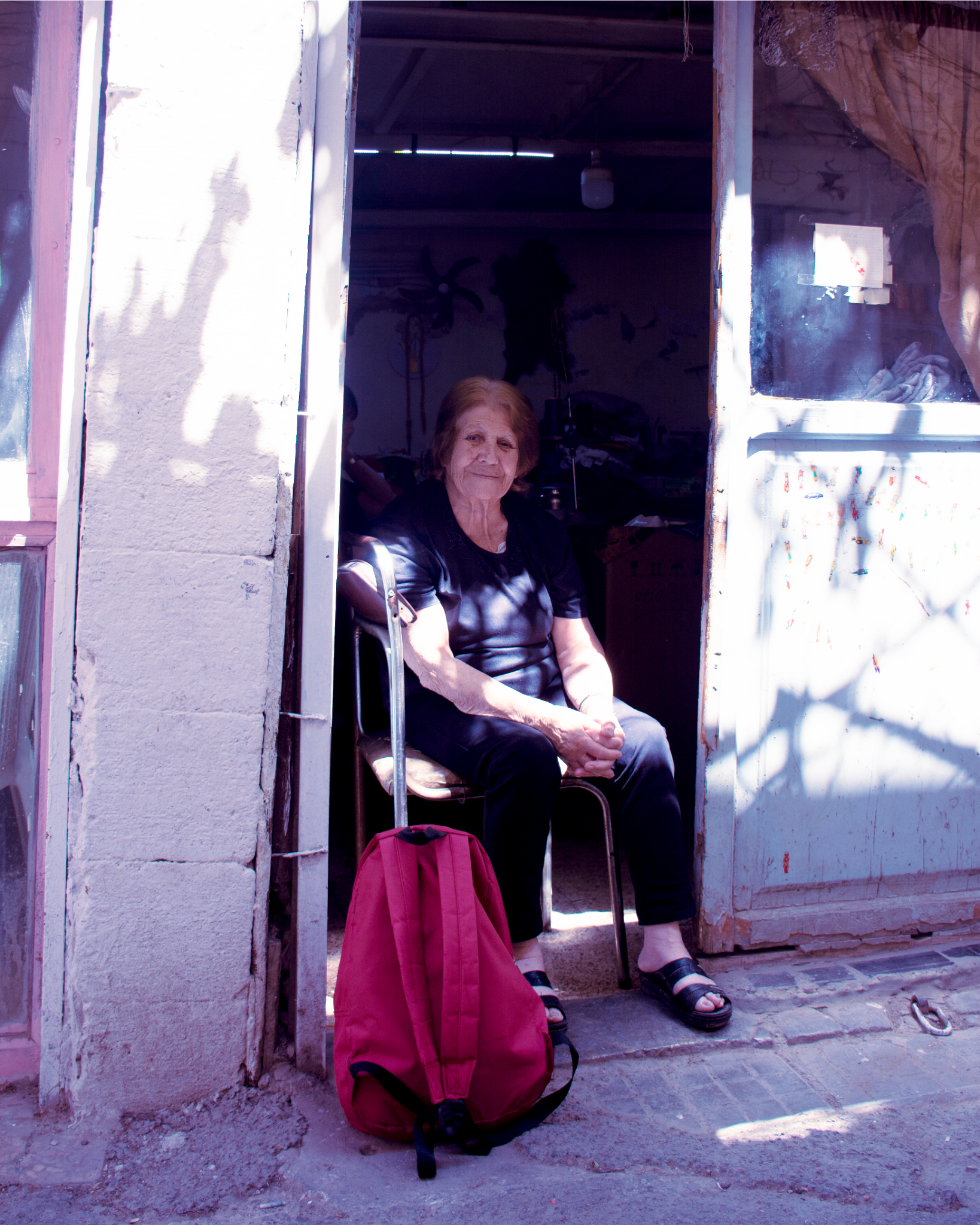
Lady outside a seamstress shop in Old Damascus.
Earlier this year, the transitional Syrian government, under President Ahmed al-Sharaa, announced a series of market-oriented reforms that aim to revive the private sector. This reform package represents the clearest signal to date of the government’s intent to shift away from the long-standing protectionist, centrally controlled economic model that dominated the post-2011 era.
While the road ahead is long—the UNDP estimates that full recovery may require $36 billion in investment and could take more than 5 decades—the intersection of local innovation, international support, and economic reform offers cautious optimism for a new era of entrepreneurship in Syria.
In addition, legal protection for businesses is very weak. Dispute resolution through the courts remains slow, inefficient, and sometimes ineffective. Many entrepreneurs rely on informal mechanisms such as tribal mediation to settle disputes. Moreover, property rights have declined, making it extremely hard for businesses owners to secure land or invest.
Beyond legal frameworks, support for small business is limited or non-existent. The government mostly targets large enterprises, while small businesses rely on their networks or aid from Non-Governmental Organizations (NGOs).
In the third part of our Reviving Syria series, we shine a light on the power of local solutions in addressing national challenges.
P3 has already conducted four fact-finding missions to Damascus and will be returning for more in-depth studies this fall.