When Proposals Become Pitches
Rethinking the Purpose of Grant Applications
Written by Joseph Philipson.
Originally published August 18, 2025.
All images have been generated using AI.
Nonprofits can no longer just tell funders what they do, they have to sell their impact. With intensifying competition for funding and evolving donor expectations, NGO grant proposals are fundamentally shifting from narrative-heavy documents to focused, persuasive pitches. A reflection of the deeper changes in how funders evaluate value and long-term potential, here is how nonprofits can adapt their proposals to survive.
From Proposals to Pitches: What’s Changing and Why?
NGO grant proposals are now more closely aligned with strategic pitches, drawing inspiration from the private-sector playbook. Using both private-sector language and expectations, this is due to the shrinking grant pool, increased competition, and funders looking for shorter, more focused arguments around a unique value proposition and a return on impact.
NGOs should adopt pitch-deck techniques, which include clarity, differentiation, and storytelling. Focus on the problem, highlight a unique solution, and make sure that it's persuasive. Organizations looking for expert guidance on transforming traditional proposals into strategic communications can connect with P3 Solutions for tailored support.
A study of NIH, NSF, and private research grants found that proposals using promotional, persuasive language were twice as likely to be funded.
The Center for Effective Philanthropy's “State of Nonprofits” survey found that 81% of nonprofit leaders say funders now prefer relational trust and mission alliance. Proposals now have to convince strategically rather than inform comprehensively.
Tightened word limits, online scoring rubrics, and a preference for structured summaries mean that many NGOs are now designing proposals to resemble concise donor pitches. They lead with impact, differentiate through narrative, and invite funders to think about partnership rather than charity.
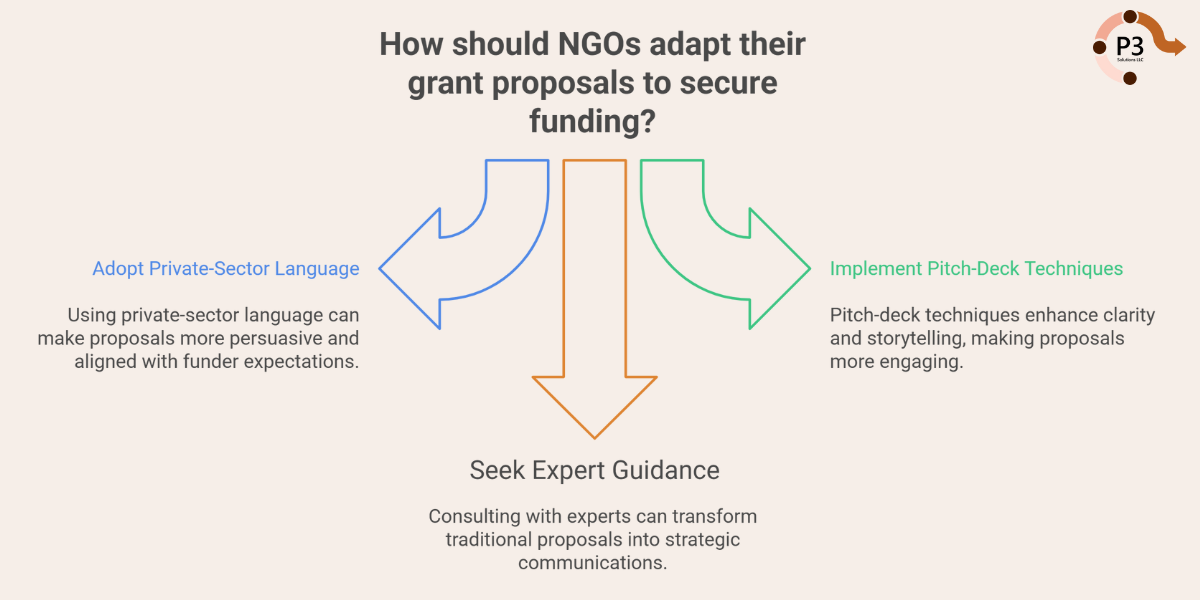
How should NGOs adapt their grant proposals to secure funding?
The criticisms are reasonably obvious. With this shift, organizations with greater marketing or storytelling resources will perform better. If proposals now work like pitches, then clarity, positionality, and persuasive framing are mission-critical.
Selling Impact: How Private-Sector Language is Shaping NGO Narratives
The structure of the proposal landscape isn't the only thing that's changing; so is the language! NGOs must describe their work in terms that resonate with the private sector, so that it aligns with funders' thinking in terms of strategic alignment, return on investment, and value delivery.
A heartfelt mission statement and needs assessment are no longer enough. NGOs need to explain precisely what they're offering, explain their comparative advantage, and demonstrate the measurable outcome that can be "bought" with the grant. If you need help sharpening your value proposition or aligning your language with funder expectations, P3 Solutions offers proposal coaching and communications strategy services to support your efforts.
A well-crafted "value proposition" is now par for the course in competitive grant applications. Organizations must demonstrate how their intervention addresses a problem more effectively, efficiently, or sustainably than the alternatives. They can no longer state what they do. NGOs like Evidence Action and One Acre are using a cost-per-impact unit or an evidence base per dollar spent, which more closely mirrors the investment-style framing found in venture capital reports rather than traditional grant proposals.
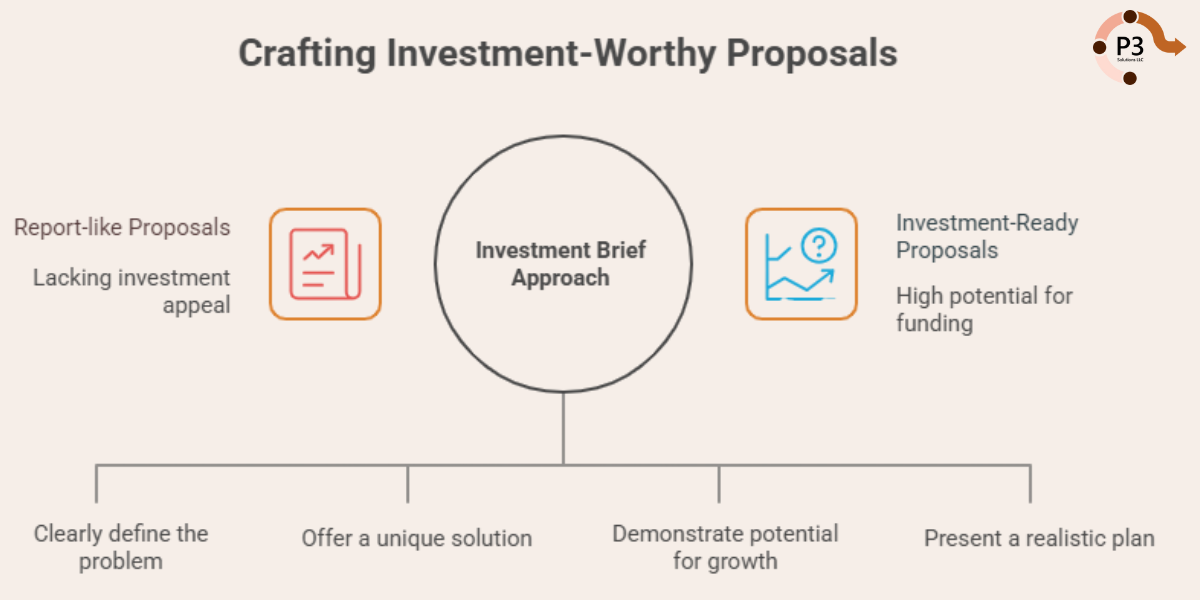
Crafting investment-worthy proposals
In high-stakes competitions like USAID's Development Innovation Ventures (DIV), applicants must demonstrate "impact per dollar" and scalability in business terms. Funders are applying venture-style thinking to development work and expect applicants to speak their language.
Even philanthropic organizations operate more like venture investors. The Mulago Foundation, which avoids proposal-based funding, looks for organizations with scalable, cost-effective solutions. They favor organizations that quantify impact per dollar and bring solutions to scale rather than lengthy pitch materials.
NGOs must also rethink their narratives. They can no longer describe programs; they must craft stories around "impact identity". Brand-driven strategy frameworks are needed to clarify positioning. Organizations like Mighty Ally advise nonprofits to define their niche or "impact identity" by articulating who they're best known for, how they deliver, and who they serve. Branding clarity turns proposals into purpose-led narratives that are easier for funders to evaluate.
Successful proposals are now less like reports and more like investment briefs. They must describe the problem, offer a distinctive solution, demonstrate evidence of scalability, and present a credible impact plan.
Differentiation in a Crowded Field: What Makes Your Proposal Stand Out?
Compelling proposals need to be more than just clear; they have to be memorable. Strategic storytelling, visual design, and customized alignment with donor priorities are all key here.
Strategic Storytelling and Signature Moments
High-impact proposals often begin with a narrative vignette: a real-world moment that grounds the problem in human terms. This storytelling technique creates an emotional anchor that stays with evaluators.
Organizations like Living Goods and BRAC often start with field-level anecdotes before moving on to the metrics to create narrative hooks that reviewers remember long after reading. Successful nonprofit narratives strike a balance between emotional storytelling and data-backed clarity, making both the human and analytical case compelling.
Design and Infographics for Instant Clarity
Clear visuals, such as timelines, cost-per-beneficiary charts, and region-specific impact maps, can enhance comprehension and make proposals more reviewer-friendly. Strong visual elements are more engaging for evaluators, increasing the likelihood that they will both remember and support the proposal.
Custom Language and Donor-Specific Targeting
Successful applications should examine the funder's language, strategy, and recent awards. The proposal's tone, section headings, and terminology have to adapt to deepen alignment and boost credibility. Funding chances can increase just with customization. P3 Solutions helps NGOs develop donor-specific narratives that resonate on both a technical and emotional level.
From Story to Evidence: Scaling with Data
Provide pilot metrics, scaling scenarios, and transparent assumptions. Scenario modelling and "per-dollar impact" projections can support narratives and demonstrate how the impact will scale under different funding levels. Scenario planning should align with proposal design to showcase impact pathways and financial resilience.
Case Studies: What Winning Proposals Get Right
To see what works in grant proposals, take examples from what's already worked. Standout proposals tend to articulate a focused solution, link measurable results to scalable potential, and communicate in a way that reflects a profound alignment with donor values.
BRAC
BRAC's proposals for large-scale funders, such as development banks and international agencies, tend to begin with a human story. From there, they zoom out into systems-level impact.
In an education proposal, for example, it'd be normal to start with the journey of a single student before presenting regional literacy trends, cost-per-trainee models, and scaling timelines. The narrative-then-data structure helps reviews to connect emotionally before mapping anecdotal proof to structural change. BRAC's program scaling across Bangladesh and several sectors serves as an excellent model of rooted storytelling combined with measurable outcomes.
One Acre Fund
One Acre Fund uses visually engaging proposals that strategically align with donor priorities.
In grants supporting farming programs, they utilize infographics that show projected yield increases and income impacts per farmer. Combined with cost-effectiveness data and donor strategy language, it's exceptionally clear that One Acre Fund is mission-aligned and results-ready.
Proposals stand out because they show impact rather than just describing it. This alignment helped support multimillion-dollar partnerships with foundations like Gates and Co-Impact.
Toward a Strategic Mindset: Proposals as Relationship-Building Tools
Proposals need to be an invitation to dialogue, trust, and long-term collaboration. At P3 Solutions, we collaborate with NGOs to develop proposal strategies that not only reflect project goals but also long-term partnership potential. NGOs treat proposals as the first step on a journey.
From ‘Send and Forget’ to Relational Intent
NGOs plan pre-submission consultations with program officers, follow-up conversations, and relationship-building activities such as site visits. Initiating dialogue early, like asking about donor priorities and sharing impact stories, can lay the groundwork for lasting relationships, which turn proposals into relational threads rather than isolated documents.
Building Trust Through Transparency and Stewardship
Well-crafted proposals include clarity on financials, risk mitigation, and governance. Donors want to see outcomes, maturity, accountability, and stewardship. Proactive communication, such as progress updates and donor recognition, can significantly improve retention and trust, especially among major contributors.
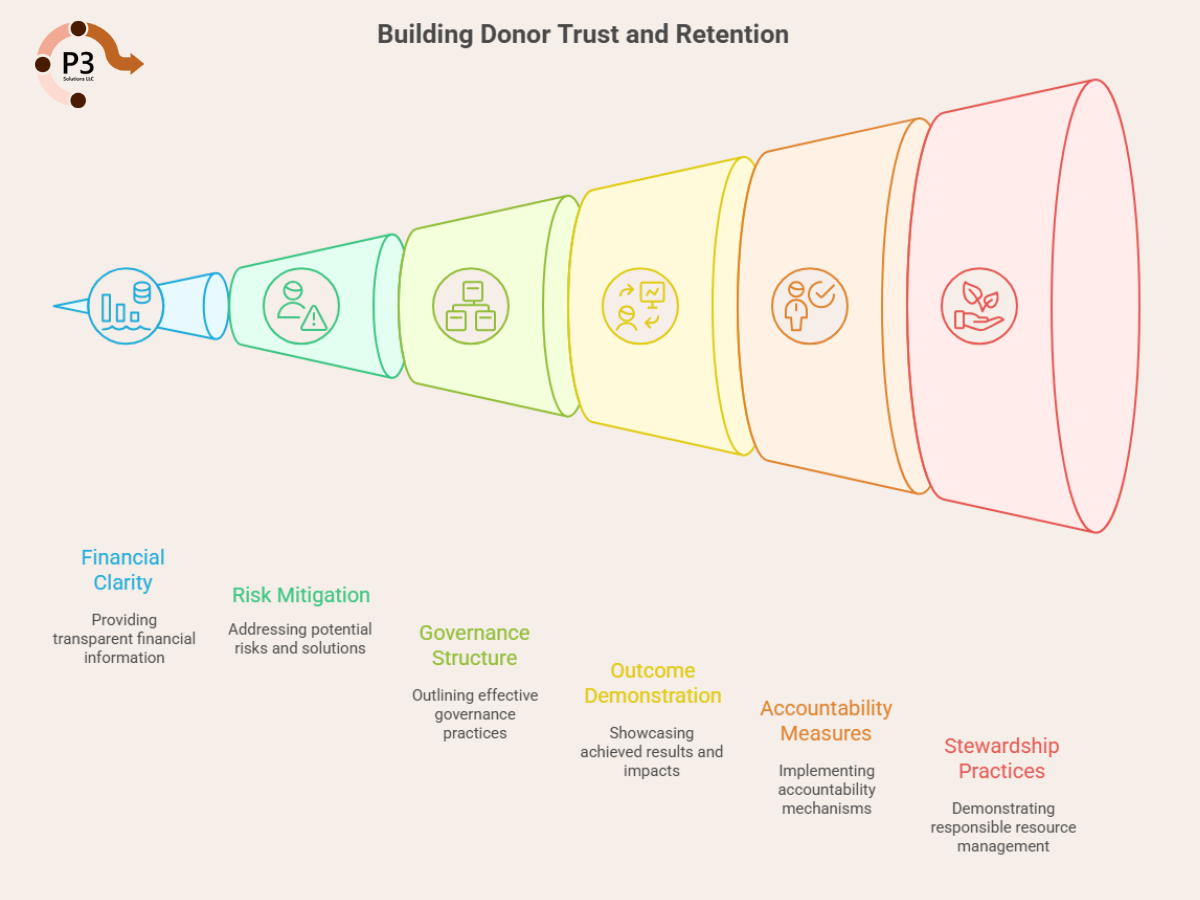
Building donor trust and retention.
Trust-Based Practices Begin Early
NGOs can reflect trust-based principles, such as minimizing reporting burdens, offering multi-year support, and sharing decision-making power. The Trust-Based Philanthropy Project outlines six grantmaking practices that redefine NGO-funder dynamics. When proposals acknowledge and reflect these principles, it's a sign that the NGO is looking to build a partnership, not just ask for funding.
Data Systems and Long-Term Signaling
By incorporating plans for data sharing, performance dashboards, and open communication, the NGO can position itself as a transparent collaborator. Proposals can demonstrate to funders that the NGO is committed to dialogue and accountability through clear grantee feedback loops.
Further Reading:
The Shrinking Grant Pool: Why NGOs Must Now Compete Like Businesses
Competing Without Losing Your Soul: What Does 'Winning' Look Like in the Nonprofit Sector?
The Invisible Link: Donor Agencies, Taxpayer Money, and Public Accountability