
Reviving Syria: How Small Businesses Are Leading the Way
Written by Tia Saliba.
Originally published September 5, 2025
Part four of our five-part series on Reviving Syria.
All images are original, courtesy of Hadi Madwar.
At P3 Solutions, we believe that rebuilding Syria requires more than large-scale interventions—it demands trust in the power of local action, rooted in human rights, economic dignity, and community resilience. In this fourth installment of our Reviving Syria series, we turn our attention to small businesses and their outsized role in driving recovery.
From neighborhood shops to homegrown service providers, small businesses are not only fueling local economies—they're restoring agency, dignity, and daily stability for communities navigating uncertainty. These enterprises create jobs, fill critical service gaps, and strengthen social fabric at a time when centralized systems remain fragile or absent.
In this piece, we explore how small businesses across Syria are becoming engines of recovery—and why supporting them is key to building a more inclusive and sustainable future.
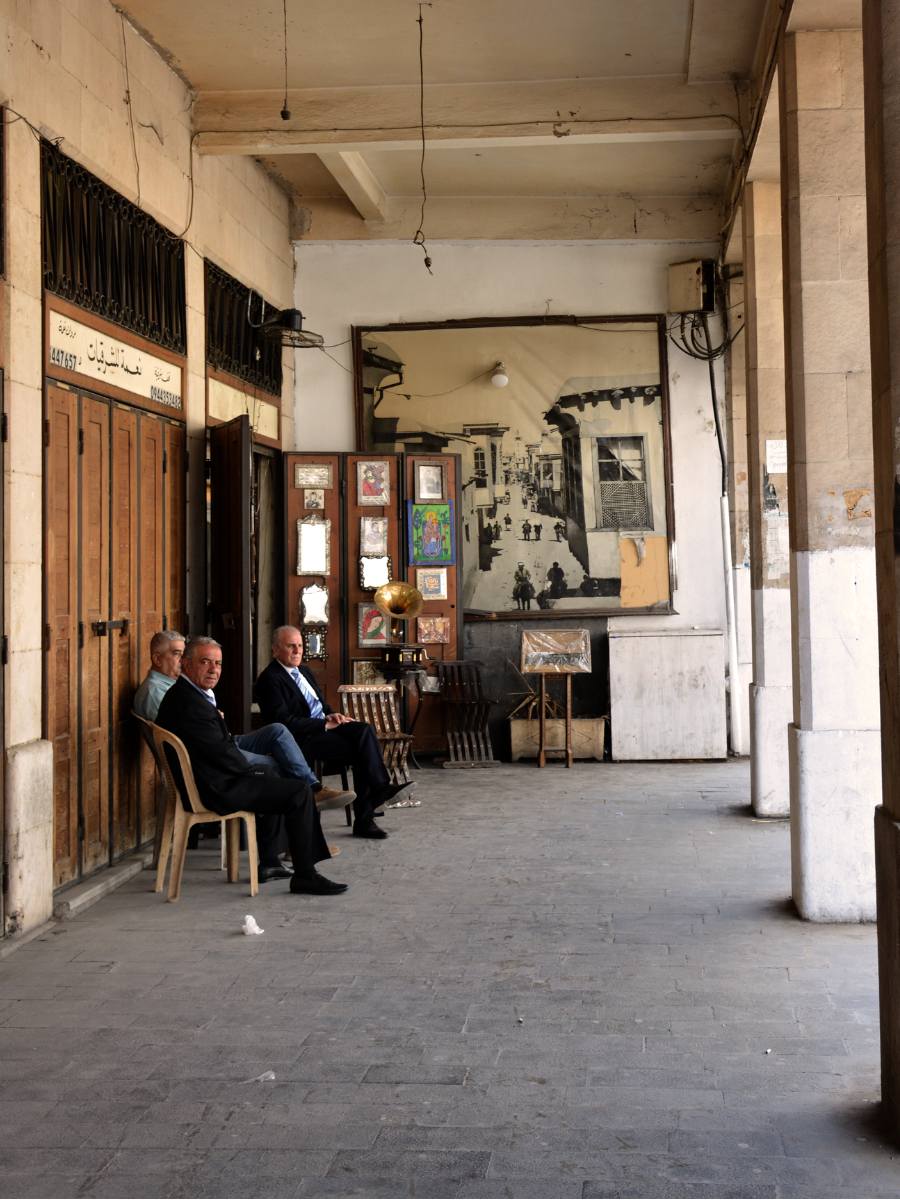
Bab Sharqi neighborhood on Easter Sunday.
Tourism is also being reimagined. The page, My Syria, promotes internal tourism by organizing trips and highlighting the beauty of the country through collaborations with local businesses. It gives Syrians a chance to reconnect with their roots and support small enterprises at the same time.
While Syrians continue to create and innovate with limited resources, international support has started to play a stronger role in helping them grow and sustain their ideas. In 2025, UNDP announced a $1.3 billion aid package aimed at rebuilding Syria’s economy, which includes direct support for small businesses, digital startups, and infrastructure improvements.
Programs by UNDP, ILO, GiZ, and the European Union are providing seed grants, vocational training, and mentorship to help new businesses launch—especially those led by youth and women.
Beyond funding, international projects are also creating spaces where entrepreneurs can connect and grow. Incubator hubs are opening in several areas to offer training and support, and Norway has partnered with the UNDP to fund a Renewable Energy Master Plan—an initiative that opens the door for clean-tech startups and sustainable business opportunities. Meanwhile, the Syrian diaspora is also stepping in.
In Turkey, a UNDP-supported project gave more than 150 young Syrian entrepreneurs access to mentorship, training, and in-kind grants to start businesses of their own.
But challenges still exist. Many Syrian entrepreneurs face strict banking limitations due to sanctions whose lifting has yet to be felt, making it hard to receive funds or scale their businesses. Infrastructure problems create barriers to consistent operation. And while initial support is growing, many programs don’t offer long-term follow-up, leaving entrepreneurs struggling after the first phase.
As I explored the landscape of Syrian entrepreneurship, I wanted to highlight a business that truly reflects the strength and spirit of what’s happening on the ground. That’s when I spoke with Dania Ayoubi and Mohamad Habbal, the co-founders of Nash Bakery in Damascus. This small business represents something much bigger: resilience, community, and creativity.
In the heart of Damascus, where economic collapse and war have challenged even the simplest dreams, Nash Bakery stands as a symbol of what patience, creativity, and community can achieve. It all began in 2018 when Dania Ayoubi, a new mother, started baking from her home kitchen. “I had just given birth to my son, and I felt this urge to create something,” she recalled. “I loved the food industry—YouTube videos, cooking shows—and I missed good cookies. So, I started making cinnamon rolls and chocolate chip cookies.”
Cookies were unfamiliar in Syria. “We had to build awareness from zero,” said Mohamad. “Explain the product, then deliver something better than expected.” And with no trained workers available, they taught their staff from zero. “People stopped valuing themselves because of the war,” Dania explained.
“We wanted to change the mindset from ‘just a job’ to something with meaning”
By 2022, Dania was running everything alone, production, sales, delivery—and was close to quitting. “I told myself; I can’t do this anymore.” That’s when she met Mohamad. “He gave me structure. A push. He saw the business not just as a bakery, but as a brand.” Together, they rebranded in 2023 as Nash Bakery, named after Dania’s two children: Naya and Bashar.
But challenges kept coming. Syria’s unstable exchange rate changed four times in a year, making pricing nearly impossible. “We couldn’t forecast anything,” Mohamad told me.
Running a bakery in Syria isn’t just about recipes and ovens—it’s about survival. Dania and Mohamad faced constant power outages, and with no stable electricity, they had to build their entire production schedule around power cuts. “We would bake late at night when the electricity came back,” Dania explained. “We relied on generators, but the fuel was expensive. We even invested in lithium batteries just to keep our machinery running.” But the energy crisis wasn’t the only obstacle—they couldn’t expand operations or buy new equipment because most of their profits went toward covering the basics: electricity, fuel, transportation, and ingredient shortages.
“Every shortage taught us something new. We learned how to be efficient with everything.” Despite all this, they remained committed to quality and never let these challenges show in their final product.
Today, Nash Bakery employs around 10 local team members and continues to grow. They’ve partnered with BeeOrder, joined My Syria events, and rely heavily on social media and pop-up events to maintain visibility without traditional marketing tools. “Our strength was in quality,” said Mohamad. “Even from home, we made sure our product could compete with high-end cafés.” He added, “If you succeed in Syria, you can succeed anywhere else.”
When asked what would help the most, both founders agreed: training, funding, and infrastructure. “We don’t need handouts,” Mohamad said. “We need tools to help us keep going.”
Their advice to young Syrians? Be consistent. Stay patient. Don’t give up. “There were so many times I was ready to walk away,” Dania admitted. “But something inside me told me to keep going. And I’m so glad I did.”
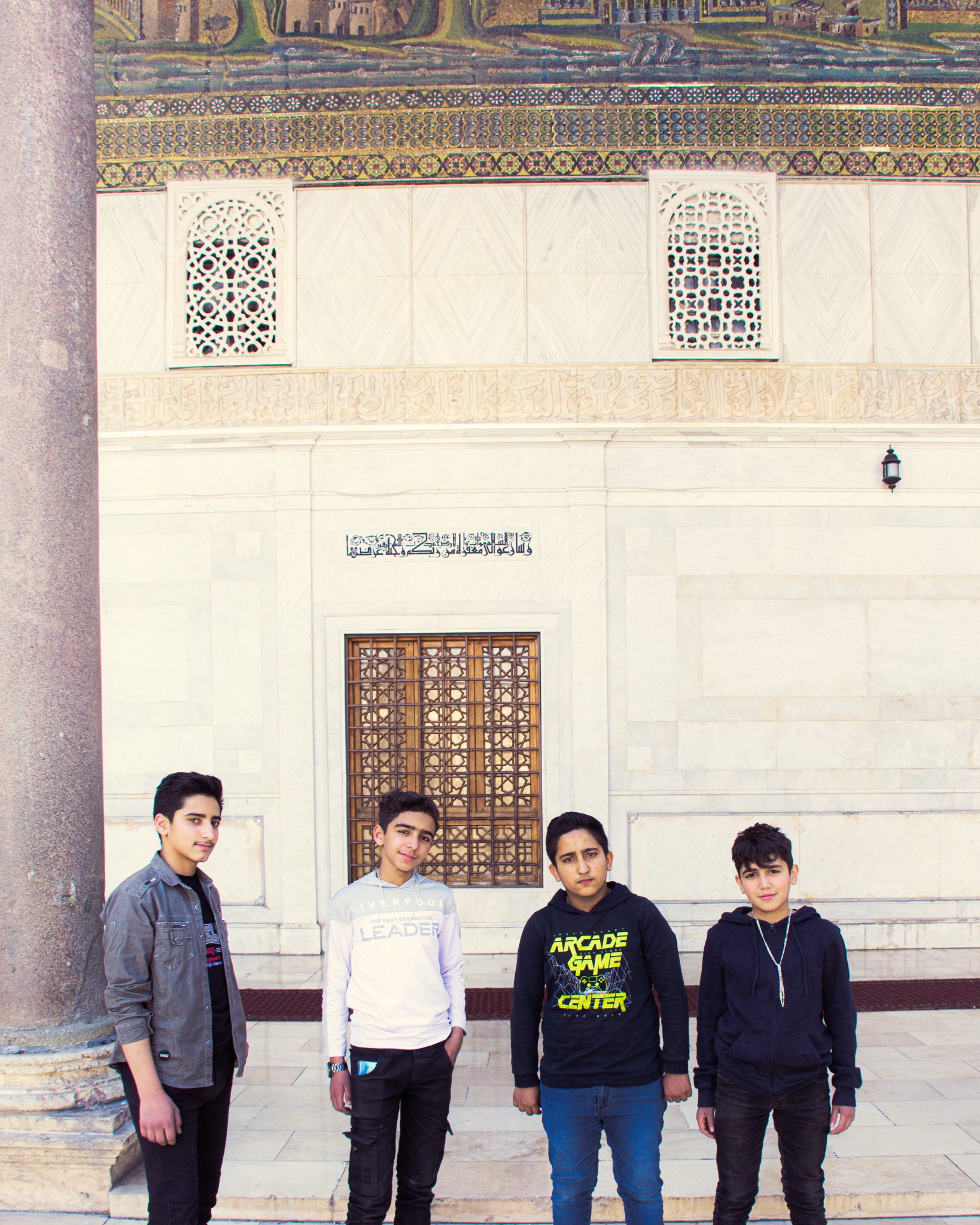
Four boys in the courtyard of the Umayyad Mosque.
That’s where the international community comes in—because rebuilding Syria isn’t something its people should have to do alone.
In the fifth installment of our Reviving Syria series, we celebrate the enduring entrepreneurial spirit that continues to shine despite adversity.
P3 has already conducted four fact-finding missions to Damascus and will be returning for more in-depth studies this summer.