
Competing Without Losing Your Soul
What Does 'Winning' Look Like in the Nonprofit Sector?
Written by Joseph Philipson.
Originally published September 8.
All images have been generated using AI.
Recently, we've been examining the shrinking grant pool and how NGOs must operate in a more competitive environment. The shrinking grant pool has led proposals to take on a more business-like shape, evolving from proposals to pitches. We've seen many of the practical implications of this shift, but how can nonprofits compete without losing sight of their mission, values, and integrity?
Winning Without Losing Your Mission
The term "winning" typically refers to being quicker, more efficient, and more effective in communicating your message than your peers or competitors. Is it a case of winning "at all costs", however?
Losing one's mission can be classified into two types of "drift": administrative drift or programmatic drift. Administrative drift is when the bureaucratic demands of institutional funding (like government grants) ultimately distract from impact. Programmatic drift is when a mission shifts to satisfy the whims of funders rather than the needs of the communities targeted within an NGO's mission.
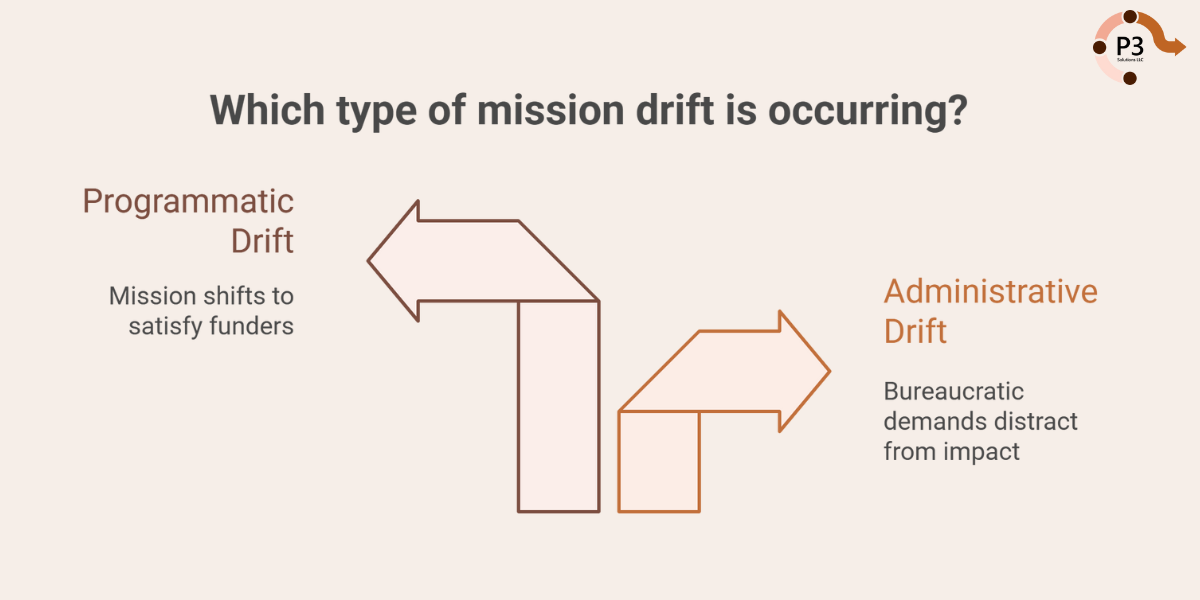
What type of mission drift is occuring?
These are drifts because they tend to occur through inaction rather than action. To counter this, suggestions have been made that it may be necessary to implement deliberate structural changes or follow best practices in nonprofit governance.
The Double-Edged Sword of Competition
Despite what you may have read in the other articles in this series, competition isn't necessarily bad. Organizations can certainly improve under competition, although there's clearly a risk that NGOs may become too business-like and lose sight of their mission.
On the positive side, competition forces NGOs to create more refined proposals with better storytelling and increased efficiency. The result is a net gain, with clearer program design, greater accountability, and clearly communicated impact.
Our previous articles already touched upon the darker side of this competition, with competition leaving the grant pool as a zero-sum game. Larger, better-resourced NGOs can dominate the grant pool, leaving smaller organisations underfunded or excluded; however, there are options for collaboration. The inequalities, however, can lead local NGOs to lose out to international ones, despite being closer to the problems and even better positioned to deal with them.
It's a paradox. Competition can drive innovation and inequity. NGOs become sharper, but mission distortion, burnout, and fragmentation are all real possibilities. Leaders have to compete because it's unavoidable, but can they still do so without undermining their values?
Why Competition Feels Unavoidable
Shrinking public funding, shifting donor priorities, and the private-sector style shifts have made everything a high-stakes contest. The pressure is intensifying across every funding channel, and NGOs are now more often competitors than collaborators (though the latter remains possible). Good work doesn't always attract good funding, and organizations have to demonstrate measurable outcomes, operational efficiency, and professional branding more reminiscent of corporations than charities.
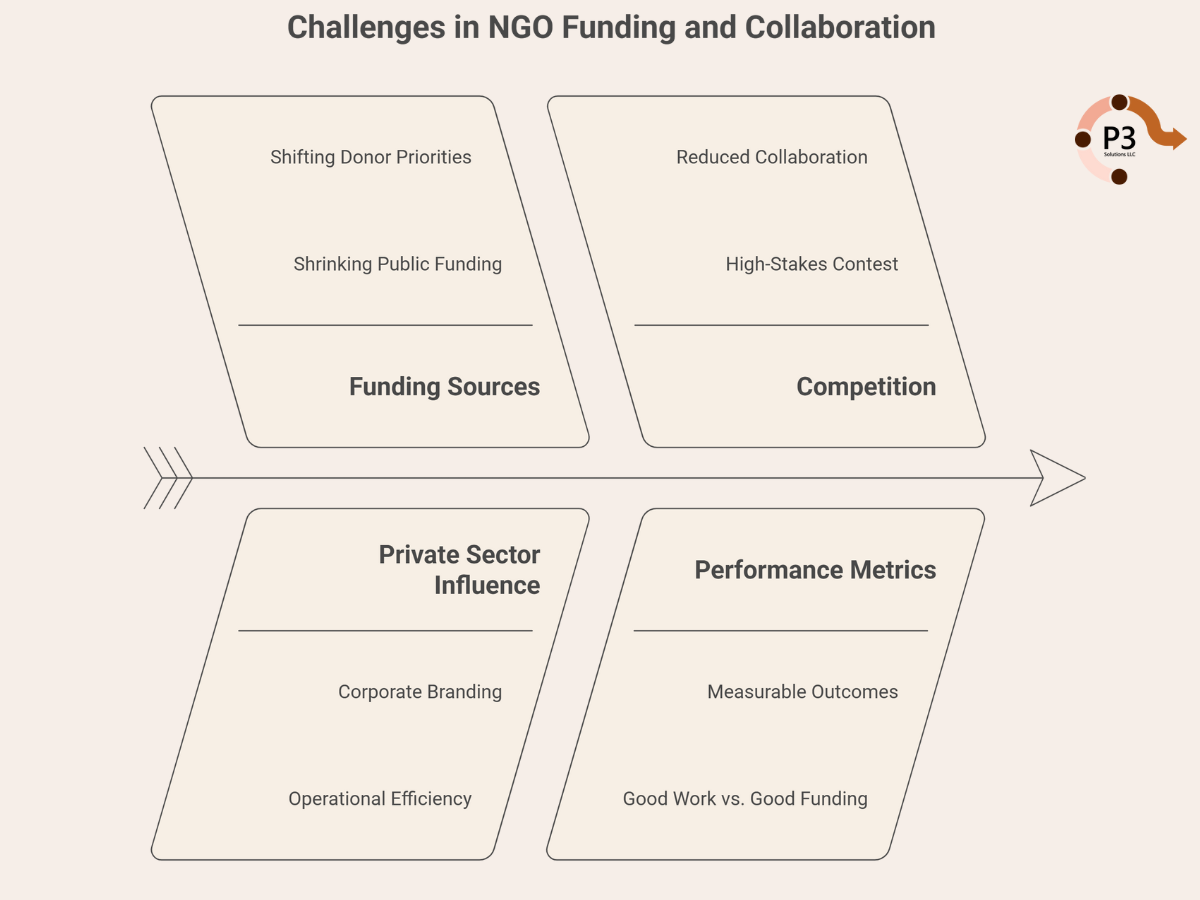
Challenges in NGO funding and collaboration
Competition Sharpens Focus
Organizations may need to distill their work into concise value propositions rather than broad, mission-heavy narratives. Competition is beneficial for communication with donors, stakeholders, and beneficiaries. NGOs are also encouraged to professionalize many of their internal systems, such as monitoring, evaluation, and governance, to ensure that impact claims are evidence-based.
Strong grant competitors balance compelling human stories with strong data, and their proposals must stand out on both the narrative level and in the finer details. Competition can catalyze improved program design and enhanced accountability.
When Competition Fuels Mission Drift
When funds shrink, desperation can ensue. Some organizations have to chase donor priorities that don't align with their own. A shrunken grant pool can lead to programmatic drift, where services shift to match funder demands, and administrative drift, when resources are consumed by the mechanics of funding rather than mission delivery.
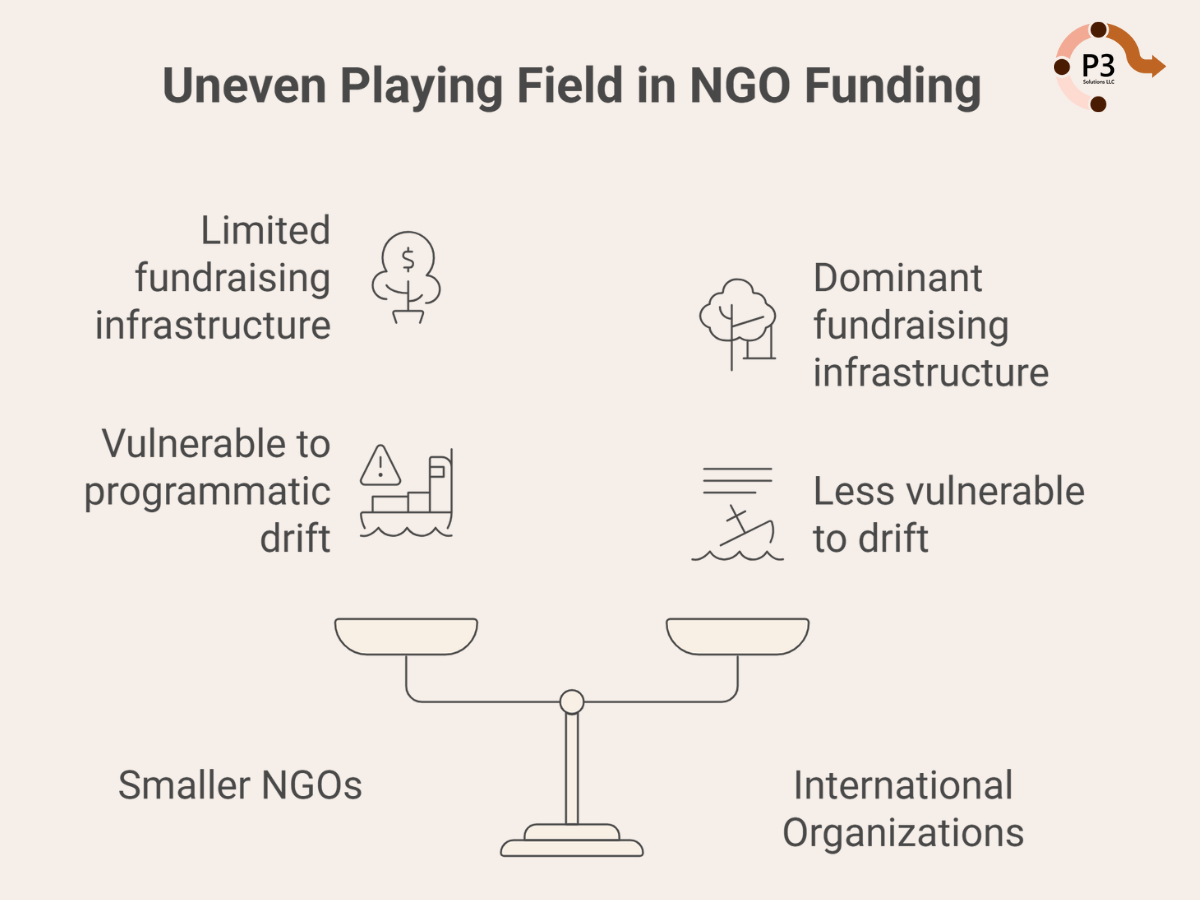
Uneven playing field in NGO funding
As always, it's the smallest organizations that are most likely to suffer. Smaller NGOs are vulnerable due to their limited fundraising infrastructure. This creates an uneven playing field with international organizations dominating.
The Danger of Donor-Driven Mission Drift
Competition isn't the only symptom of the shrinking grant pool; the relationship between funders and grantees also undergoes a shift. Donor priorities and compliance shape the very structure of nonprofit programming.
We've already seen how this can result in better discipline and accountability, but it can also be the driving factor behind mission drift. Programs and strategies can shift away from community needs and towards donor demands. For organisations to be competitive and mission-aligned, they must put safeguards in place to protect against it.
How Funders Shape NGO Behavior
While often unintentional, funders can be the wind that pushes NGOs off course. We're certainly not claiming that it's their intent, but specific funding models can have this effect, especially when grants are tied to particular priorities, reporting frameworks, or short-term results.
NGOs may need to reorient their programs to align with these, especially when there are fewer grants available. They're effectively chasing any funding available, so rather than finding the funding that suited their mission, they have to change direction, essentially looking for "any port in a storm", if we want to continue with our sailing metaphor.
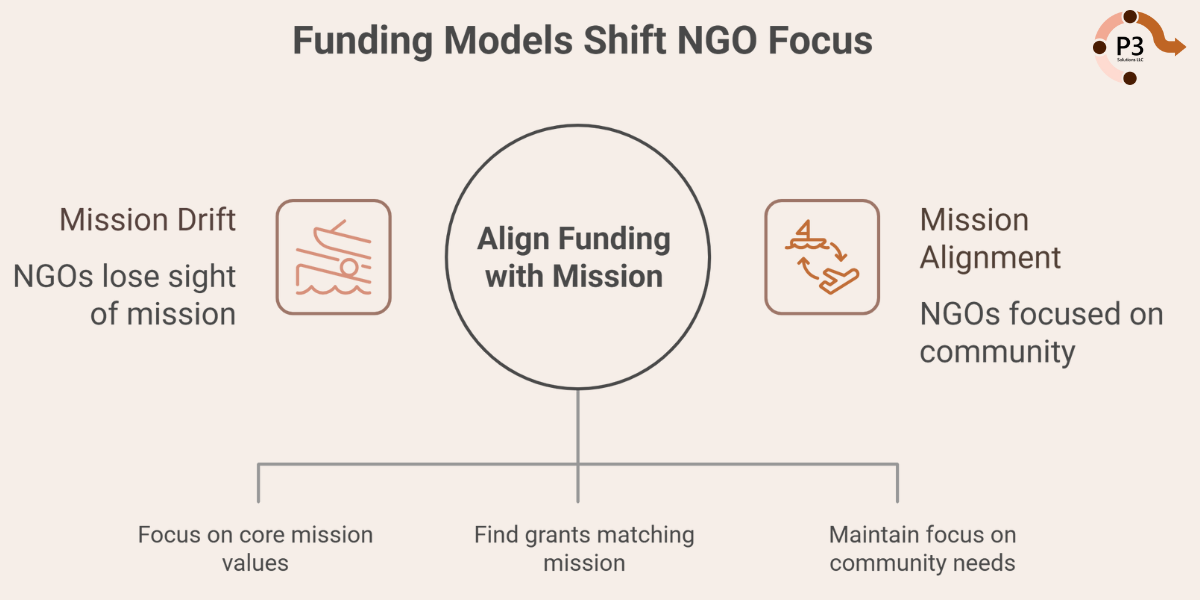
Funding models shift NGO focus
An agile shift away from the mission may be acceptable for some key funding, but over time, regularly aligning with donors can shift an organization's focus away from community needs and towards funder expectations. A fine example of the ongoing trend of organizations to become more business-like.
Guarding Against Drift
While the circumstances certainly increase the likelihood of mission drift, NGOs can proactively invest against it. Governance, strategy, and accountability are all areas that you can make more resistant to donor influence. Creating mission guardrails, such as frameworks for boards and staff, can be used to evaluate opportunities against core values.
Protocols for mission alignment reviews are another option. The goal is to ensure that fundraising choices reinforce rather than erode organizational purpose and help organizations stay disciplined under pressure. “Winning” doesn't have to come at the loss of integrity.
Collaboration and Competition: Can They Co-Exist?
When the grant pool dries up, collaboration becomes even more difficult. Organizations soon have to compete for the same funds as their "collaborators". This dynamic, which has been dubbed "co-opetition," means that NGOs now have to constantly balance their survival instincts and partnerships.
The Co-opetition Trap
Nonprofits often collaborate with their direct competition; sharing platforms, attending joint bids, or partnering on larger grants. Everyone ends up on thin ice, building trust one moment before looking to outcompete someone the next. Relationships can become strained, and NGOs may end up suspicious of their partners.
The Case for Ethical Collaboration
Collaboration is still key for NGOs. Pooling expertise, using complementary strengths, and sharing infrastructure can increase impact. Ethical collaboration levels the playing field, too, providing a space where smaller NGOs have access to partnerships and resources that they would otherwise be excluded from. Clear governance, transparency, and shared values can turn collaboration from a survival tactic to a long-term strategy.
Rethinking What ‘Winning’ Means in the Sector
It used to be that “winning” meant securing the grant, signing the partnership, or meeting donor targets. Given the current situation, this definition is too “black-and-white”, especially if success only gets measured in dollars raised or projects funded.
This kind of tunnel vision leads to NGOs leaning too hard into becoming transactional players or business-like, acting within a marketplace rather than trying to be agents of change. So how can they redefine winning so that they can protect their values, strengthen communities, while also striking a balance between survival and integrity?
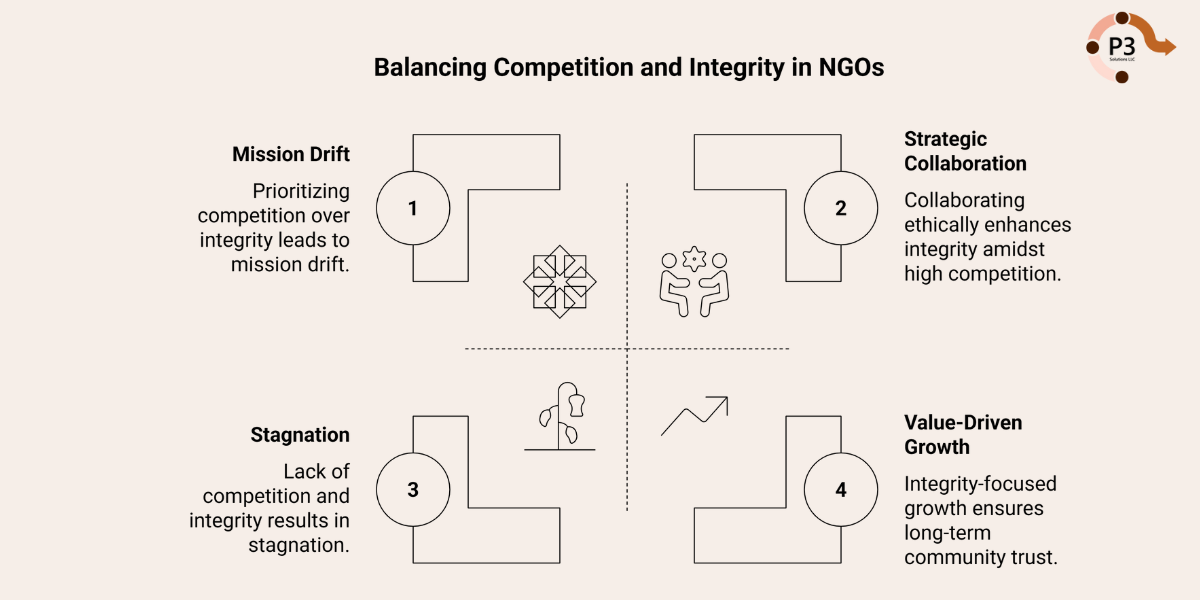
Balancing competition and integrity in NGOs
Beyond the Grant: Redefining Success
Fundraising can keep the lights on, but it's only a fundraising “win”, not necessarily a mission “win”. Strategy has to be an organization's moral compass, anchoring them (there's that boat metaphor again) in their long-term purpose. Prioritize core objectives and resilience, clarity, and alignment over the temptation to solely chase funding.
Integrity as a Metric of Success
Integrity must be key to an organization’s ability to create a sustainable impact. You can't see it on a balance sheet, but the organizations that are transparent with donors, clear with their staff, and accountable to the communities they serve can build trust and long-term partnerships.
Winning as Resilience and Trust
Organizations can redefine winning as resilience, withstanding short-term financial pressures without compromising their mission. Trust-based philanthropy models, built on mutual accountability and flexible support, are excellent examples of funders who value NGOs that demonstrate strong governance, transparency, and adaptability.
Competing Without Losing Your Soul
Competition is an inevitable part of the nonprofit sector. Funding pools are shrinking, and donor expectations are evolving. Competition doesn't make abandoning values or diluting purpose inevitable. NGOs can refine their strategies, collaborate ethically, and establish robust governance frameworks to safeguard their integrity.
It isn't about competing at all costs; it's about a careful analysis of what "winning" really means. If an organization's victories are defined solely by securing funding at all costs, then it'll surely lose sight of its mission. However, when winning is synonymous with trust and long-term community needs, competition becomes a means by which organizations can strengthen themselves while staying true to their core values.
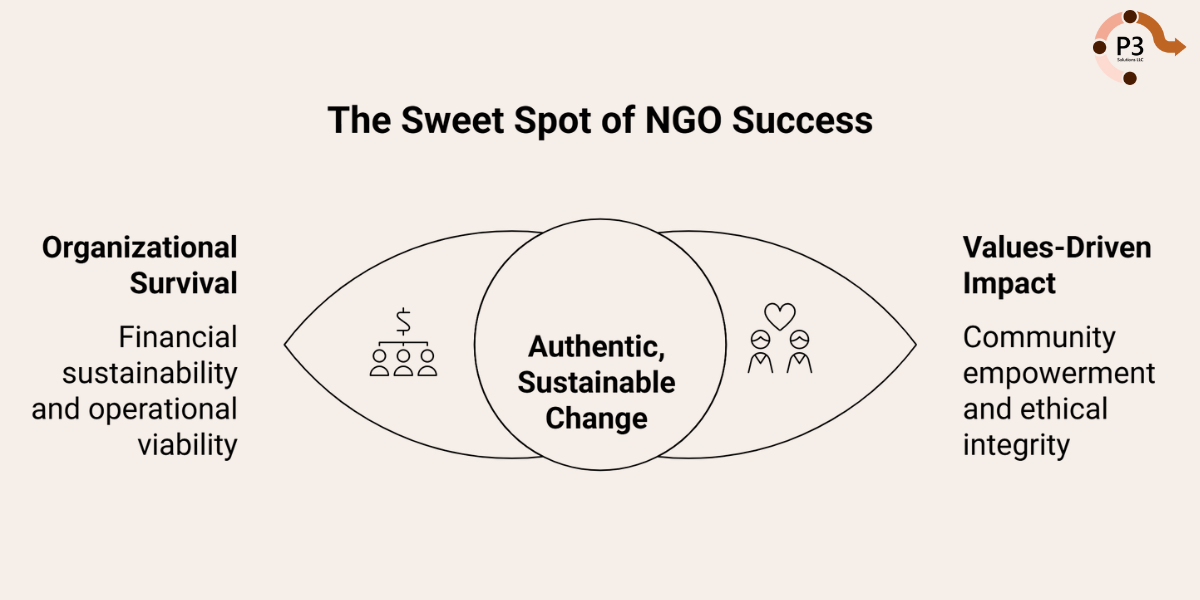
The sweet spot of NGO success
P3 Solutions can help NGOs compete in a manner that aligns with their purpose. We pride ourselves on our guiding principles and know how organizations can secure funding without compromising their values. We believe that the future of the nonprofit sector depends on it.
Further Reading
When Proposals Become Pitches: Rethinking the Purpose of Grant Applications
The Shrinking Grant Pool: Why NGOs Must Now Compete Like Businesses
The Invisible Link: Donor Agencies, Taxpayer Money, and Public Accountability