The Power of Punctuation
Updated February 24, 2026. Written by Ainslie Hone.
As an English as a Second Language teacher, I’ve watched my students struggle for years with English punctuation - among other things! Punctuation is designed to make reading easier. Most of my students overuse the comma and write sentences for days – making it impossible to follow. Just like the writing style of Virginia Woolf, they don’t know where to stop, and if you are like me and naturally inhale with every comma, you’re likely to hyperventilate.
Aristophanes of Byzantium is generally credited with the invention of punctuation into the Greek system, around 200 B.C.
Changing through time, from dots to lines to squiggles, punctuation as we know it was not really used in English until the 16th century. Excessive punctuation was apparent in the 18th century, and in my opinion, still today - mostly by my students.
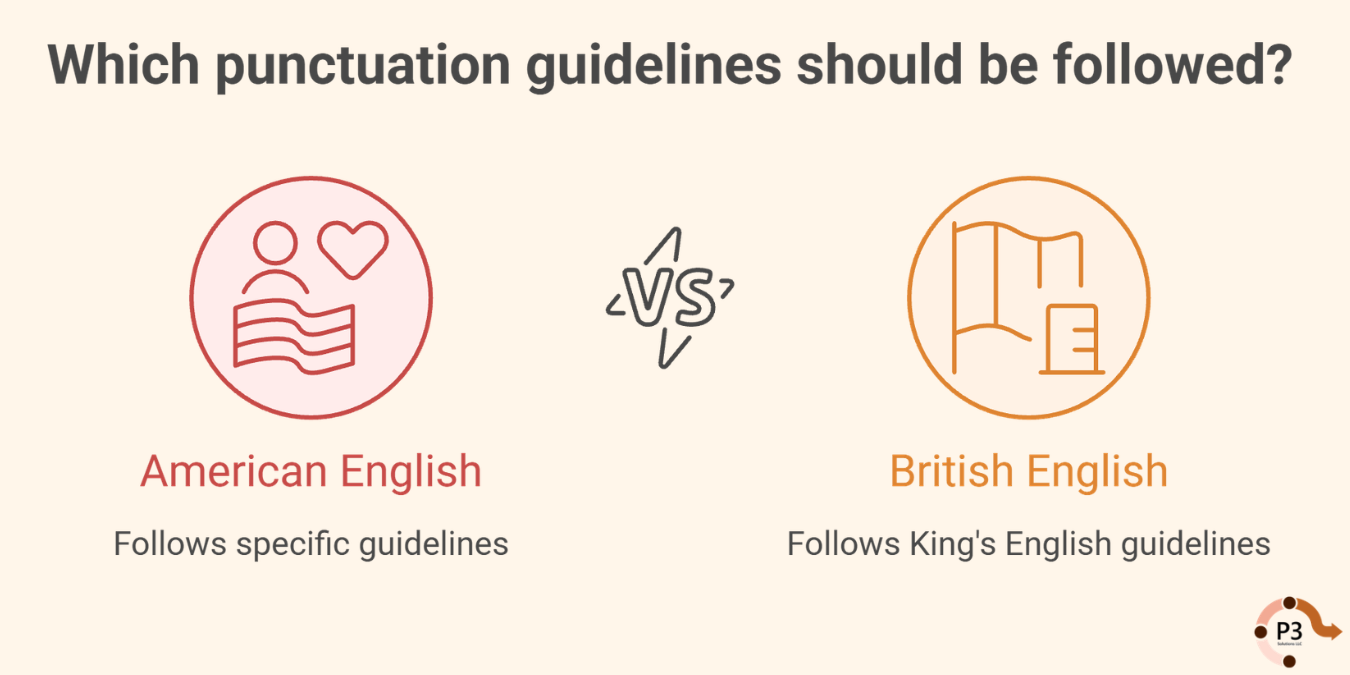
Which punctuation guidelines should be followed?
There are also numerous differences between American English (A.E.) and British English (B.E.), which complicates matters further. The King’s English set the rules for B.E. in 1906, and in 1923, the state of Illinois declared “American” to be the official language. Even today, there are different guidelines to follow when using A.E. (e.g., APA, GPO, CMOS) so no wonder my students are confused.
Let’s dive into the more common differences between B.E. and A.E. in terms of punctuation.
Commas save lives
Generally speaking, a comma is used in writing to break up thoughts or ideas, or when people are expected to pause during speech, to clarify meaning. BUT there is an enormous difference here with the serial comma – no, not a comma that goes on a killing spree - and it is predominantly used in A.E. rather than B.E. The serial comma (also known as the Oxford comma) is separating three items or more with a comma, even before conjunctions.
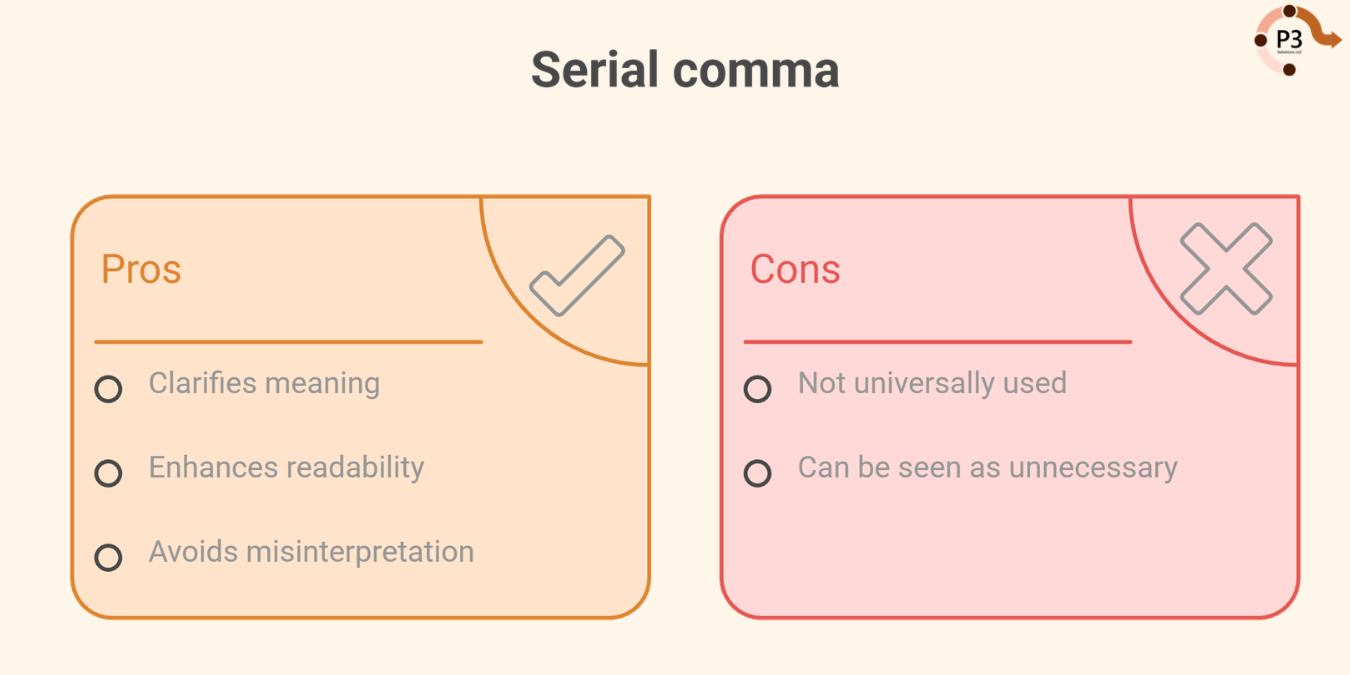
Serial comma
No commas: Wendy loves cooking her family and her dog. (Oh my god!)
Serial comma: Wendy loves cooking, her family, and her dog. (Oh, that’s nice!)
Without the serial comma, it would be acceptable to only have two commas: Wendy loves cooking, her family and her dog. Wendy’s family and dog are safer with commas.
Quotation marks - in or out?
Double quotation marks (“) are generally used in A.E. for direct quotes and single quotation (‘) is used for quotes inside the quotes. Periods and commas are placed inside the quotation marks. Confused?
“He says ‘I can’t do it!’ all the time, but he always does,” said Wendy.
According to the police, “Wendy’s family is safe, thanks to the use of commas.”
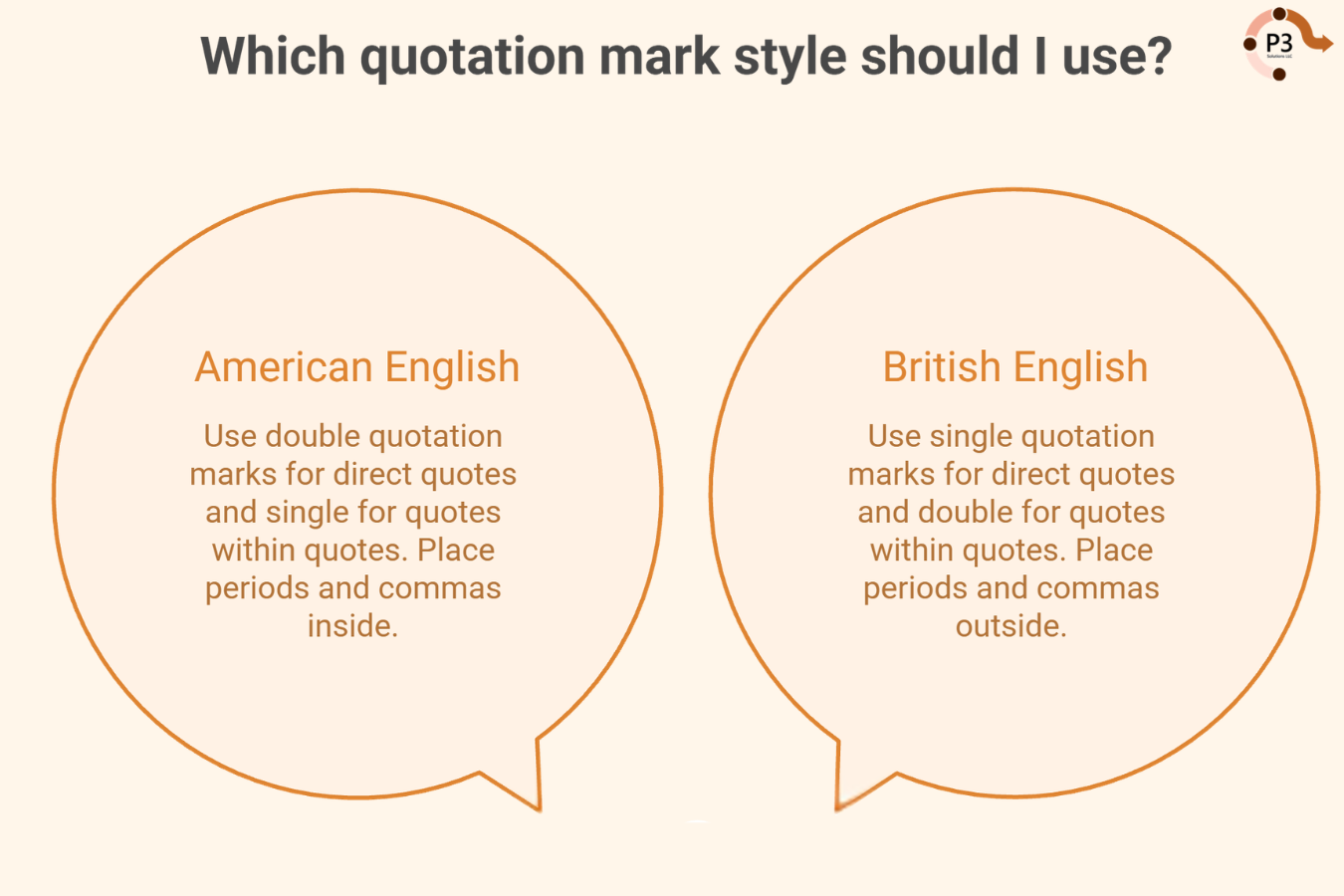
Which quotation mark style should I use?
B.E. on the other hand does the opposite. I think it is just to mess with us. Single quotation for direct quotes, double for inside the quote, and full stops and commas outside quotation marks.
‘He says “I can’t do it!” all the time, but he always does,’ said Wendy.
According to the police, ‘Wendy’s family is safe, thanks to the use of commas’.
Full stop. Period.
Another odd difference is the use of full stops (B.E.) and periods (A.E.). A.E. uses periods after abbreviations (Dr.), personal titles (Mrs.), and professional titles (Prof.). B.E. only uses periods (full stops), when the ending letter is not the same as the last letter, for example, Mister is abbreviated to Mr, but Professor becomes Prof.
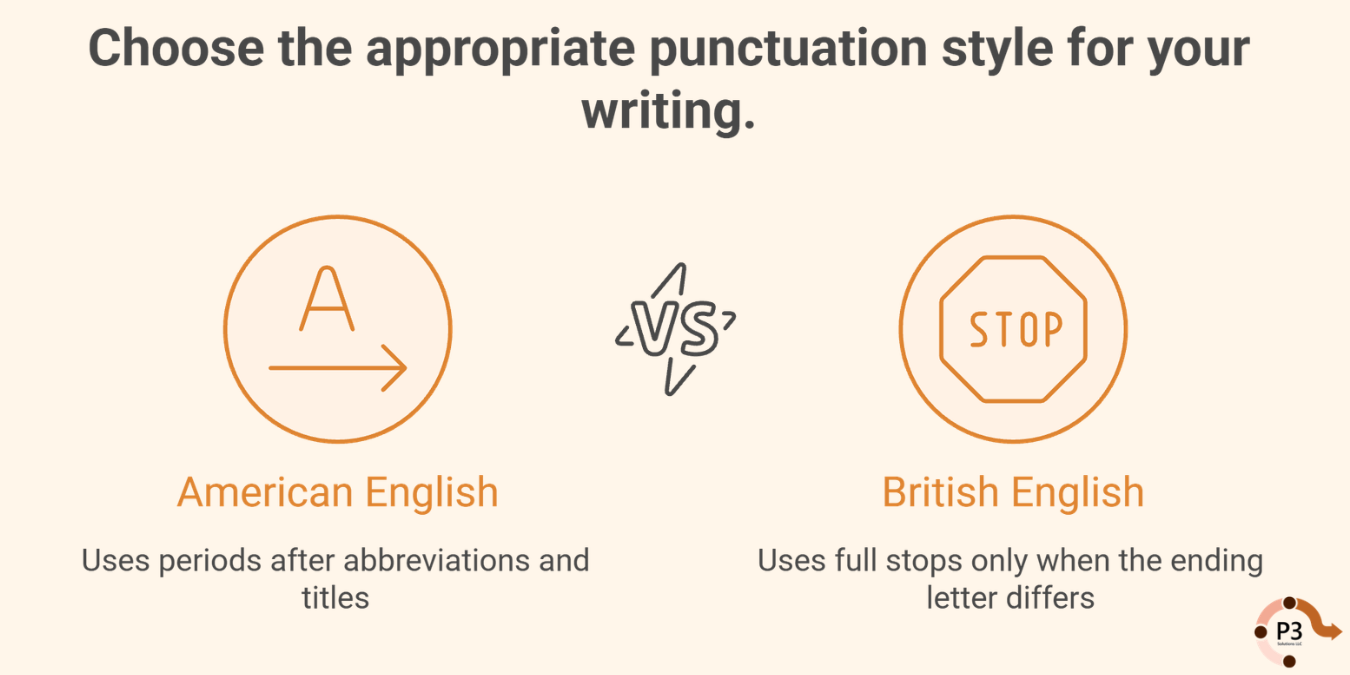
Choose the appropriate punctuation style: periods
A.E.: Mr. and Mrs. Smith are going to see Dr. Walker this afternoon and then Prof. Green tomorrow morning.
B.E.: Mr and Mrs Smith are going to see Dr Walker this afternoon and then Prof. Green tomorrow morning.
To hyphenate or not to hyphenate?
Generally speaking, B.E. uses more hyphens than A.E. In B.E., compound nouns and adjectives are hyphenated, and prefixes too, while A.E. just joins the words together.
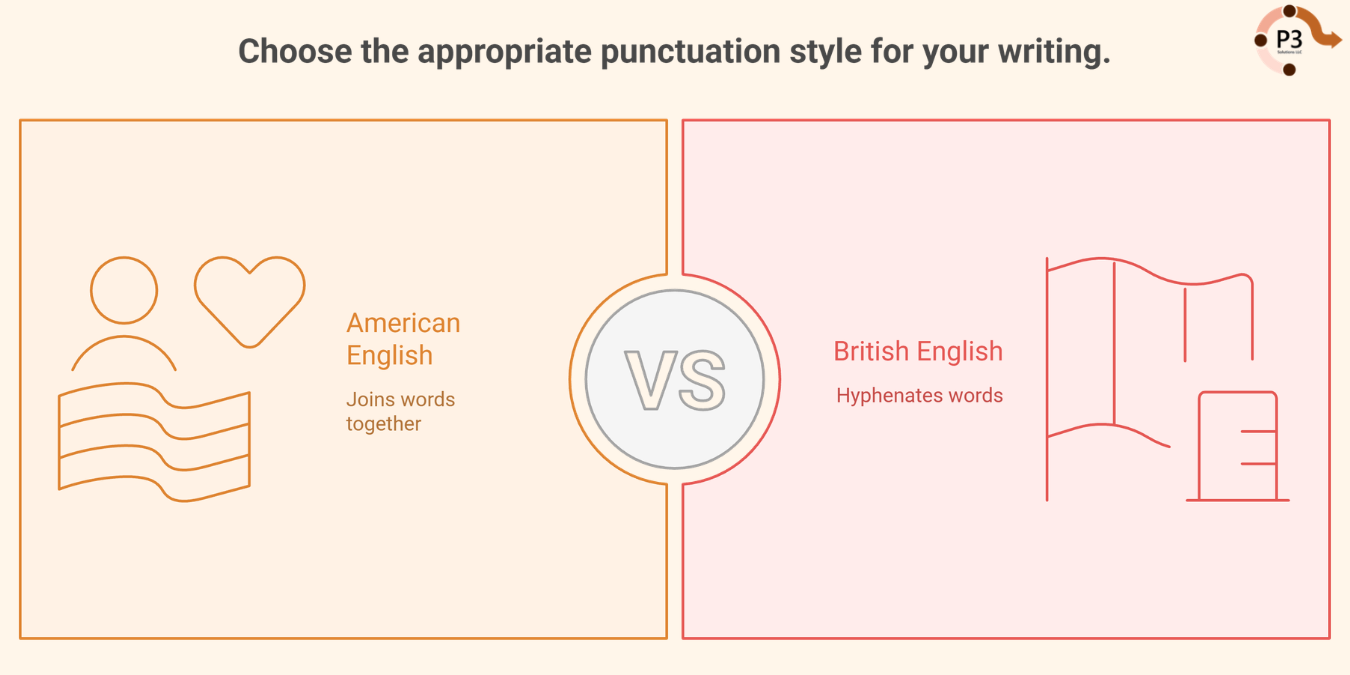
Choose the appropriate punctuation style: hyphens
A.E.: southwest, breakup, coworker
B.E.: south-west, break-up, co-worker
So, A.E. or B.E.? The key to writing concise documents is to use punctuation consistently. Having a detailed style guide is vital to ensure that documents are easy to read, and the meaning is clear. Ultimately, if your readers are British or American, they will have different expectations for punctuation, and the tone of your writing depends on the purpose. Not every sentence needs 200 commas, nor should they end with a bunch of !!!
If your team wastes time and energy or erodes confidence with unclear writing, talk to us about how to fix it.
Further Reading
Poor Communication in the Workplace.
The Dangers of Poor Writing in Workplace Communication.
Deadline Crunch? P3’s Top 10 To-Dos.