Time Management Strategies: scheduling tasks
Written by Joseph Philipson.
Originally published November 11, 2024.
Part two of our five-part series on time management strategies.
All images are P3 originals, courtesy of Hadi Madwar.
Part 2: Scheduling Tasks
Having already seen the benefits that prioritizing tasks can have when it comes to time management, it's time to turn our attention to the second in our five-part series on time management: scheduling tasks.
Why should you plan and schedule tasks?
You've already got a fairly solid idea of which tasks are high-priority and urgent, which means you know roughly the order you should do these tasks in.
Planning and scheduling tasks will help you to be more focused and efficient, as you'll have already decided what to do next.
In a way, scheduling is part of the prioritization process, as you'll always look to tackle the highest-priority tasks first.
Knowing when you'll do each task can also help you manage stress. Instead of worrying about something that needs to be done, you can focus on the task at hand, aware that everything's been scheduled.
Scheduling also helps you to get the most out of your time. It turns each task into a manageable step and it also helps you to see where the gaps are in your schedule and when you could be working on something else.
Planning and scheduling tasks
Even though the urgent / important tasks in an Eisenhower Box are ones you should do immediately, don't just dive straight into them!
Always plan and schedule tasks to know when you'll be doing them and to give yourself a better idea of how long you'll be doing them.
Whether you're using the Eisenhower Matrix, ABC Method, or any other prioritization method, you should also consider breaking larger tasks down into manageable steps.
From there, it's time to start scheduling your tasks.
Scheduling tasks allows you to know how you'll be using your time. You'll also see whether you're ahead of schedule or behind schedule.
You won't always be able to exactly work out how long a task will take so always try to give yourself a flexible schedule, especially with tasks you've never done before.
Time blocking
Remember that when you schedule tasks and create day plans, time blocking or time chunking is simply a way to schedule tasks while avoiding multitasking.
You block out time to focus on one thing rather than filling your plans and schedules with many individual tasks to switch between.
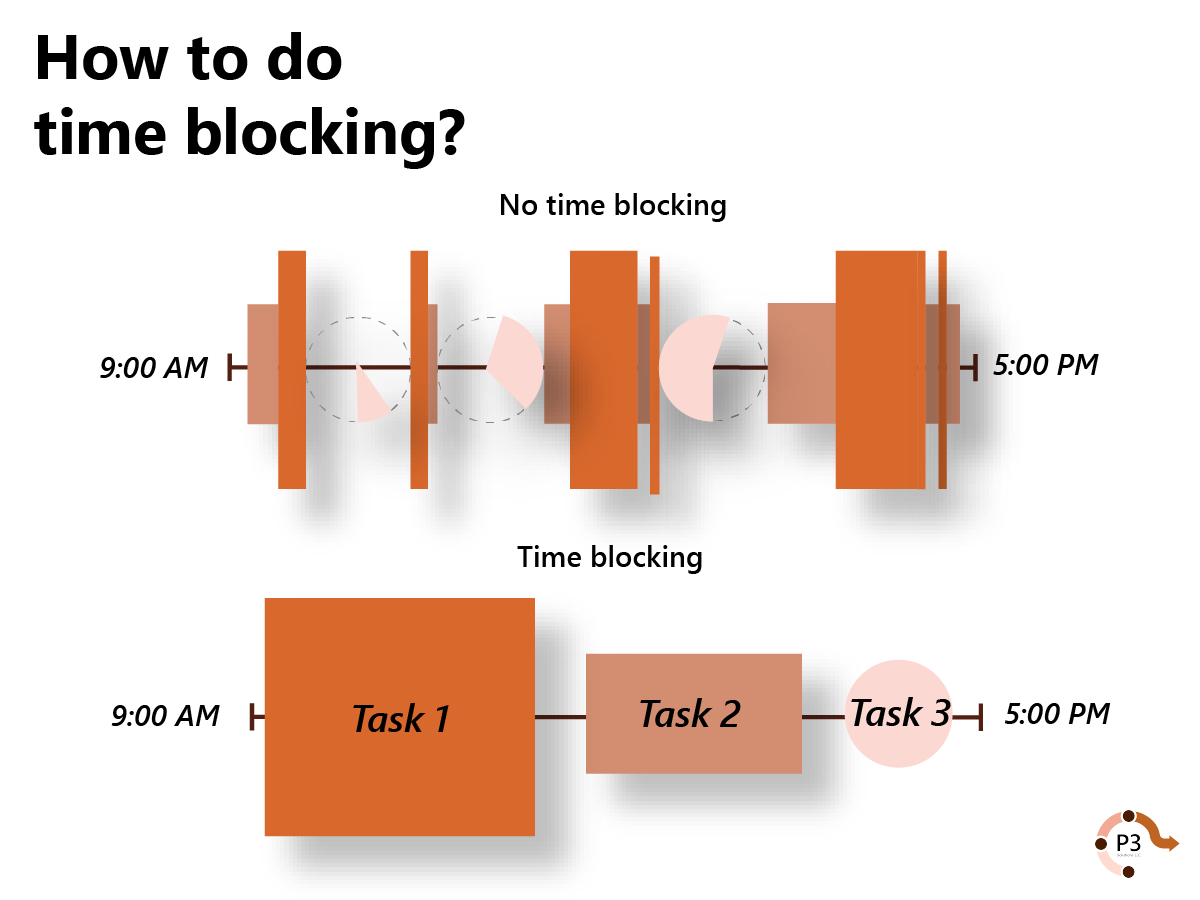
Time blocking is the process of setting time (in blocks) for particular tasks. For example, you could set aside a block of time between 9:00 and 10:00 am to answer emails.
Remember that you need to incorporate breaks into these blocks, and regular breaks are always better than working for extended periods and then taking a long break.
Typically, 25 minutes of work followed by a 5-minute break is a good ratio, but as you get more familiar with time blocking, you'll work out what ratio of work to breaks is best for you.
Benjamin Franklin was a fan of time blocking, and we all know he was pretty productive.
Creating a day plan
A day plan is a great way to use every working day optimally. Things will naturally interfere with this, but if you've correctly prioritized tasks and scheduled when you'll do them, you can slot them nicely into your day plan and start getting them done.
When you create your day plan, remember to review your overall goals, asking yourself what you need to do to achieve your goals and complete your tasks.
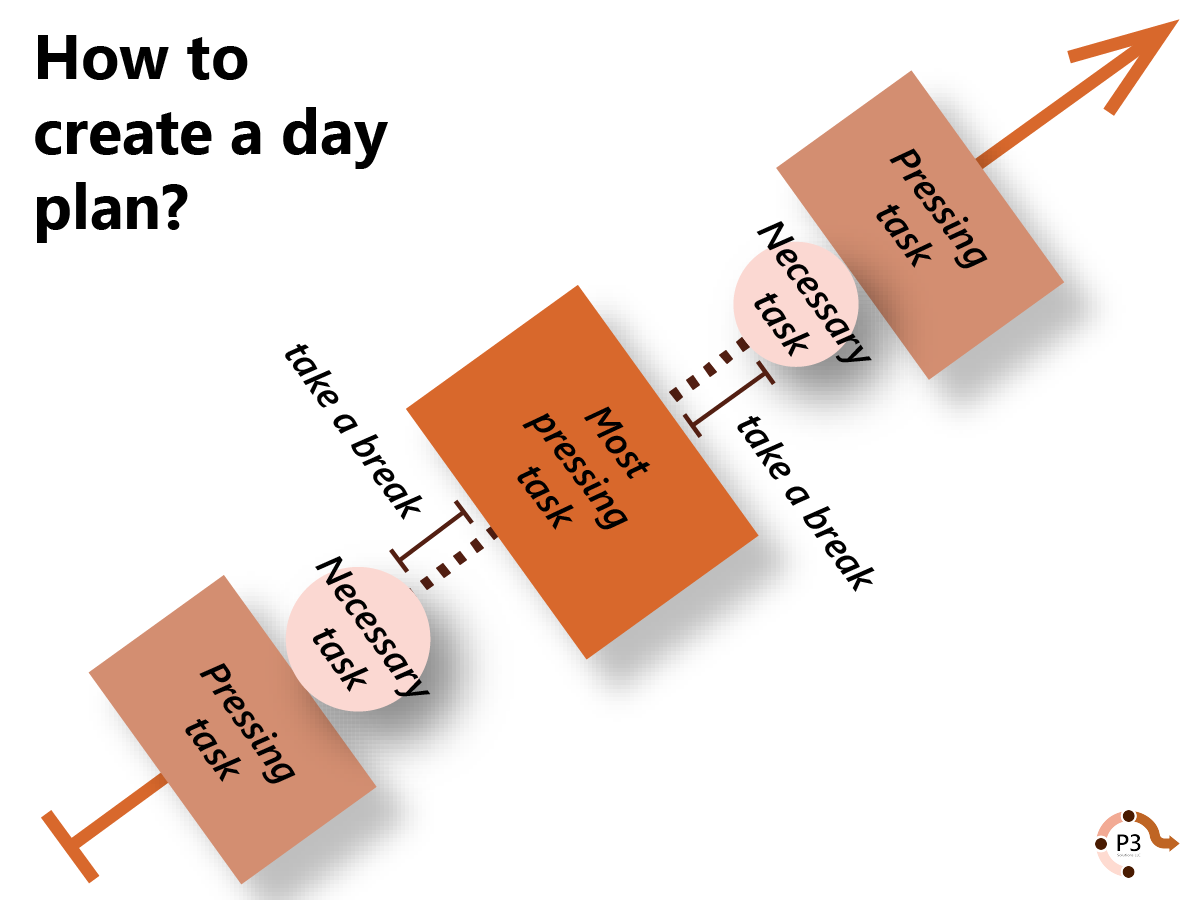
Your day plan can include time blocking, too. Your day plan can essentially be different time blocks throughout the day and then you can insert your prioritized tasks into your plan.
As always, remember to incorporate breaks and while the highest-priority tasks should go first, you mightn't work as effectively simply by starting with the most difficult task and working down your list.
It may be more effective to insert easier tasks between more challenging and high-priority tasks.
Don't forget to include routine tasks in your day plan. It's easy to forget about tasks like checking emails, making phone calls, or attending meetings, which you can schedule for times when you tend to be less productive anyway.
Though it's quite meta, you can also set aside time for creating your day plan.
Here’s some great free resources from asana.
Effectively incorporating breaks into your task planning
As mentioned, planning your day and scheduling tasks has to include breaks.
Taking a break is so important that taking breaks during work hours boosts work performance rather than detracting from it.
Who knew? Not most bosses, apparently.
Regular breaks will help you stay focused and productive throughout the day and can even make you more creative and a better problem-solver.
Aside from being essential for preventing burnout, taking regular breaks is good for your physical health as much as it is for your mental wellbeing.
There are time management techniques like the Pomodoro Technique (25-minutes of work and a 5-minute break) that we saw earlier. There's also the 52 / 17 Rule, which works the same as the Pomodoro Technique but with 52 minutes of work and a 17-minute break. You could also work in 90-minute work cycles, working for 90 minutes and then taking a 15-20 minute break.
Within time blocking, your breaks are also blocks. Try to avoid putting one task immediately after another and remember that the length of each break should be reflective of how intensive the previous task was.
Don't forget that your breaks shouldn't be distracting, especially if you need to return to work afterwards. Avoid activities like watching videos or scrolling through social media on your break, choosing to do some stretching, walking, or light exercise instead.
You can also use your breaks to relax, meditate, hydrate, or eat some healthy snacks.
Remember that you need to include some longer breaks during your work day, too, such as taking an hour for lunch.
Need help to complete your project on time? P3 Solutions can help!
We thrive on the challenge of creating exceptional written content, provide business development processes to help you stay ahead of the competition, and mission-critical business solutions.
Contact us and tell us how we can help you meet your next challenge.
Further reading:
Indeed: https://www.indeed.com/career-advice/career-development/weekly-work-plan
Float: https://www.float.com/resources/work-plan-templates
HBR: https://hbr.org/2023/05/how-to-take-better-breaks-at-work-according-to-research