Breaking Down Silos: Improving Collaboration and Communication
Written by Joseph Philipson.
Originally published July 1st, 2026.
Silos are easy to spot, but much harder to fix. They cause slow work, messy decisions, and problem-solving through blinkers. Teams have to share goals, make work visible, and understand how their decisions affect the wider organization.
The Problem with Silos
Silos occur when teams, departments, or individuals keep information rather than sharing it across an organization. Generally, this could be the sales team not knowing what operations can deliver, project teams working on different versions of a plan, or managers making decisions without key information from the people who'd be affected. Silos aren't often the result of malicious intent; instead, they grow out of root causes such as unclear responsibilities, competing priorities, disconnected systems, or a simple belief that "this is not my department."
At their best, silos slow things down. At their worst, they can be really damaging. With information siloed, teams can end up using outdated information, duplicating effort, or waiting for answers to questions that another department could easily answer. Silos ultimately affect more than just productivity, damaging morale, making people feel ignored, and frustrating employees who are powerless to fix the problem.
Gallup found that only 28% of employees feel their opinions matter at work, with a third describing their workplace as isolated or impersonal. These are the kinds of places that silos thrive in. People stop asking questions and sharing information, and become protective of their corner of the work. The organization becomes less connected, and even good people can produce substandard work as a result.
Cross-Functional Teams and Shared Metrics
To break down silos, you need to encourage teams to work together toward a common goal. Cross-functional teams include people from different areas of an organization to work together on a shared problem, mixing knowledge, context, and decision-making power. They won't pass work from one department to another because this team can look at the whole process and ask what needs to happen to improve outcomes.
Shared metrics prevent cross-functional work from turning into more meetings. Each department tends to protect its own priorities when its key metrics are related directly to its own activities. With a shared goal, everyone is pulling toward the same destination.
Focus on outcomes, not outputs. Define goals, signals, and measures together so teams know what success means before they start work. Rather than tracking handover meetings, you can track whether handovers are completed on time, whether fewer issues are being escalated, or whether customers are getting responses more quickly.
By changing accountability, success means that no department wins at the expense of another. From end to end, improving work becomes a shared responsibility. Make goals clear and connected.
If your teams are working hard but not always working together, P3 can help you build a cross-functional team structure around shared goals, clearer accountability, and better communication.
Tools That Improve Visibility
Collaboration tools aren't a silver bullet for breaking down silos. You have to ensure they make the right information easier to find, the right people easier to involve, and the next steps easier to understand. Good tools should reduce the amount of work hidden in an organization, not create a void for it to disappear into. Visibility matters because transparent digital work environments can help teams understand both the work being done and the process behind it.
Tools improve visibility in three ways: what is happening, who owns it, and what's been decided. Identifying critical teams, understanding how they relate to the work, and assigning relationship owners to communication is never left to chance. Software tools should do the same. You don't want more platforms; you want dependencies, ownership, and decisions that are visible, so they don't become blockers.
Useful for teams that need a shared place to track projects, tasks, owners, due dates, and status updates. It works best when teams use it to show progress and blockers, not just to list tasks.
A simple option for visual task management. Trello boards, lists, and cards can make work stages easy to see, especially when teams need a quick view of what is waiting, in progress, blocked, or complete.
Useful when conversations need to move out of private inboxes and into shared channels. Slack channels, canvases, lists, and workflows can help teams keep key project details, tasks, and updates in one visible place.
A good fit for workshops, process mapping, brainstorming, and early-stage planning. Its shared visual workspace helps people from different teams see the same problem simultaneously.
Useful for teams that need dashboards and reporting across multiple workstreams. Live dashboards can help leaders and teams see progress, priorities, and resource use without having to ask every department for separate updates.
Case Study: Wendy the Squirrel
Wendy is an exceptional acorn collector... as long as the acorns are on her side of the wall. Safely tucked away, she's perfected the art of pretending she can't hear anyone asking for help. While her teammates focus on the colony's success, Wendy sticks firmly to her motto: if it's happening outside her little corner of the forest, it's someone else's problem.
The funny thing is, every squirrel in the forest has the same mission: collect enough acorns so everyone makes it through the winter. But when each group guards its own pile and refuses to share information, the whole colony suffers. One team may have found the biggest oak tree in the forest while another has the fastest route to get there — but if nobody talks to each other, everyone spends more time scrambling and less time gathering.
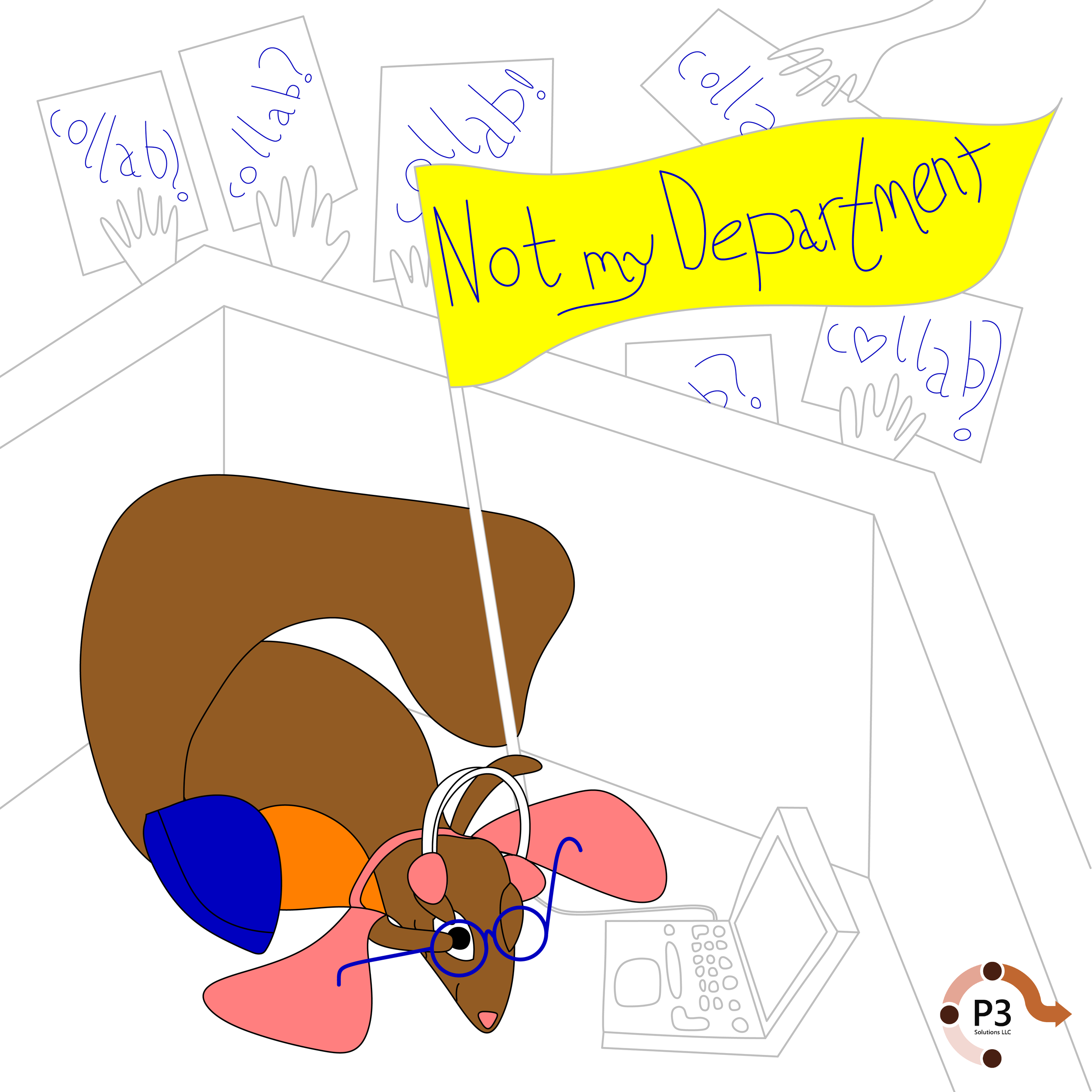
Wendy: Professional Wall Builder
In any workplace, silos work the same way. When teams operate as if challenges belong to someone else, opportunities are missed, work gets duplicated, communication breaks down, and progress slows to a crawl. One team may have the information another team desperately needs, but if no one is talking, everyone ends up working harder instead of smarter.
The most successful squirrel colonies — and organizations — know that collecting acorns is a shared goal. No single squirrel can gather enough for the entire colony, and no department can succeed in isolation. Marketing may spot an opportunity, Operations may know how to execute it, and Customer Service may have valuable insights that help everyone improve. When those pieces come together, the whole organization benefits.
The fix is surprisingly simple: tear down the walls. Build cross-functional teams around shared objectives instead of departmental boundaries. Create shared metrics that reward collective success rather than individual wins. Make it easy for people to communicate, ask questions, and share information through collaborative tools and regular check-ins. When everyone can see the bigger picture, they're more likely to step in, offer help, and solve problems before they become bigger issues.
Wendy eventually discovers that the wall wasn't protecting her work — it was limiting it. The strongest teams don't ask, "Whose department is this?" They ask, "How can we solve this together?" Because at the end of the day, the forest doesn't care which squirrel found the acorn. It only matters that the colony has enough to thrive.
Small Shifts Can Improve Collaboration
Silos can't be fixed by a big announcement or a piece of software. Fix them with small, repeated changes that make collaboration easier, clearer, and more natural. Teams need to know who owns what, where decisions are recorded, and how information should be shared. When they're aware of why their work connects to the organization's wider goals, collaboration feels almost obvious.
Make ownership visible
Every project should have clear owners, decision-makers, and points of contact so people know where to go before work stalls.
Share goals before sharing tasks
Teams should agree on what success looks like before assigning work; each department may optimize for its own version of progress.
Map dependencies early
Before work begins, identify which teams need to be involved, where handovers happen, and who needs updates along the way.
Keep a shared decision log
A visible record of decisions stops teams from repeating the same conversations or relying on information that only one person remembers.
Ask who else needs to know
This simple question can prevent useful information from being trapped with one person, team, or department.
Create space for people to speak up
Better communication depends on people feeling safe enough to raise concerns, ask questions, and share mistakes before they become bigger problems.
If silos are slowing your projects, creating confusion, or making collaboration harder than it needs to be, P3 can help you bring the right people together, clarify shared goals, and build cross-functional ways of working that are easier to sustain.