Time Management Strategies: self-care
Written by Joseph Philipson.
Originally published December 3, 2024.
Part four of our five-part series on time management strategies.
All images are P3 originals, courtesy of Hadi Madwar.
Take care of yourself
Some days, you probably wouldn't believe that you could have actually done more work. However, we've been looking at some of the best time-management strategies to be more productive.
We've covered how to schedule and prioritize tasks. But what about you? The person behind all this work. Before you can take care of work, remember to look after yourself.
Today, we'll examine how self-care is an important part of time management and how the most effective work comes from people who are mentally and physically fit.
You need to be at your best to get the most out of yourself and your time. Whether you work in an office or are a top-level athlete, taking care of yourself is vital to increased productivity and performance.
Taking care of yourself can start with some self-reflection. Before you can start thinking about how you'll take better care of yourself, consider everything you're doing and which of those things are beneficial and good for you. This could be as simple as taking a 10-minute walk during your lunch break, practicing mindfulness for 5 minutes in the morning, or ensuring you get 7-8 hours of sleep each night.
You can even use approaches similar to those we've seen for prioritizing tasks. Prioritize things that are beneficial for you and good for you.
In terms of work, getting something done that's been a source of stress is an excellent way to not have to worry about it anymore. However, it also boils down to knowing when to prioritize yourself over your work. Ultimately, if you forget about yourself or put yourself second to your work, you and your work will suffer.
At its simplest, self-care is a gift you give to yourself. It means you'll be healthy, live a better life outside of work, and have better focus and concentration when working. Remember, you are the most important asset in your life and work.
You'll get more out of your life outside of work. There'll be fewer days when you return home unable to enjoy your free time because you've worked too hard. Instead, you'll have been efficient and productive.
Live a healthy life
Increased productivity begins with a healthy lifestyle. The keys are getting enough sleep, eating a healthy diet, regularly exercising, and staying hydrated.
Just remember that everybody's different, so you'll never find a perfect health plan that works for you.
That doesn't mean you should give up, though. There are a few key areas you should focus on to live healthily, and the 12 Tips for Maintaining a Healthy Lifestyle by Healthline are an excellent place to start.
Weight
Start by attempting to maintain a healthy weight. Weight within a healthy range for you is a good place to start as it reduces the risk of high blood pressure, high cholesterol heart disease, stroke, and type 2 diabetes, a list of things that you really want to avoid.
Diet
Many factors go into maintaining a healthy weight, but one is what you eat. Attempt to eat healthier by choosing nourishing foods and limiting processed foods and sugar. We all enjoy a treat and can eat things that we shouldn't, especially on busy days, but rather than completely changing your diet overnight, it's better to start swapping out unhealthy foods for healthy alternatives and eating smaller portions if losing weight is your overall goal.
Hydration
Staying hydrated goes into this. It can be as simple as having some water on your desk at work. Even now, water bottles you can buy hold the recommended amount of water you should drink and indicate when you should have a drink throughout the day. Remember that how much you should drink each day depends on the person, but the recommended amount is usually around 15 cups (4 liters) daily.
Exercise
Then there's exercise. You can regularly exercise or even walk more each day. You want to avoid how much you sit and how much screen time you have each day. Getting outside and into nature has been proven to improve well-being.
Take breaks
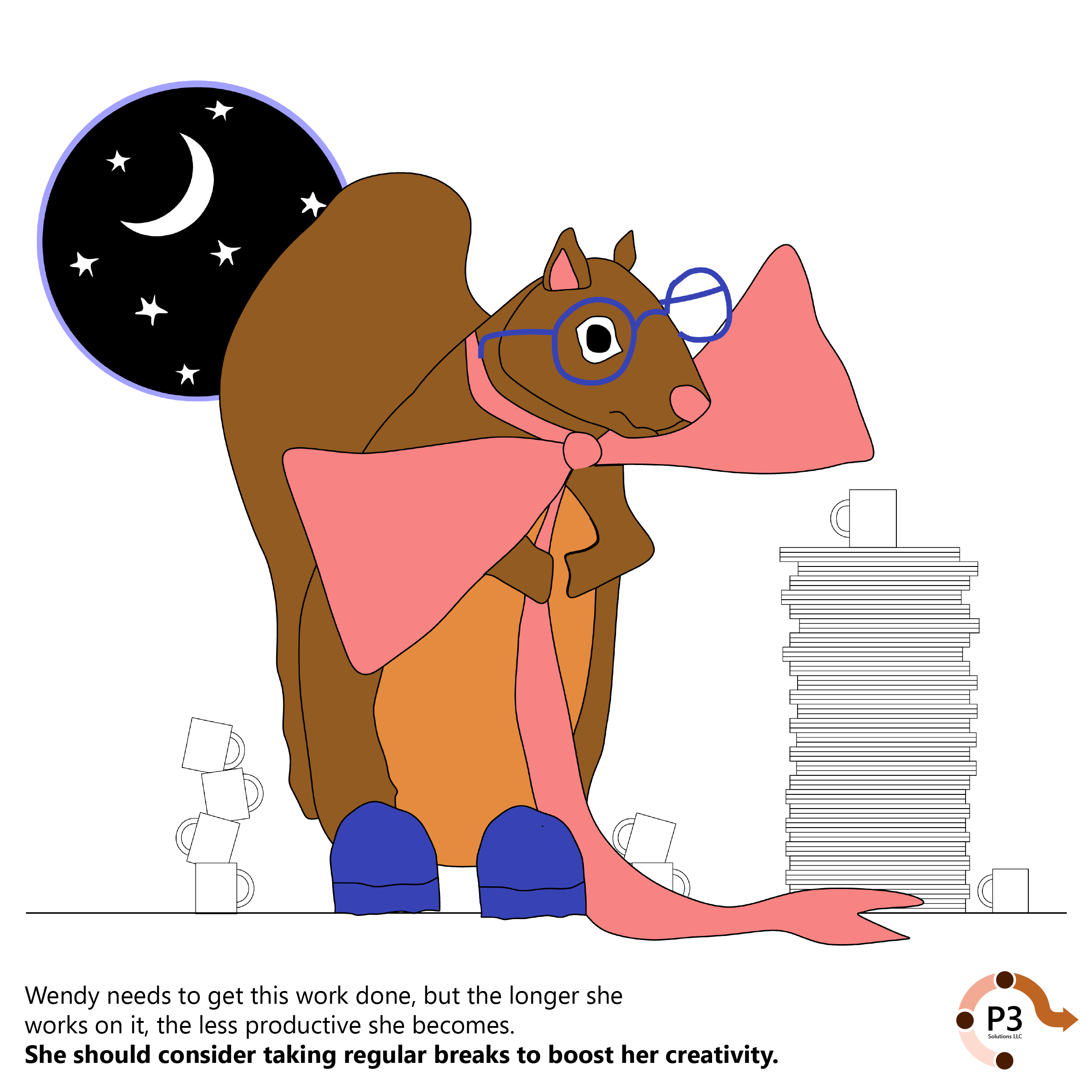
Wendy is the prime example of what NOT to do in the workplace.
Many time management techniques prioritize regular breaks. After all, the Pomodoro Technique suggests you'll be more productive working in 25-minute segments with 5-minute breaks over four hours than working solidly for four hours without any breaks.
Brain research proves you need regular breaks, so incorporate breaks into your day. If your focus is waning, it may be time for a break.
Breaks help improve focus, so be sure to pay attention to how effectively you work and take a break if you see your productivity dip.
Ultimately, a 30-minute break might help you finish something an hour sooner. If you do the math, that's still 30 minutes saved overall.
Find a work-life balance
The law of diminishing returns will apply to your work, and if you can't get time away from it to rest and do the things you enjoy, you'll be unlikely to work at your best.
By finding a good work-life balance, you can work more efficiently and have more control over your time, ensuring you have time for both work and personal life.
Like taking a break, you need to carefully consider how much of your time is dedicated to work and how much to yourself.
Of course, work needs to be done, but it's a false economy if you spend most of your time working, burning out, and ultimately getting less work done.
Reward yourself
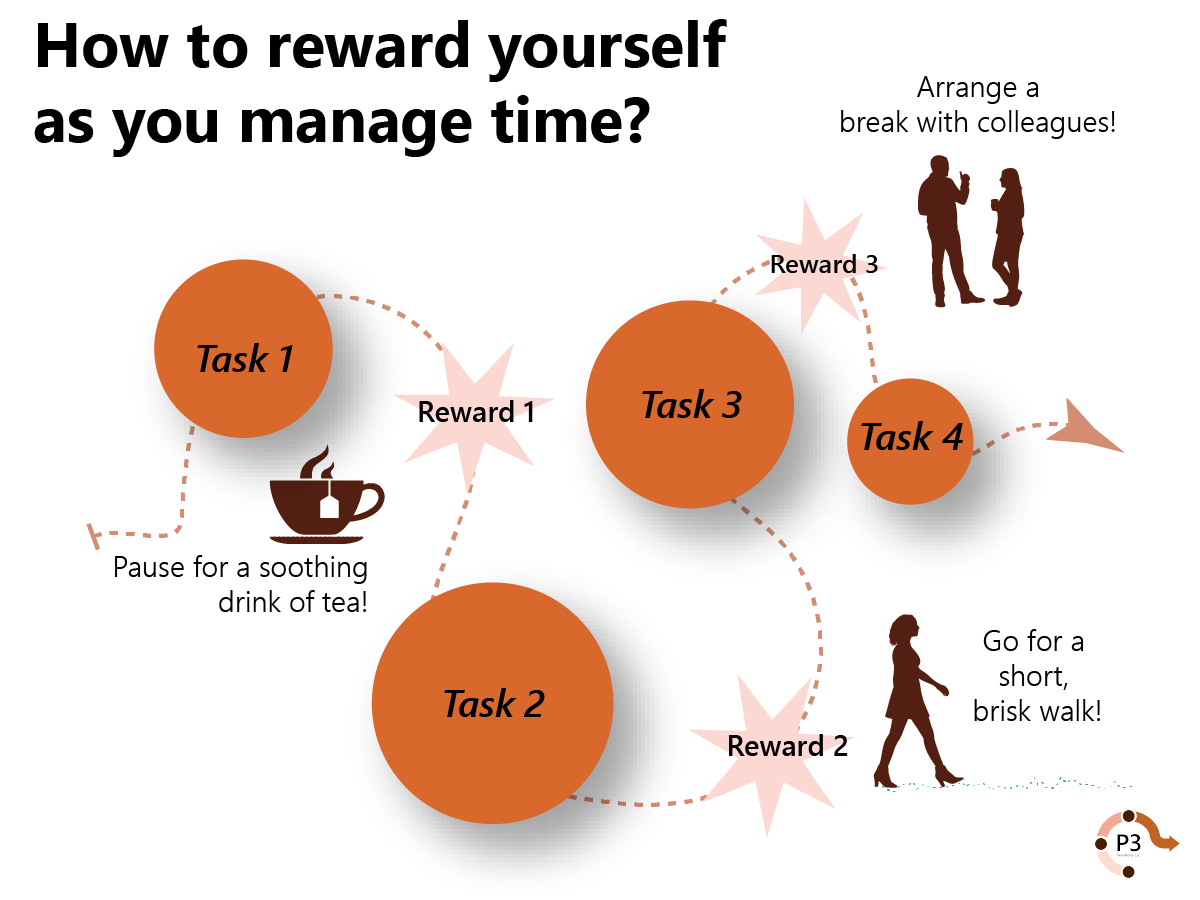
While a job well done often feels like a reward, completing minor tasks may sometimes feel unrewarding on bigger projects with many component parts.
Regular breaks can feel like a reward after some hard work, but if there are other things you like or enjoy, reward yourself for completing tasks or working for a certain amount of time.
Ideally, find rewards that you enjoy that are also good for you. If you procrastinate a lot, line up a reward for when you've finished a task. In many cases, a finished task is its own reward, especially if you've been worrying about it, but you'll see yourself working much more effectively knowing that you get to do or have something nice once you've finished working.
By taking care of yourself, you'll work more effectively, which means you'll have more time during your working day.
Need help to complete your project on time? P3 Solutions can help!
We thrive on the challenge of creating exceptional written content, provide business development processes to help you stay ahead of the competition, and mission-critical business solutions.
Contact us and tell us how we can help you meet your next challenge.
Further reading:
Very well mind: https://www.verywellmind.com/self-care-strategies-overall-stress-reduction-3144729
Everyday health: https://www.everydayhealth.com/self-care/
World Health Organization: https://www.who.int/health-topics/self-care#tab=tab_1