Miscommunication and Overload in Workplace Channels
How Digital Noise Disrupts Teams
Written by Joseph Philipson.
Originally published May 21, 2025
Part three of our five-part series on poor communication.
All images are courtesy of the P3 team.
We've never had more ways to communicate at work, so why is communication seemingly more complicated than ever?
With instant messages, emails, project boards, video calls, and collaborative docs, miscommunication is as prevalent as communication tools. More channels don't necessarily equate to better communication; they can result in confusion, overload, and burnout.
With teams looking to digital tools to collaborate, they risk missed messages, delayed responses, and information getting buried. The result is disconnected teams, fractured workflows, and a culture where nobody's being listened to.
Here's how miscommunication and overload are undermining productivity in digital workplaces.
The modern workplace is drowning in messages
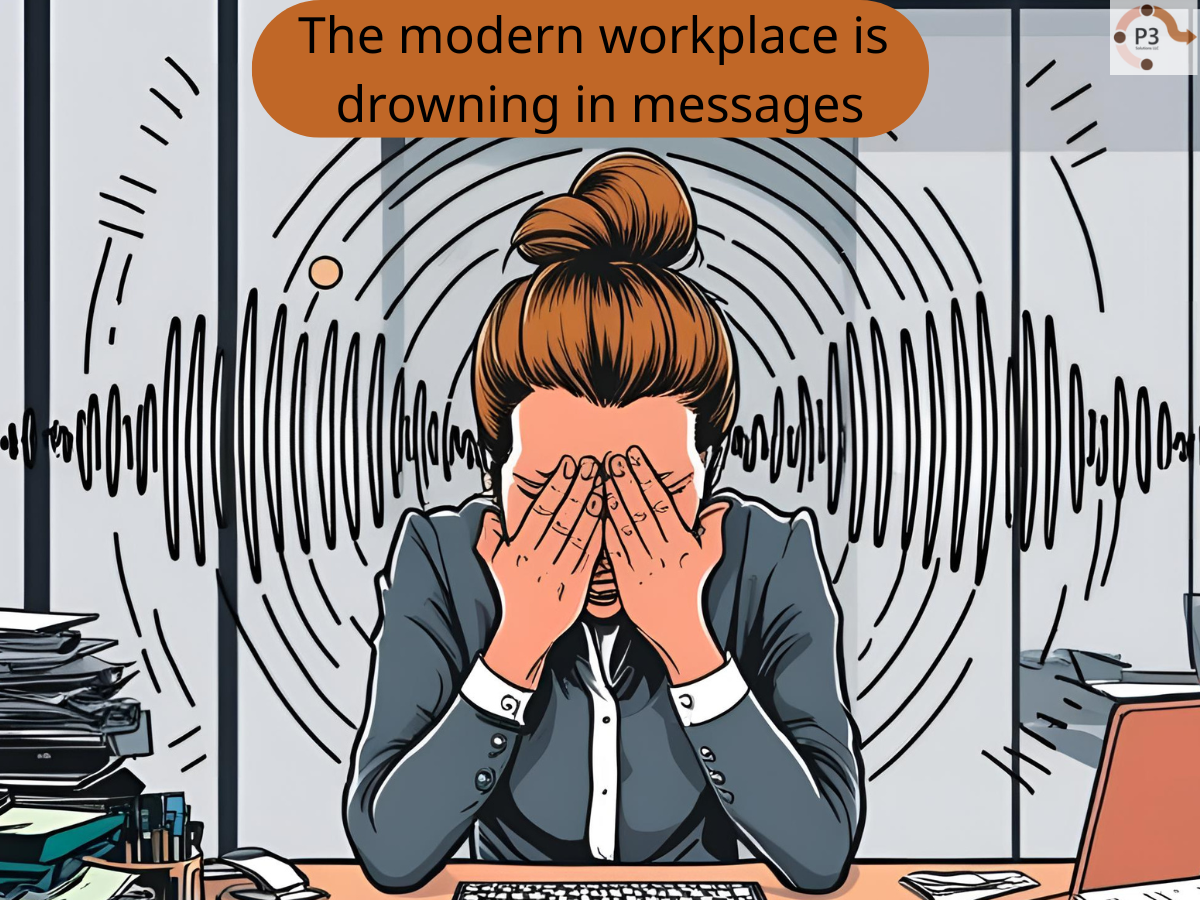
Imagine starting your typical day. More often than not, you can't even get started until you've caught up with pings, emails, group chats, comment threads, or endless notifications.
With this nonstop stream of digital chatter, you can rarely even get on with your work until all of this has been addressed. By the time you're all caught up, you're not as bright-eyed and bushy-tailed as you were when you got into the office.
With platforms like Slack, Microsoft Teams, and email, it's never been easier to reach colleagues, regardless of their location or time zone.
Convenience equates to volume, and volume equates to noise. A Harvard Business Review found that 38% of employees feel overwhelmed by the sheer quantity of their daily communications. This is particularly tough for knowledge workers, who find themselves drained before they even begin their real work.
It's not the fault of the tools themselves. After all, Slack, Teams, or good old email are useful. It's more of how we use them, with every message feeling essential. Teams and employees are pulled in too many directions and spread too thin.
Why communication overload hurts more than you think
Too many pings, too many emails, and too little time sounds like an obvious problem, but employees' busyness is probably more dangerous than you think.
Employees who are bombarded with information and messages throughout the day will struggle to focus, process information, and make informed decisions. Background noise will quickly become a cognitive drain, which can snowball to affect entire teams.
Researchers call this "continuous partial attention". Many workers are now operating in this mental state. They're scanning for a message, notification, or update with one eye constantly on their communication tools.
By the way, don't confuse this with multitasking. Multitasking includes switching between tasks and not constantly having your attention split.
Splitting your attention between two things won't mean you give 50% of your attention to each. Instead, the law of diminishing returns applies, and you'll do both tasks poorly.
Studies have shown that workers spend 88% of their typical week on communication-related tasks. When you combine this with a fear of missing something important, the result is digital fatigue.
This overload will destroy morale, increase burnout, and harm team dynamics. Every message feels urgent when very few of them are, which makes teams lose sight of what matters most: their actual work!
What happens when messages are ignored?
In fast-moving work environments, delayed or ignored messages can feel like you've hit a wall. They can be frustrating and leave teammates guessing, but they also highlight the broader problem of overreliance on instant communication that we've already seen.
Unresponsiveness might signal that the message is being ignored, the person isn't there, or they're waiting for somebody else's answer. This can lead to misunderstandings, especially if there's no clear indication of who's accountable.
With the shift to digital-first communication, there are fewer social cues than ever, and it's much harder to signal attentiveness or urgency. A short, delayed, or ambiguous response might be interpreted as disrespectful or disinterested, even when it isn't.
A study found that 70% of digital workers are anxious about how their messages are perceived and whether they're being ignored. Silence is no longer neutral, and not responding to something could be negatively interpreted, which forces everyone to be ultra-alert to messages rather than their more critical tasks.
Organizations need to set clear expectations for response times and recognize the need to create systems that allow for silence.
Unresponsiveness as a silent productivity killer
The overall problem is cyclical: Workers are drained by constantly monitoring various communication channels, but when a message isn't answered, everything can grind to a halt.
Whether it's a status check, a request for feedback, or a deadline confirmation, it can create bottlenecks for different teams. It presses the pause button on work, decisions stall, and any momentum can quickly disappear.
Unresponsiveness isn't always a problem, but with busy, overstretched teams, essential messages can slip through the cracks when everybody's inundated with unimportant messages.
Then, when a message isn't answered, someone will send a friendly "nudge" or "reminder." Multiply this behavior across multiple people in multiple teams, and you'll see how quickly this can become a problem.
According to the 2024 State of Business Communication Report, this is costing U.S. businesses an estimated $1.2 trillion a year.
Micromanagement or pressuring employees to be "always on" won't automatically fix this. Instead, you need good policies about communication, expectations, and who needs to respond, how quickly, and through which channel.
When different teams know the rules, don't abuse communication channels, and clearly understand how and when they'll get answers, there'll be less friction, allowing projects to run more smoothly.
The avalanche of irrelevant messaging
The key to effective communication is good communication. Workplaces want to avoid noisy, off-topic, or unnecessary communication.
Team channels and inboxes are too often flooded with low-value messages, such as random gifs, casual updates, redundant replies, or FYI messages, that are rarely relevant to everybody in the conversation.
This digital avalanche means that important stuff can be quickly buried. There might be an update that's lost in the scroll. Even if the messages are seen, how much time was wasted sifting through the clutter?
The more an employee is inundated with messages and updates, the less attention they'll pay. They'll start tuning out, checking channels more and more infrequently because the signal-to-noise ratio is too low.
This digital noise has a measurable cost. A study by the Information Overload Research Group found that excessive and poorly filtered messaging can decrease knowledge worker productivity by 25%.
Employees receiving messages that aren't relevant to them burn mental energy simply deciding whether or not the message is for them.
Slack, Microsoft Teams, and email make overcommunication too easy. Employees must have clear norms about when they can use @mentions, reply-all, or even send a message.
How poor filtering wastes everyone’s time
One workable solution to the avalanche of information is filtering. Clear filtering systems and communication norms can help employees.
Without them, they have to sort through the noise manually, one notification at a time, which all adds up.
Pinging back with "Not sure if this is for me" is a waste of time. The problem is both cognitive and operational. It ultimately affects the whole organization and each individual employee cognitively.
Decision fatigue and context switching drain performance. When workers jump between tools, threads, and topics, it takes time to recover.
This doesn't mean you have to eliminate every communication tool; you need to establish practices that help filter the proper information to the right people. Use intelligent message routing, strong tagging, and cultural norms around relevance.
Not every update needs to go to everyone, and not every conversation needs a full audience. Respect your team's time and cognitive bandwidth with focused messages.
Set communication rules and stick to them
Without any rules, digital chaos ensues. People respond on different timelines, use tools inconsistently, and escalate messages through the wrong channels.
You end up with confusion rather than collaboration, and everything slows down.
Establish norms for how teams communicate. This doesn't need to be rigid or bureaucratic. Just make it clear.
· When is it okay to use direct messages vs. group chats?
· What counts as urgent?
· What’s the expected response time for different types of messages?
· Who should be tagged, and when?
As long as everybody knows the answers to these kinds of questions, communication will be more effective, and employee anxiety will be lower.
Reduce the clutter: fewer platforms, better practices
There's the issue of too much communication, and then there are too many communication channels!
Email, chats, project management platforms, video calls, etc. How many do you really need? Most solutions have a lot of overlap, and with every extra channel added (often just to add a slight increase in functionality), there's a much greater risk of overwhelming teams.
With so much overlap in functionality, you'll find teams get the same (or slightly different versions of the same) messages in Slack, email, and calendar invites.
This makes everything more confusing, and if you have to add a new communication tool for certain functionality, make sure that everyone is aware of its purpose and use.
For example:
· Use email for formal, asynchronous updates
· Use chat for quick check-ins and informal collaboration
· Use project management tools for task-specific discussions and deadlines
Don't overuse any single platform, especially if you have multiple. If everyone reverts to one platform, you can send too much information to too many people.
Train for digital clarity
Whether you send a message in Slack, an email, or a project update, everyone needs to know how to send information. Sometimes, it's not what you say but how you say it.
Communication training is often overlooked and it's common for team members to have no training on communicating clearly and thoughtfully, especially in writing.
This can result in vague messages, confusing tones, rudeness, and unnecessary back-and-forth. Something supposed to be a quick message might offend, start an unnecessary conversation, or confuse other team members.
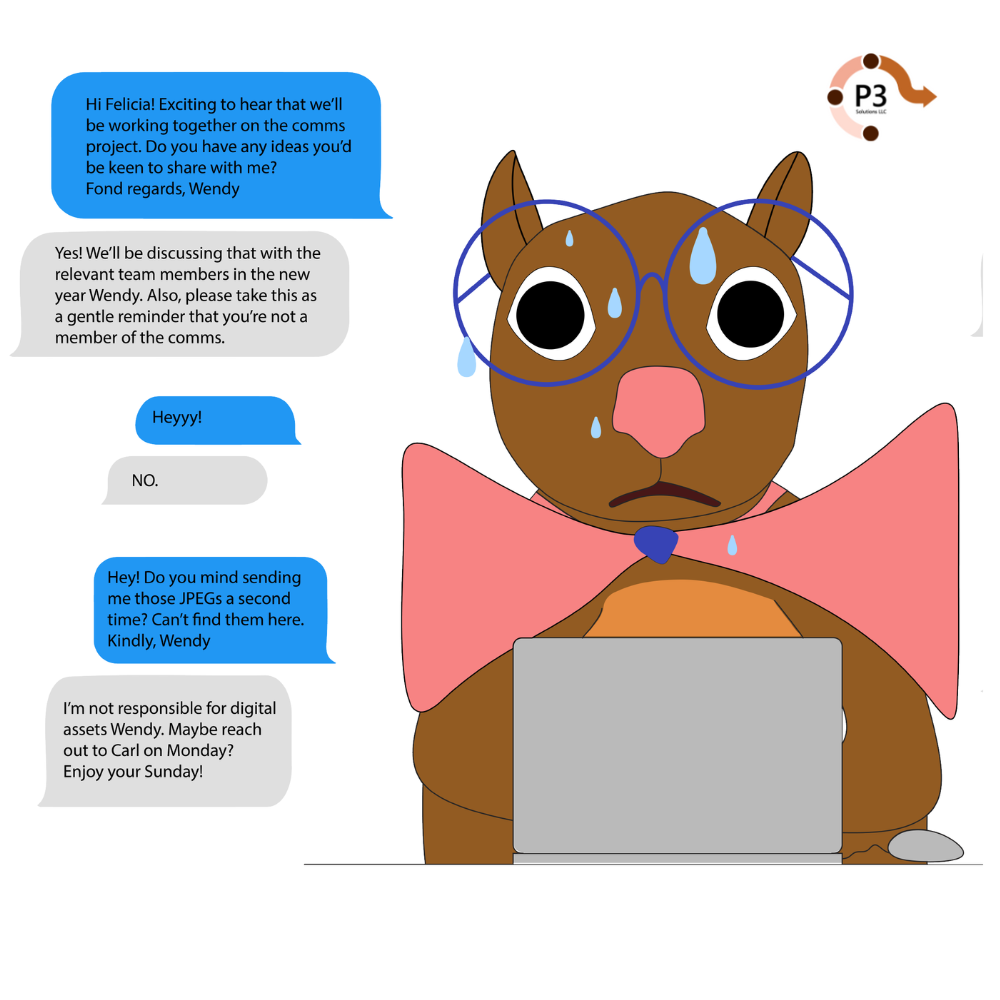
While Wendy’s intentions are good, her communication habits quickly lead to an overwhelming workload. Image by Hadi Madwar.
Read more about Wendy: what NOT to do in the workplace.
Digital communication is now an essential skill, not a soft skill. Every member of every team will need to learn how to write clearly, learning how to:
· Structure messages for easy reading
· Use formatting (like bullet points or bold text) to aid comprehension
· Be mindful of tone, especially across roles and cultures
· Know when brevity is helpful and when it's just confusing
You may also need to establish standards for how team members use emojis and punctuation and even read receipts.
The clearer the writing, the fewer the misunderstandings. Take the time to establish clear approaches, and you'll immediately get all that time back with confident and effective communication.
Less noise, more clarity: a new way forward
Communication tools are here to stay, and it looks unlikely we'll find anything better soon.
All we can do is set up practices to make communication count. Encourage less noise, responding with purpose, and ensuring that every piece of information has a clear recipient, goal, and value.
Establish practices that give communication immediate and obvious value, saving time and stress.
Audit your current communication culture to see what messages are getting lost, where the noise is coming from, and how to make communication more intentional.
Need support with your communication? P3 Solutions can help!
Contact us and tell us how we can help you meet your next challenge.
Further Reading:
You might be interested in our previous posts about poor communication in the workplace.
Part one: https://www.p3solutions.net/insights/the-impact-of-poor-communication-on-team-dynamics
Part two: https://www.p3solutions.net/insights/complaints-and-rudeness-in-the-workplace