The Power of Storytelling in Proposals
Written by Joseph Philipson.
Originally published May 6th, 2026.
Images have been generated using AI, unless otherwise stated.
When Proposals Become Spreadsheets
Proposals can look impressive on the surface if they contain detailed processes, technical explanations, and pages of information. However, as good as they look, they fail to persuade because they never touch on the client's problem. Here's how to introduce storytelling into your proposals using a tree, and there's another cautionary tale from Wendy, too, of course!
Why Technical Proposals Fail
Proposals fail when they explain everything for the supplier and very little for the client. Specifications, methodologies, and process diagrams may feel explicit, but they leave the reader wondering how any of it connects to their problem. Accuracy and detail don't necessarily guide a reader toward a decision.
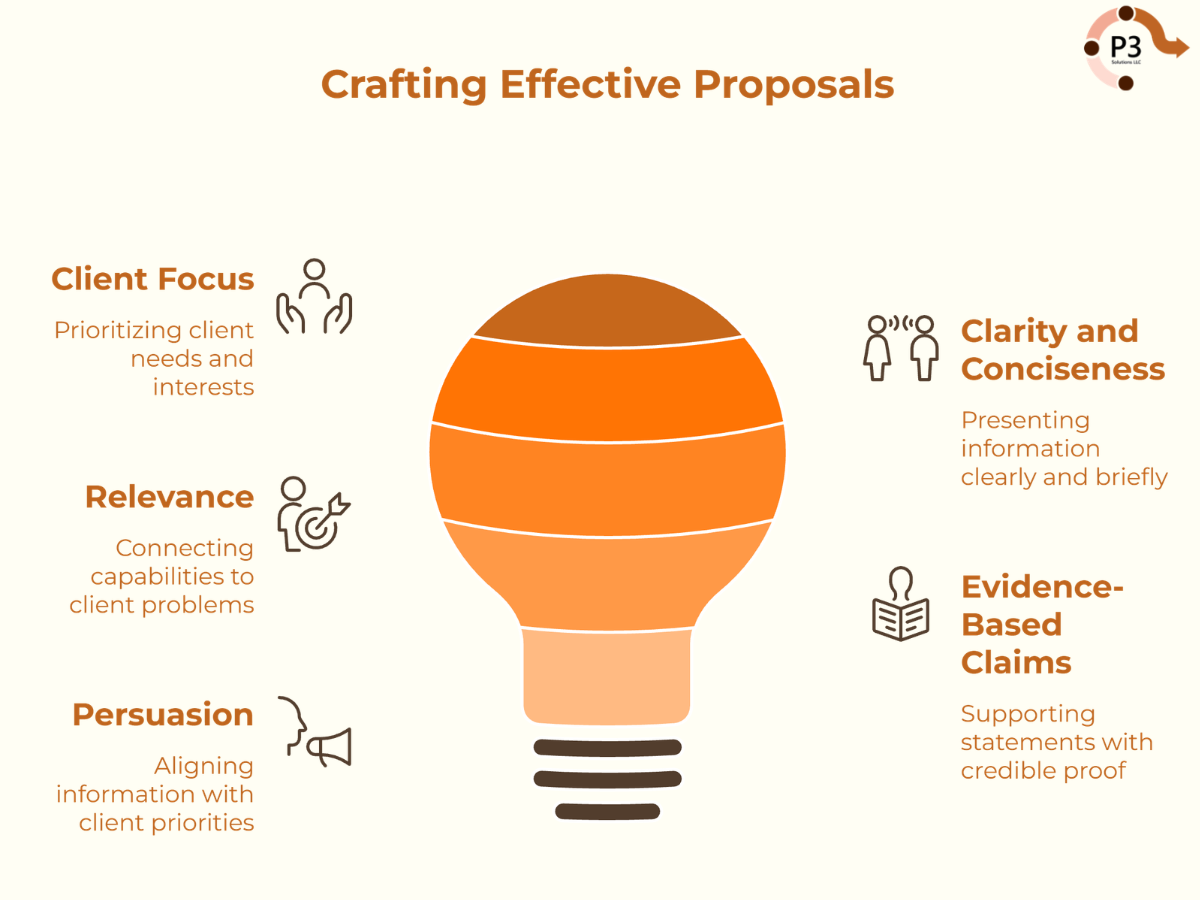
Crafting effective proposals
Prioritizing information over meaning could be a proposal's downfall. Technical details still matter, but without context, can you really interpret them? Decision makers want more than simply understanding how a company works; they want evidence that the supplier understands the situation and can deliver clear outcomes. Proposals that list capabilities without explaining their relevance leave interpretation up to the reader.
Facts in professional environments aren't always the tipping point. Persuasion means aligning information with concerns and priorities rather than just data. Proposals that read like technical reports can give context but won't necessarily persuade. Proposals focusing on the supplier's internal capabilities, like services offered, tools used, or departments involved, might make sense internally, but this won't mirror how the client sees the problem.
Research on business communication shows audiences respond more positively to clear, relevant summaries than long descriptions of internal capabilities.
Effective communication, by contrast, begins with understanding the audience and shaping the message around their needs and interests. Without this step, the proposal is just a catalog of features.
Do something different. Show that you understand the client's situation, connect capabilities to outcomes, and support claims with credible evidence. The connection between problem, solution, and proof is essential; otherwise, even technically perfect proposals fail.
Meet Wendy: The Proposal Nobody Wants to Read
Remember Wendy? She's our lovable squirrel colleague whose enthusiasm often far outweighs her ability. In preparation for winter, she's going to collect food. Her fellow woodland critters need a plan, and Wendy's in charge of the proposal.
In true squirrel fashion, Wendy's meticulous. Her proposal features excellent nut-gathering techniques, multiple caches, and insider squirrel knowledge on how to remember where everything's hidden.
That sounds great, but it didn't address some of the problems the other animals had. Wendy explained how to gather nuts and carefully store them in preparation for winter, but she didn't address questions from the rabbits about how they'd know how much food they'd have by winter, or the birds' concerns about storing nuts in trees (which they can't access), or hedgehogs worried that the first frost would arrive before collection was complete.
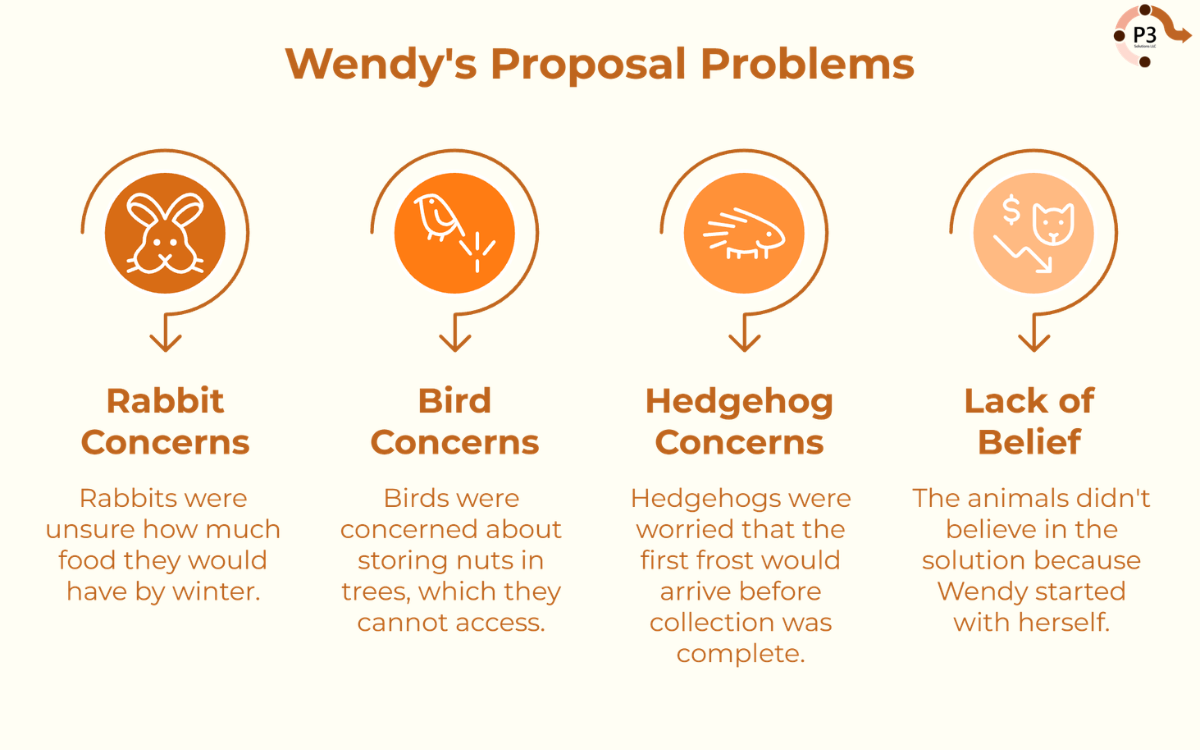
Wendy’s proposal problems
Every animal left confident in Wendy's many nut-collecting skills, but they didn't believe in the solution for them. She didn't start the proposal with winter and an impending food shortage; she started the proposal with Wendy.
The Story Tree: A Better Way to Structure Proposals
There's a better way to do proposals, and one we think that Wendy would really like: the Story Tree. Rather than listing capabilities, this approach allows a proposal to grow logically. Each part of the tree has a role: the roots anchor the story in the client's problem, the trunk is the proposed solution, and the branches are the client outcomes. The proof is in the leaves.
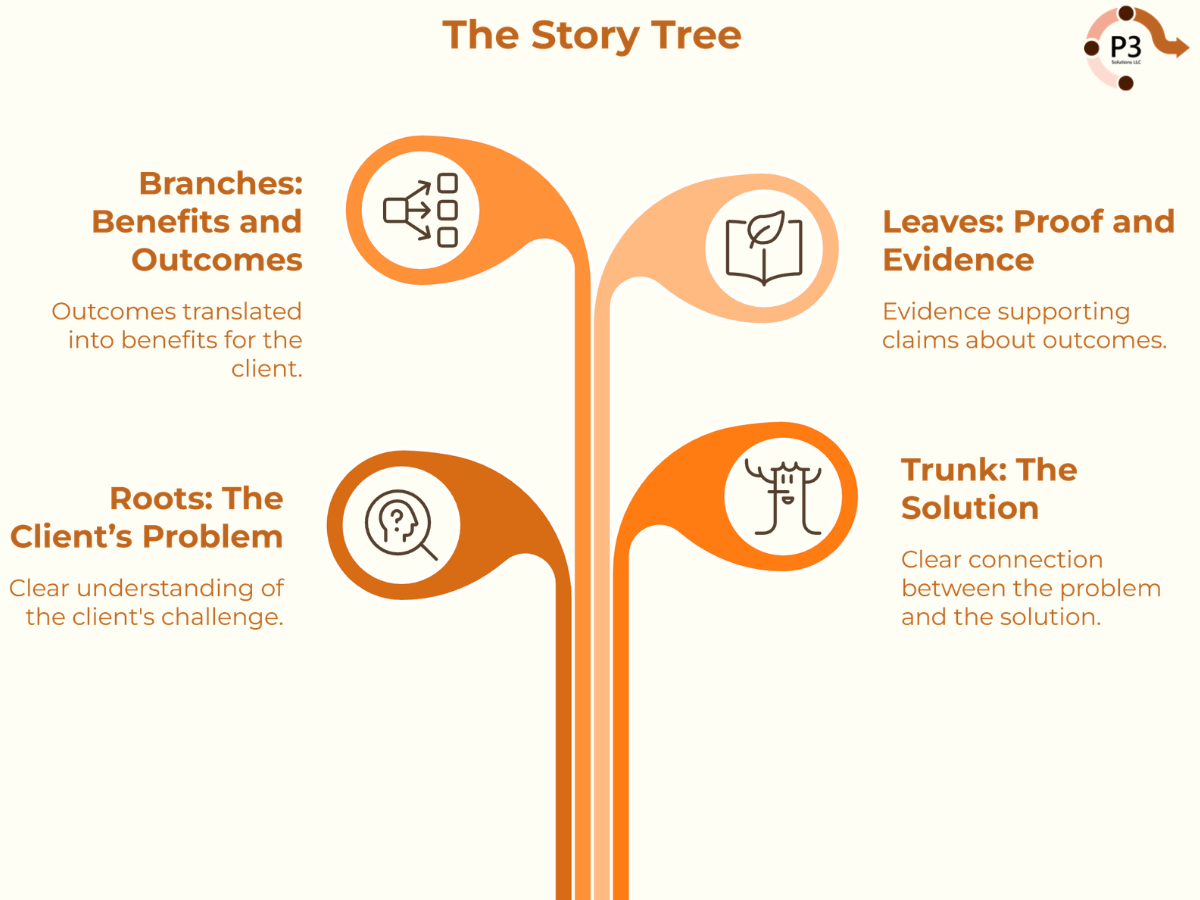
The story tree
Roots: The Client’s Problem
Start every proposal with a clear understanding of the client's challenge. Don't even think about describing services or tools yet. Show you've understood what the client wants to achieve and the obstacles they'll face.
This section should reflect the client's priorities, constraints, and goals. Readers who see their own problems described accurately will be confident that the proposal is grounded in their reality. This isn't a generic sales pitch.
Trunk: The Solution
With the problem defined and contextualized, you can present the solution. The solution isn't just what you'll do; it explains how you'll address the challenges at the roots. Offer a clear connection between the problem and the response. That way, the client can follow a logical path from the issue to the steps to resolve it.
Branches: Benefits and Outcomes
The branches of the Story Tree show how the proposal translates the solution into outcomes for the client. Outcomes could be improved efficiency, reduced risk, faster delivery, or stronger long-term results. You should frame the benefits in terms that matter to the client.
Leaves: Proof and Evidence
The leaves are the evidence. Examples, case studies, testimonials, or measurable results must support claims about outcomes. Evidence reassures the client that this isn't a theoretical solution; it's a real one. In B2B environments, proof points such as case studies, examples, and real outcomes help decision-makers assess credibility and reduce uncertainty when evaluating solutions. They can see how similar problems have been solved before, giving the proposal credibility.
Make It Human: Using Case Stories
Case stories make a proposal persuasive. Technical explanations say what a company can do, stories explain what these capabilities really look like. Show the reader how a similar problem was solved. Concrete examples strengthen arguments far more than abstract claims. Persuasive communication is most effective when people can clearly see how a solution connects to their own needs and concerns.
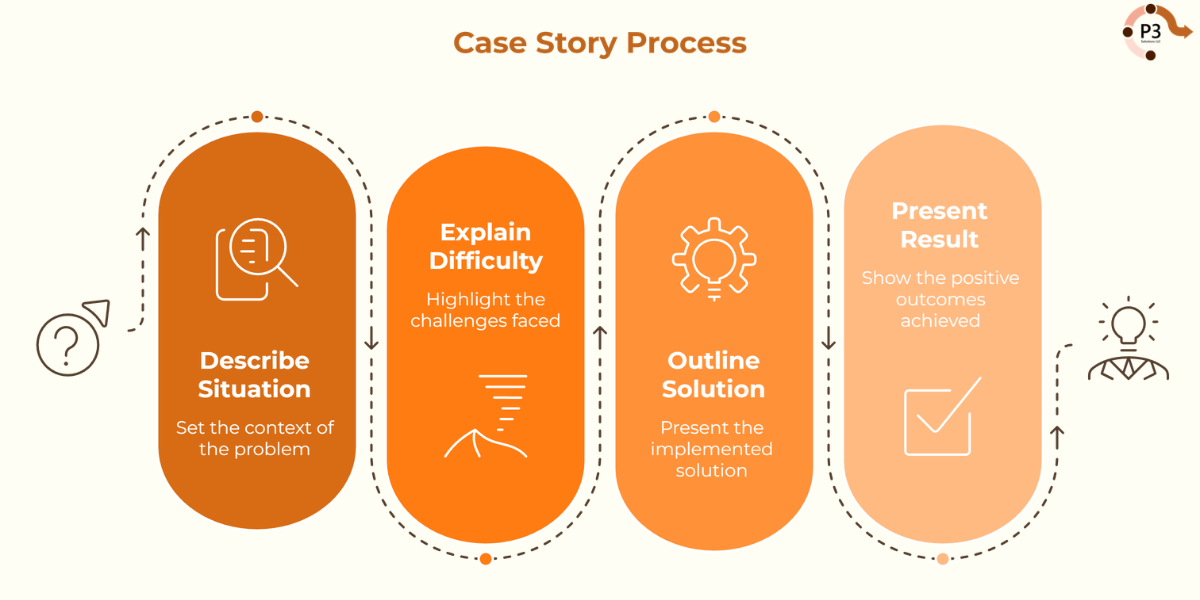
Case story process
A case story doesn't need to be long. A few sentences should be enough to show how a challenge was addressed. Use a simple structure: describe the situation, explain the difficulty, outline the solution, and then present the result.
Evidence is important here, too. Credible proof, such as testimonials, past results, or documented outcomes, can help reinforce the story and build trust with the reader. Combine narrative examples with clear evidence to make the argument easier to understand and more convincing.
Practical Ways to Transform Your Proposal
Remember that you don't have to rewrite your entire document. Small structural changes can make a difference. Shift the focus from describing the supplier to explaining how the client's problem will be solved.
Start with the client's situation before showcasing the company's capabilities. Open with the reader's first concern. Understand your audience and shape your message around their priorities.
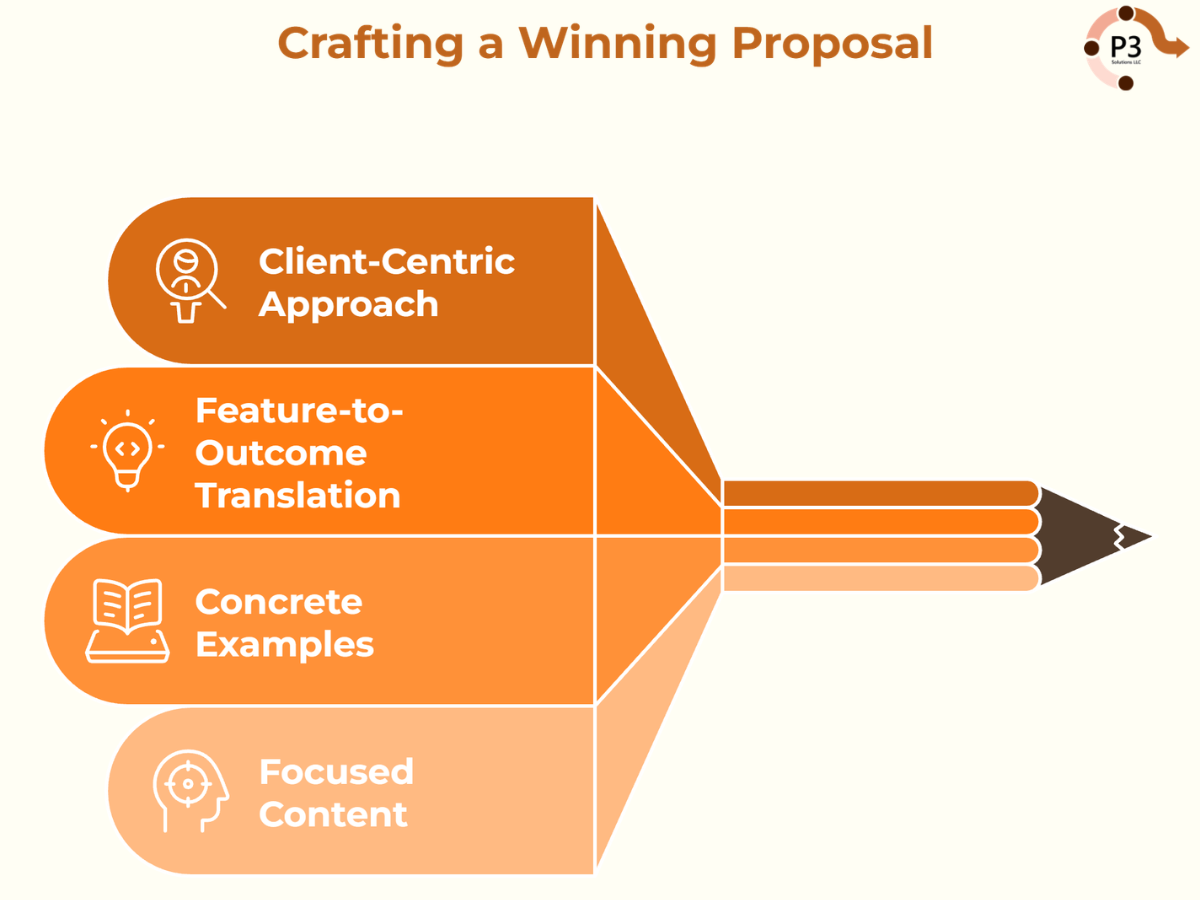
Crafting a winning proposal
Translate features into outcomes. The reader wants to know how capabilities make a difference. Link technical descriptions to results so the proposal is easier to follow and more persuasive.
Concrete examples improve clarity. A case story showing a similar challenge can help readers understand the approach in practice. Give context for technical explanations with examples, and the proposal will be more grounded in real experience.
Remove information that doesn't support your central argument. Proposal guidance consistently emphasizes focusing on the client's priorities rather than listing every internal capability. Proposals tend to grow longer as teams each add their technical details as they want to demonstrate expertise. Excessive information makes documents harder to read. Instead, ensure each section directly explains the problem, presents the solution, and supports it with credible evidence.
Don’t Be Wendy
So, let's conclude by saying that Wendy's proposal wasn't wrong. The accurate information, detailed processes, and careful explanations of her capabilities can all be useful. It's just that presenting it all in isolation didn't help her readers see how their problem would be solved. It simply described the supplier while ignoring the client's challenge.
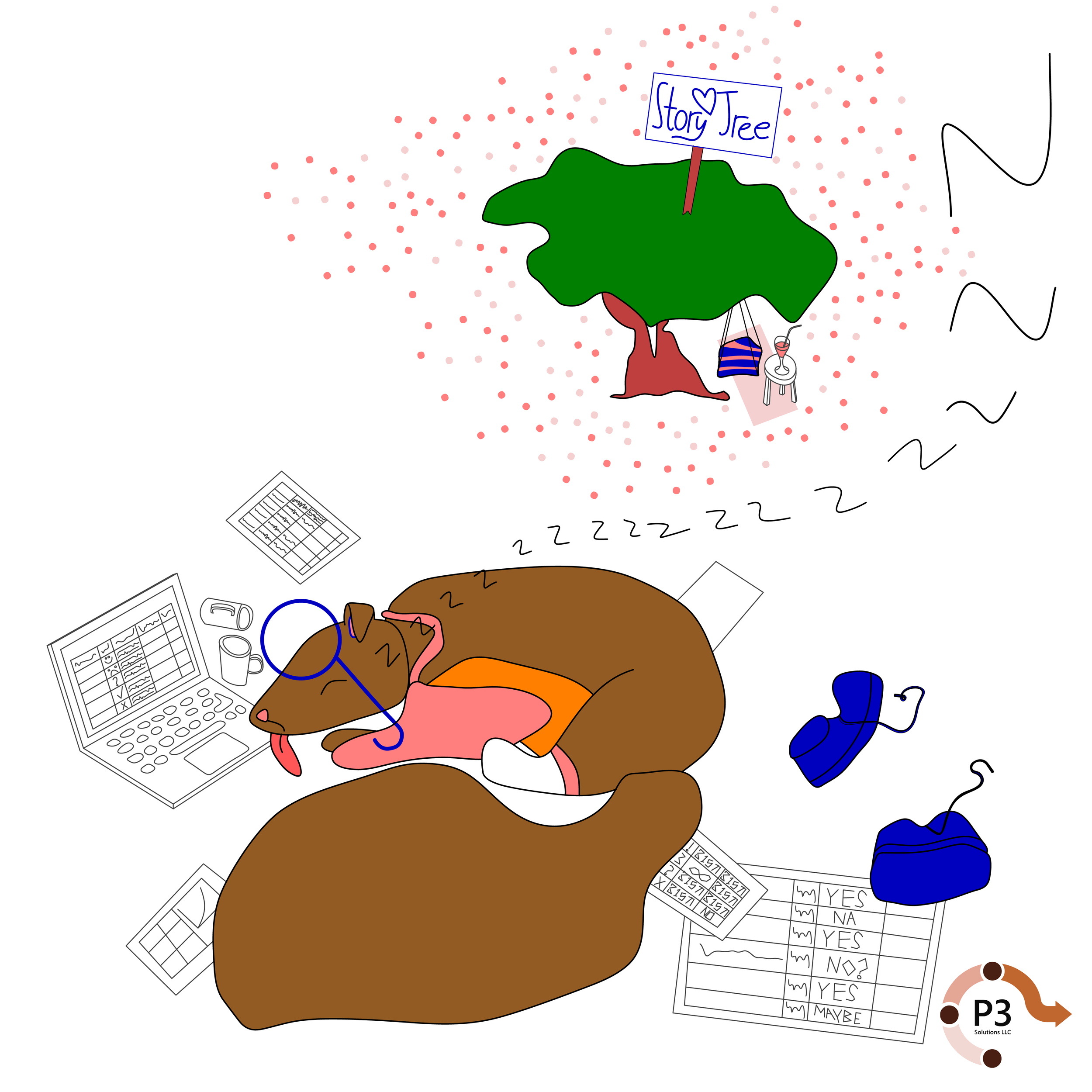
Wendy got everything right—except the story. Facts alone don’t show how the client wins. Image courtesy of Hadi Madwar.
Start with the client's situation, explain the solution clearly, and support it with credible evidence. Structures that follow this path are easier to understand and more persuasive.
The Story Tree is a simple way to think about structure. By starting with the roots and identifying the client's problem, you can build the trunk with a clear solution. Extend the branches to explain the outcomes and support claims with proof; the leaves.
Proposals following this approach will feel more like solutions. The reader won't have to interpret capabilities as the proposal guides them through a clear narrative.
Build Proposals That Win
A strong proposal helps readers understand their problem, see a clear solution, and trust the team delivering it. With a clear story from challenge to outcome, these proposals win. If your proposals read like a technical document, rethink the structure. Focus on the client's problem. With a clear story, the proposal is easier for decision makers to understand and approve.
At P3 Solutions, we help teams develop clear proposals that connect with clients. Turn your proposal into one that wins.
Further Reading:
How to uncover the client’s real problem before writing the proposal.